Brister Freeman
WaldenBrister Freeman is a formerly enslaved Black man recalled in Henry David Thoreau’s account of the vanished inhabitants of the woods around Walden Pond. His presence survives in a place-name, apple trees he planted, and a graveyard epitaph; these remnants give the landscape a human history while exposing how little the written record preserves of the people who lived there.
Identity and Setting
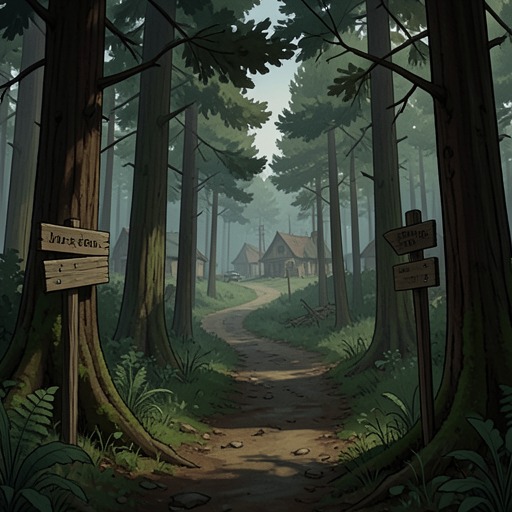
Thoreau places Freeman on Brister’s Hill, beside the old road through the woods. He describes Freeman as a Black man who had once been enslaved by Squire Cummings. The apple trees Freeman planted and tended still grew on the hill: by the time of Thoreau’s visit, they were large and old, but their fruit remained wild and ciderish.
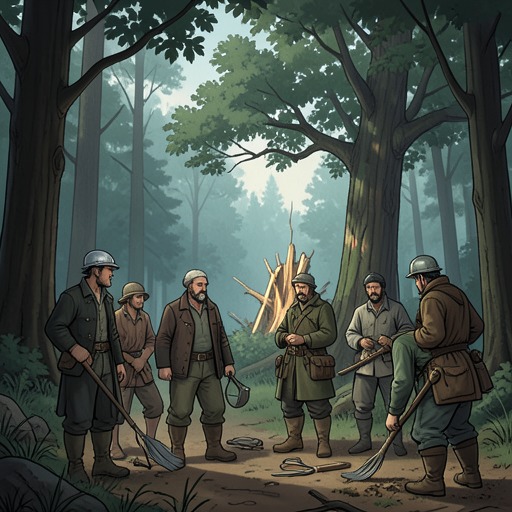
Freeman belongs to a broader, earlier community that Thoreau tries to recover by imagining the woods as inhabited rather than empty. Within the memory of Concord residents, the road near Thoreau’s house had once echoed with the laughter and conversation of people who lived there. Freeman’s remembered home and surviving trees turn that general recollection into a particular trace of a life.
Family and Local Memory
Freeman lived with Fenda, his hospitable wife, who told fortunes. Thoreau remembers her through a striking description of her appearance, but the account offers little of her own words or perspective. As with Freeman, her place in the narrative comes chiefly through the narrator’s act of recollection.
The evidence of Freeman’s life comes to Thoreau in part through an epitaph in the old Lincoln burying-ground. Its wording labels him a man of color and emphasizes when he died. Thoreau observes that this way of marking the date of death indirectly tells him that Freeman had lived, making the epitaph’s narrow record itself a measure of what has been left undocumented.
Landscape and Significance
The apple trees outlast the household and the community around it. Their continued growth connects Freeman’s labor to the hill long after he is gone, while their wild fruit bears the mark of cultivation that has slipped beyond its original purpose. The hill’s name, trees, and graveyard record together preserve fragments of his history, but none supplies a full account of his life.
Freeman’s appearance in Walden is brief and mediated by a white narrator’s local history. That limitation matters: the narrative restores the presence of a formerly enslaved resident to a landscape that might otherwise seem simply natural or unoccupied, yet it cannot recover his voice from the scant traces available. His remembered planting and the epitaph’s stark notice of death make the woods a record of both human habitation and historical erasure.