Terminal Annex Post Office
WomenThe Terminal Annex Post Office is Henry Chinaski’s former workplace, but its significance extends beyond his employment: after he quits, its schedule persists in his writing routine, and its sense of suspended time returns during a night of drinking. The post office thus remains a measure of the working life he has left and a pattern that his new life as a writer does not entirely escape.
Employment and Departure
Chinaski had worked as a postal clerk for twelve years before quitting in an effort to become a writer. The departure marks a change in occupation, not an effortless passage into artistic freedom. He describes the transition as frightening and says that he drank more than ever while attempting his first novel. His account places the post office behind him as a source of wages and routine, while showing that uncertainty and economic pressure accompany the new work.
The Workday Recast as Writing Discipline
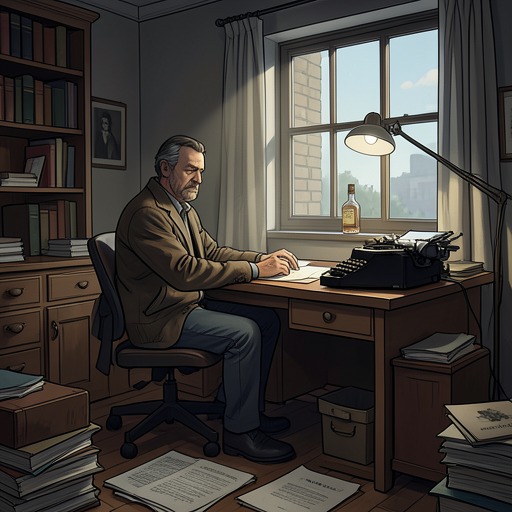
Even after leaving the postal job, Chinaski keeps its evening start time. He begins writing at 6:18 p.m., the time he used to punch in at the Terminal Annex Post Office. He sets himself a goal of ten pages a night, then discovers the next morning how much he has produced; the pages still require revision or disposal. The novel takes twenty-one nights to write. The former punch-in hour therefore survives as a private rule, converting a workplace schedule into a literary one without removing the discipline of repeated nightly labor.
Work, Writing, and the Body
The routine is physically punishing: Chinaski writes through the night with whiskey and beer, smokes inexpensive cigars, and listens to classical music on the radio. In the morning he vomits before checking the pages left on the couch. The contrast between the visible stack of work and the effort required to make it usable complicates the image of writing as pure independence. His account presents literary labor as a new occupation organized by hours, output, and bodily cost, even as its schedule is self-imposed rather than set by an employer.
The Post Office as a Measure of Stalled Time
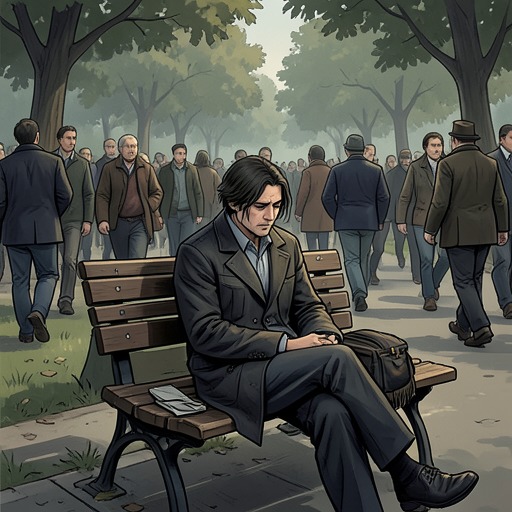
Later, during a night of drinking and waiting for the liquor store to open, Chinaski says that time feels motionless and compares the experience to working in the post office again. The comparison returns the institution as a felt duration rather than a setting: the hours drag while existence becomes unbearable. His former workplace supplies the language through which he understands this suspension, linking the monotonous passage of a night to the time discipline of his old job.
Narrative Significance
The Terminal Annex Post Office appears only through recollection and comparison, yet it connects distinct parts of Chinaski’s life. Its punch-in time structures the beginning of his writing nights; the repeated labor of producing and revising pages echoes a work routine; and its remembered pace gives form to a later episode of waiting. The post office is not simply the occupation he abandons. It remains a durable measure of time and work as he tries to make a living through writing.