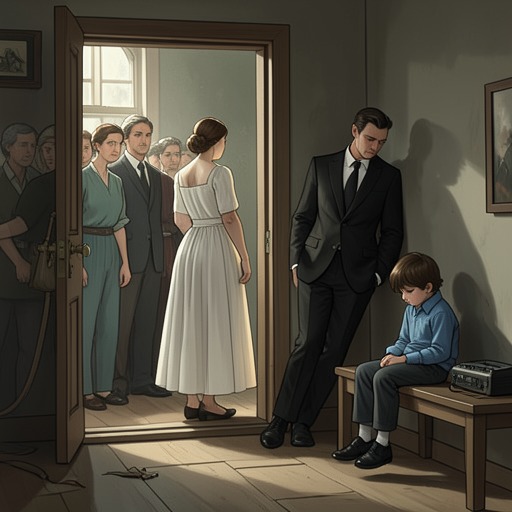
Denial and silence about childhood sexual abuse
AccidentDenial and silence about childhood sexual abuse are not merely an unresolved memory in Page Clarke’s life; they are a family pattern that shapes what can be acknowledged, whom Page can trust, and how she tries to protect her own children. The novel follows that silence from Page’s childhood, through years of attempted recovery, to two contrasting encounters: her mother and sister refuse to recognize the abuse, while Page tells Trygve Thorensen the truth and finds a listener who does not demand that she withdraw it.
Family History and the Inherited Silence
Page tells Trygve that her father sexually abused her from the time she was thirteen until she was sixteen, and that her mother knew. Page describes a household in which her mother was afraid of her father, who beat her, and believed the children had to keep him happy to avoid further harm. Page also says her father had abused Alexis before abusing her. The account establishes a family structure in which the mother’s fear and the sisters’ divided positions helped keep the abuse unspoken; Page says Alexis had been relieved when attention shifted to Page.
The silence is reinforced by the family’s public image. Page’s father had been regarded as a good doctor and a respected man, a reputation Alexis invokes when Page confronts her. Page recalls that she once thought his profession made a difference, but says the abuse left her afraid of medical care. She avoided doctors for years and sometimes did not go even while pregnant, fearing what might happen. The contrast between a trusted professional identity and Page’s private experience makes the family’s denial especially consequential: social respectability does not undo what happened, but it supplies a story that the family can use to avoid facing it.
Page left home at seventeen and worked as a waitress to pay for an apartment. Her mother treated the departure as a betrayal and told her that she had broken her father’s heart. After he died, Page briefly believed that she might have caused his death. These details show how the family’s account placed responsibility on Page even as she was trying to leave the situation. She later found a therapist and made peace with the past, but that recovery did not resolve her relationship with her mother or make the family acknowledge the truth.
The Confrontation at Home
Years later, during Allyson Clarke’s hospital crisis, Page tells her mother that her marriage to Brad Clarke is in trouble because Brad is involved with someone else. Her mother refuses to believe her and insists that Brad would not jeopardize the marriage. Page then reminds her mother of what they went through and asks her to remember Page’s father. Her mother denies knowing what Page means and moves to leave. The argument about Brad’s affair thus becomes the immediate setting for a more fundamental dispute: whether Page’s mother will recognize the harm she helped conceal.
When Page’s mother continues to deny the past, Page confronts her directly, with Brad present. Page says her mother brought her father to her and left her alone with him, and states that she was thirteen. Her mother calls the account untrue and says Page’s father would never have done such a thing. Page insists that her mother knew and participated in the concealment. She also turns to Alexis, asking her to remember the family history and saying that Alexis had pushed Page toward their father so that she herself would no longer be the target. Alexis appears frightened and appeals to their father’s standing as a doctor; Page responds that his profession did not protect her.
The confrontation makes the cost of denial visible without bringing the family to agreement. Page says that the abuse continued until she was sixteen and that she eventually threatened to call the police. She is crying as she asks why her mother and sister helped protect their father and why her mother now acts as though the abuse never happened. Brad knows about Page’s history, but the scene is the first time he hears her speak to her family about it so plainly. Her mother and Alexis do not acknowledge her account, leaving Page without the admission she has sought.
Telling the Truth to Trygve
After the confrontation, Page tells Brad she is glad she spoke, while still wondering whether her mother truly believes the denial or lies to cover for her father. Brad tells her not to expect an admission from either her mother or Alexis. Page then goes to the hospital, where Allyson has been in intensive care for three weeks. She sits quietly beside her daughter, shaken by the combined strain of Allyson’s condition, Brad, and her mother. The movement from a family argument to the silent hospital room places the disclosure beside another painful uncertainty, without suggesting that one can resolve the other.
When Trygve comes to see her, Page first describes the conflict with her mother as part of a familiar pattern. She says she has tried to maintain a workable relationship with her mother but cannot manage it when the past resurfaces. Then she begins to tell him what happened. She explains that her father abused her between thirteen and sixteen, that her mother knew, and that her mother had brought him to her and left her with him. Page also tells Trygve that her mother feared her father and believed compliance would keep him from hurting the family. She is distressed as she speaks, but says she wants to be honest with him and feels safe telling him.
Trygve listens and comforts her. Page tells him she left home at seventeen, worked to support herself, later found a therapist, and tried to make peace with the abuse. What remains painful is her mother’s refusal to admit it: Page says her mother continues to present her father as a saint, a version of his character that Page cannot reconcile with her childhood. Telling Trygve does not change her mother’s position, but it gives Page’s account a witness who accepts it rather than redirecting her toward denial.
Consequences and Narrative Significance
Page’s family history also appears in a quieter scene with Andy Clarke. While Allyson is still unconscious, Page finds Andy crying as he explains the accident to the family dog. He asks why Page and Brad fight so often now, when they did not used to. Page tells him that adults sometimes argue when they are sad or afraid, and apologizes for upsetting him. She does not tell him that Brad is having an affair. The moment is not equivalent to the abuse Page experienced, but it places her in a position of managing what a child knows while trying to reassure him amid adult conflict. The novel thereby connects silence across generations without treating every withheld truth as the same harm.
After Page’s mother and Alexis leave, Page feels relieved as she puts the house back in order and cleans Allyson’s room. She finds a large quantity of laxatives Alexis has left behind and understands this as evidence of Alexis’s serious illness and her attempt to make herself disappear. Page’s interpretation extends the pattern of concealment beyond the childhood abuse: suffering remains difficult for the family to recognize openly, even when its effects are present in the house. The departure brings no reconciliation, but it gives Page temporary space from the people who have refused to acknowledge her history.
The concept’s force lies in the difference between being unable to speak and being refused belief. Page has spent years trying to heal and can tell Trygve what happened, yet her mother and sister continue to deny it when she confronts them. The novel gives the disclosure a double consequence: it cannot compel the family to revise its account, but it ends Page’s silence in that moment and establishes a more honest form of trust with Trygve.