Accident responsibility and public blame
AccidentAccident responsibility and public blame is a recurring conflict in the aftermath of the Golden Gate Bridge collision: the crash’s cause remains uncertain, while families, police, and reporters feel pressure to assign fault. The novel tracks how grief and incomplete evidence invite premature judgments, how political status shapes whose account is trusted, and how a later revelation changes what the characters believe without resolving the first accident in court.
Uncertainty at the Scene
At the scene, a fireman reports that investigators do not yet know what happened. He later explains that both cars may have drifted across the center line, and that the force of the collision makes it difficult to determine who crossed first or why. Laura Hutchinson says she did not cross the line; although the fireman has heard she was farther over it, he sees no reason to disbelieve her. Her identity as a senator’s wife is immediately recognized, a detail that foreshadows how status will affect the handling and public interpretation of the crash.
The uncertainty is not merely technical. Phillip Chapman is dead, Allyson is gravely injured, and Chloe is also hurt; knowing who crossed the line cannot reverse any of those consequences. At the hospital, Trygve Thorensen tells Page Clarke to resist imagining every possible future for Chloe while they lack medical answers. Page moves between fearing that Allyson will die and refusing to accept that possibility. In this atmosphere, the desire to identify a responsible driver coexists with the knowledge that a verdict cannot restore what the families have lost.
The first investigative decisions deepen the doubt. Phillip’s blood test shows alcohol, but not enough to classify him as legally drunk. Hutchinson is not tested: one patrolman accepts her assurance that she has not been drinking and regards her distress as sufficient explanation for what he sees. He even gives her brandy after the crash. His partner questions whether she should be taken to the hospital for an alcohol check, but the test is not performed. The disparity becomes central to the Chapmans’ sense that their son is being suspected while Hutchinson is granted the benefit of an assumption.
The First Public Story
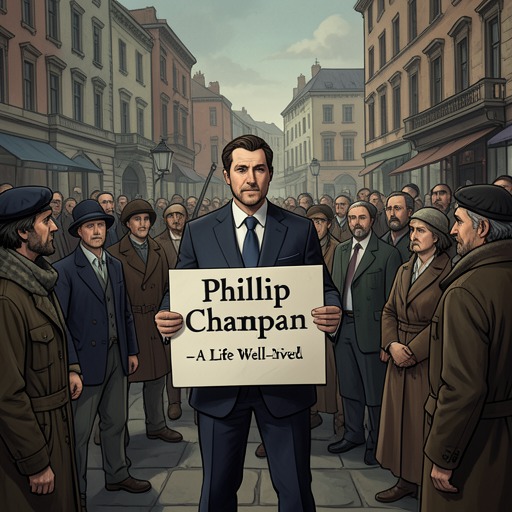
The newspaper account gives the uncertainty a direction. Its article includes photographs and accounts of the four young people, but foregrounds Hutchinson’s distress and uses statements from a senator’s aide to present her as a grieving mother. Without explicitly accusing Phillip of being drunk or saying he caused the collision, the article leaves readers with that impression. Trygve recognizes how emphasis and insinuation can make a disputed account seem settled: the piece formally avoids a direct accusation while implicitly shifting blame toward the young driver.
That framing draws force from Phillip’s age and the small amount of alcohol in his blood. Trygve notes that the patrol evidence remains inconclusive and that the cars appear almost equally implicated. Jamie Applegate says Phillip had half a glass of wine, followed by two cups of black coffee and later a cappuccino; Jamie also insists that the boys were not drunk and that Phillip was paying attention. These details do not establish what caused the crash, but they challenge the easy inference that the presence of alcohol makes Phillip responsible. Trygve objects to the assumption that a young male driver must have been reckless, especially when the available accounts describe Phillip as responsible.
Page is less certain about what to believe. She understands that assigning fault might matter to lawsuits, but feels that legal blame would neither bring Phillip back nor restore Chloe’s legs or bring Allyson out of intensive care. When Jane tells her that a friend believes Hutchinson had struggled with alcohol since her teens and had received treatment years earlier, Page refuses to treat an old problem as proof that she drank before the collision. The report is hearsay, not evidence about that night; Page’s response marks a deliberate effort to distinguish suspicion from knowledge even while others are searching for someone to blame.
Grief, Reputation, and Doubt
The Chapmans’ grief turns the question of blame into a defense of their son’s name. When doctors tell them that Phillip had a small amount of alcohol in his blood and that Hutchinson was not tested, his father, Tom Chapman, protests the unequal treatment. He argues that a seventeen-year-old should not be presumed guilty on the basis of a limited amount of alcohol while an adult driver is accepted as sober without examination. His anger briefly gives shape to grief, but fades as he recognizes that no argument can undo Phillip’s death. He is an attorney, and he later plans to sue the newspaper to clear his son’s name.
The public’s attention also reaches the Chapman family at Phillip’s funeral, where Hutchinson’s presence can be read in opposing ways. Trygve suspects that appearing there will make her look compassionate to the press, and doubts that the gesture is free of political calculation. Page cautions that Hutchinson may be sincere. The scene sustains both possibilities: a public act of mourning may express genuine feeling and still be useful to a public image. Neither interpretation proves who caused the collision.
As time passes, Page and Trygve continue to resist a simple conclusion. Trygve tells Page that the patrol still considers the evidence inconclusive, and that the cars seem nearly equally to blame. He also questions how the newspaper’s account has made Phillip appear culpable while presenting Hutchinson as respectable and mature. Page’s own position remains unsettled: she is not convinced the press is right, but neither can she determine what happened. Their dispute is less about possessing a complete explanation than about noticing how age, reputation, and political connections can make one interpretation feel more credible than another.
Later Revelations and Their Limits
The later collision in La Jolla changes the emotional force of the earlier uncertainty. News reports say Hutchinson was arrested for felony vehicular manslaughter and that tests showed she had been driving while intoxicated. The crash killed members of another family and injured her twelve-year-old daughter. Page breaks down, believing that Hutchinson must also have been drunk on the Golden Gate Bridge and that her earlier suspicions were justified. Trygve’s suspicions seem vindicated to the family, and the new report appears to clear Phillip in their eyes.
Further reporting supplies a history that had previously been hidden. Trygve’s investigative reporter friend tells him that Hutchinson had made four recent stays at a Los Angeles treatment clinic, under another name, and that none had been successful. Department of Motor Vehicles records reportedly show at least six minor accidents and a more serious one in Martha’s Vineyard; some records were sealed or concealed, allegedly with help from her husband’s lawyers and public-relations staff. The disclosure reframes the earlier assumptions about her sobriety and the apparent absence of a record. It establishes a troubling pattern in the characters’ understanding, but does not substitute for an alcohol test from the night Phillip died.
Reporters then press the Clarke and Thorensen families for reactions and access to the injured girls. At the hospital, they ask Page whether she is angry and whether Allyson will wake from her coma; they have also tried to secure a photograph inside the intensive-care unit. Frances refuses them entry, and the nurses close the doors and draw the shades. Page declines to turn Allyson’s condition into a spectacle. Her public response expresses sorrow for everyone affected, including the relatives of the La Jolla victims, rather than accepting the reporters’ invitation to perform outrage.
Page later agrees to a television interview, saying that anyone responsible for such a tragedy should answer to the fullest extent of the law, while acknowledging that punishment changes nothing for her family now. She is unhappy when the broadcast edits her words to make her appear pathetic. She has spoken because the revelations might help Hutchinson be fairly punished in La Jolla, although the first collision cannot be admitted as evidence in that case because Hutchinson was not tested at the time. Page ultimately feels some relief that Hutchinson may face justice, but Allyson’s condition remains unchanged, and the trial is still ahead.
Significance
The novel separates moral suspicion from provable responsibility. The later crash and concealed history make the earlier decision not to test Hutchinson look consequential and deepen the family’s conviction that Phillip was unfairly blamed. Yet the evidence about the Golden Gate Bridge collision remains inconclusive, and the characters’ later certainty exceeds what investigators established about that particular night. By keeping that gap visible, the narrative shows how grief, unequal treatment, political influence, and selective reporting can produce a public verdict before a legal one. It also refuses to treat that verdict as a remedy: vindicating Phillip’s reputation matters to his parents, but it cannot undo the deaths, injuries, or fear that began with the collision.