Media intrusion and privilege of the powerful
AccidentMedia intrusion and privilege are intertwined throughout the aftermath of the Golden Gate Bridge crash. Reporters treat private grief as public material, while Laura Hutchinson’s status as a senator’s wife influences how authorities and news coverage handle her. The resulting imbalance is not simply a clash between privacy and the public’s right to know: it determines whose conduct is questioned, whose account gains authority, and whose suffering becomes a spectacle.
Deference at the Scene
At the crash scene, uncertainty about how the cars crossed the center line remains unresolved. A fireman explains that both vehicles may have drifted across it, and that the wreckage does not make responsibility clear. Yet when he identifies the other driver as Laura Hutchinson, the mention of Senator John Hutchinson prompts a knowing response. Her identity enters the conversation not as evidence about the collision, but as a reason for special notice.
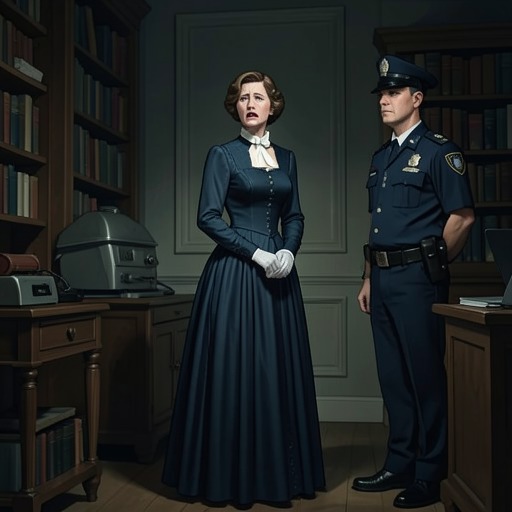
The police response makes that distinction consequential. Laura is discreetly shielded from camera crews, and she refuses to comment on Phillip Chapman’s death. Later, a patrolman acknowledges that he did not take her to the hospital for an alcohol check. He relies on her claim that she had not been drinking, her distressed condition, and his impression of her as a respectable senator’s wife. He even gives her brandy, reasoning that it is too late to test her afterward. His assumptions turn political and social status into a substitute for scrutiny, while the question of whether the young drivers had been drinking remains under examination.
Bereaved Families as Public Material
At Marin General Hospital, a reporter approaches Page Clarke while she is waiting to learn whether Allyson Clarke will survive. He asks about Allyson’s connection to Phillip, what kind of boy Phillip was, and whether the teenagers might have been drinking. He also emphasizes that Laura was the other driver and had not been injured. Trygve Thorensen intervenes, but the reporter invokes the public’s right to know and continues pressing Page. She tells him that her daughter may be dying and that the questions are not his business. The encounter presents a stark conflict: a claim of public interest is used to justify questioning a parent in acute distress, without regard for whether the questions can help establish what happened.
The Chapmans face a different but related invasion. When Phillip’s parents arrive, they learn that a small amount of alcohol was found in his blood, though it was not enough to make him legally drunk. They also learn that Laura was not tested, because officers at the scene assumed she was sober. Tom Chapman objects that his son is being implicitly suspected while an adult connected to a senator escapes the same examination. His anger briefly gives shape to grief, but it does not settle the cause of the crash; he and Mary Chapman are left mourning their only child.
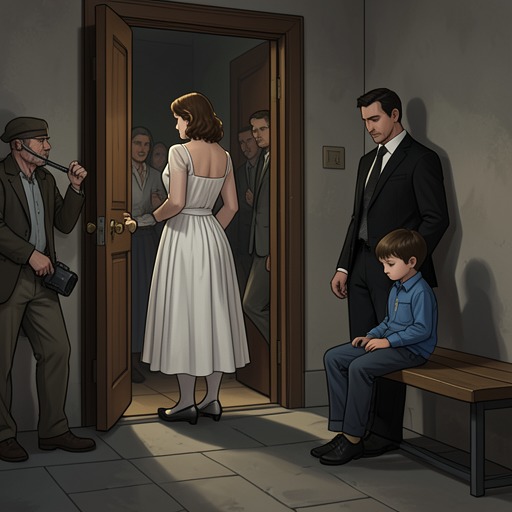
A photographer takes their picture in the emergency room. Their grief has become an image for public consumption before they have had time to absorb Phillip’s death. The narrative underscores the double injury: the Chapmans must endure both the loss of their son and the knowledge that their private anguish is being made into news. The story around the crash is already becoming a contest over culpability, with the dead teenager and injured young people available for speculation because Laura’s political connection makes the collision especially attractive to the press.
Reporting and the Manufacture of Blame
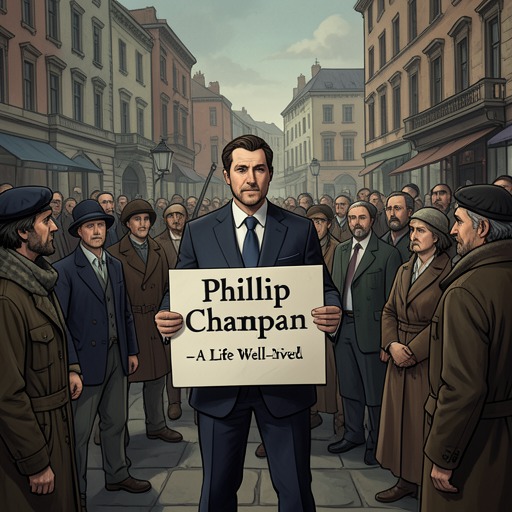
A newspaper account gives Laura a sympathetic presentation through a photograph and statements from a senator’s aide. Although she does not give an interview, the article describes her as too upset to comment and emphasizes her understanding of the other families’ grief. It does not directly accuse Phillip of causing the crash, but its arrangement of details suggests that the teenagers had been drinking and leaves readers with the impression that Phillip may have been responsible. Trygve recognizes how insinuation can convey an accusation that the article never states outright. The distinction between verified fact and a story’s implied conclusion becomes central: the report can appear cautious while directing public blame toward the person whose family has the least power to correct it.
Later, Senator Hutchinson publicly expresses sorrow and says that his wife is devastated. He also raises questions about possible defects in her car’s steering column and brakes, while Laura remains absent from public view. Page and Trygve hear a new explanatory frame take shape, but it does not resolve the crash’s original uncertainty. Across these accounts, the press and the senator’s representatives compete to shape what the public sees: one account casts Laura as a grieving mother; another redirects attention to the car; neither by itself establishes who caused the collision.
Renewed Exposure and a Larger Pattern
The imbalance becomes sharper when Trygve’s investigative reporter friend obtains information about Laura’s history. He reports that she had entered a well-known Los Angeles treatment clinic four times in three years under another name, and that records showed at least six minor accidents and a larger accident in Martha’s Vineyard. Some records had been sealed or otherwise kept from view; the friend suggests that political influence and possible bribes may have helped conceal them. This information changes the context in which Page and Trygve understand the earlier decision not to test Laura, but it does not retrospectively supply an alcohol test from the night of the bridge crash.
After Laura is involved in a fatal drunk-driving crash in La Jolla, reporters again seek access to the families. A senator’s statement promises an investigation and full disclosure, while the Hutchinson family’s account raises vehicle defects. At the hospital, reporters ask Page whether she is angry and press for information about Allyson’s condition. Some attempt to obtain a photograph inside the intensive care unit; Frances threatens to have them removed and to seek a court order. Page refuses to let Allyson’s condition be turned into an image designed to provoke outrage. Asked about blame, she speaks instead of her sadness for all the families affected. Her restraint rejects the reporters’ effort to convert grief into a simple performance of anger.
Accountability, Evidence, and the Limits of Exposure
Page eventually agrees to an interview, saying that anyone responsible for such a tragedy should answer to the law. The broadcast edits her remarks in a way that makes her appear pathetic and distorts what she intended to say. Her experience shows that public access does not guarantee that a person’s meaning will survive the process of being recorded and presented. She had hoped to draw attention to Laura’s history, but regrets participating after seeing the result.
The legal limits are equally important. Because Laura was not tested for alcohol after the bridge collision, that crash cannot be admitted as evidence in the later La Jolla case. Page believes, however, that the earlier incident helps establish a pattern. The press’s scrutiny thus has a double edge: it intrudes on families and can distort their words, yet investigative reporting may also uncover a history that official channels failed to make visible. The story does not treat publicity as a substitute for fair procedure. Instead, it shows how status can shape which questions are asked, whose records remain hidden, and how responsibility is narrated before the facts are settled.