The value of life with disability and unconditional acceptance
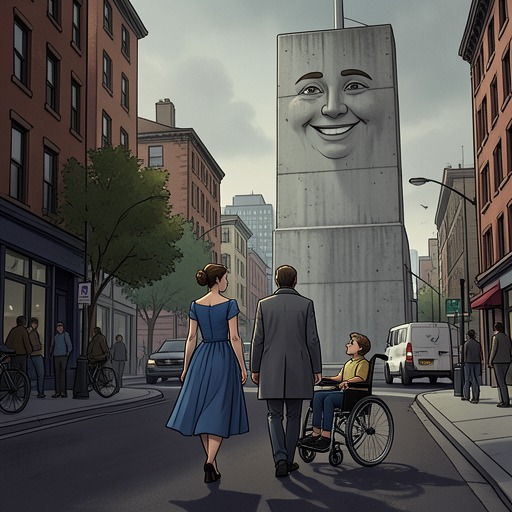
AccidentThe value of life with disability and unconditional acceptance is tested when Allyson Clarke’s severe brain injuries leave her future uncertain. The question is not simply whether she can be saved, but whether her life would still be welcomed if she woke with lasting impairments. Page Clarke answers that question by insisting on Allyson’s worth beyond physical ability or a return to a presumed normal state. Brad Clarke, frightened by the possibility of profound disability, initially imagines that a life unlike Allyson’s former one might not be worth preserving. Their disagreement makes a medical crisis into a conflict over care, dignity, and the standards by which a life is valued.
Medical Uncertainty and the Meaning of Recovery
The doctors describe a range of possible outcomes rather than a dependable forecast. Allyson might remain comatose, sustain extensive brain damage, lose motor skills or reasoning abilities, or become blind; swelling and the success of efforts to control it could shape what followed. Page asks whether her daughter might ever be normal again, and the doctor answers that recovery is possible, while emphasizing that normality has degrees and that the outcome would require exceptional luck. His guarded assessment leaves the family facing not a choice between certain recovery and certain death, but a frightening field of possibilities.
That uncertainty governs urgent decisions as well as future expectations. The neurosurgeon says Allyson needs immediate surgery and warns that delay could leave her dead or without viable brain function. Page has been unable to reach Brad, but feels that she should ask him before authorizing surgery because Allyson is his child too. The doctor makes clear that there is no time to wait: he does not expect Allyson to survive another two hours without the operation. Page must therefore decide under pressure, with little chance for further consultation and no assurance that surgery will restore her previous abilities. The scene places the family’s responsibility to protect Allyson’s life beside the limits of what medicine can promise.
The prospect of a second operation intensifies that strain. Four days after the first, increasing swelling and dangerous pressure lead the hospital to prepare for another brain surgery the next morning if Allyson does not improve. Brad responds by asking how often the family may have to face another operation; Page answers that treatment may continue as long as needed for Allyson to recover. The exchange shows how hope is sustained through practical decisions even when the hoped-for destination remains undefined.
Page and Brad: Two Measures of a Life
Brad initially separates the Allyson he remembers from the impaired person she might become. He says that he wants his former daughter back: beautiful, strong, intelligent, and able to do anything she chooses. If she were severely brain damaged, he asks, would Page want to care for her for the rest of their lives? He argues that watching her on a respirator while her brain swells cannot change the outcome, and says that he would rather let her go than have her live with profound limitations. His words arise from terror at the possible losses and from his inability to bear seeing her in intensive care, but they also make independence and ability into conditions of the future he can imagine accepting.
Page rejects that measure. She maintains that Allyson still has a chance, even if she does not make a complete recovery, and that if she lives, the family must help her. She does not claim that impairment would be easy, or that Allyson will certainly survive; her position is that uncertainty and possible disability do not justify giving up on her. After Brad admits that he cannot face the sight of his daughter and is afraid she will die, Page embraces him. His fear becomes visible as fear rather than indifference, but understanding it does not erase the burden his withdrawal has placed on her during the crisis.
The difference between them is stated plainly when Page tells Trygve that she would rather have Allyson in any condition than lose her, while Brad would rather lose her than see her limited. Trygve calls Brad’s view elitist and too sharply divided, and agrees that having whatever life remains is preferable to having none. Page accepts his support on the question of Allyson’s worth, even as her marriage to Brad is breaking down. The contrast matters: she is willing to welcome an uncertain future for her daughter, but that willingness does not require her to overlook the damage within her marriage.
Bjorn and the Work of Care
Trygve’s experience with Bjorn gives Page a practical point of reference for the long-term care that Allyson might need. He recalls that Bjorn wore diapers until age six and continued to have accidents until age eleven. He also remembers worrying about traffic and Bjorn burning himself while trying to cook at twelve. Progress, he explains, took a long time, patience, hard work from Bjorn as well as from those around him, and, at times, help from capable people. He cautions Page that she might have to start from the beginning with Allyson, and acknowledges that Allyson could recover with even greater limitations than Bjorn.
This account does not promise that Allyson will follow Bjorn’s course. It offers neither a prognosis nor a simple model of what her family’s life would become. Instead, it makes support visible as extended, concrete work, and challenges the assumption that a life requiring such work is therefore a life without value. Page says that the possibility frightens her, but that she would still rather have Allyson that way than not have her at all. Her answer recognizes the burden without treating it as a reason to withdraw love or care.
Page also has to explain uncertainty to Andy Clarke. When he asks whether his sister will be all right, she does not reassure him with a certainty she does not possess. She tells him that Allyson could still die, might recover, or might wake with impairments, using Bjorn as one possible comparison. She also names other possibilities, including blindness and difficulty walking. The conversation shows that acceptance does not depend on pretending the future is known; it includes telling a child what remains frightening and unresolved.
Disability, Dependence, and the Limits of Normal
The concept’s force lies in the tension between treatment aimed at recovery and the worth of a person whose recovery may be partial. In the immediate crisis, surgery is pursued because Allyson’s life and remaining brain function are at risk. Yet Page’s commitment is not presented as conditional on the operations restoring every ability. She can hope for recovery while also affirming that Allyson deserves care if recovery falls short. The distinction prevents hope from becoming a demand that Allyson return unchanged before her life can be welcomed.
At the same time, the discussion is filtered through fear, medical prediction, and family comparison. Brad imagines a future defined by severe impairment and lifelong caregiving; Trygve describes the patience and assistance that Bjorn’s development required; Page accepts the possibility of a difficult future without knowing its shape. These perspectives do not make disability an abstract symbol detached from daily life: they bring forward questions of mobility, cognition, communication, safety, and sustained support. They also reveal a limit in the family’s language, which repeatedly measures outcomes against normality and capability. The evidence does not settle what Allyson’s eventual life will be like. It does establish Page’s governing response to that uncertainty: the value of her daughter is not contingent on a complete recovery.