Sombra! Sombra!
AniaraSombra! Sombra! is a cry for shade whose force in the poem comes from its return across different moments of danger. It is first heard among people blinded and terrified by fire in Rind, then recalled through the catastrophe in Xinombra. In the later recollection, the word does more than name a need for darkness or relief: it carries the sound of a crowd’s fear into another scene of religious devotion and threatened vision. Its repetition makes a brief utterance into a fragment of communal memory.
The Cry in the Fire
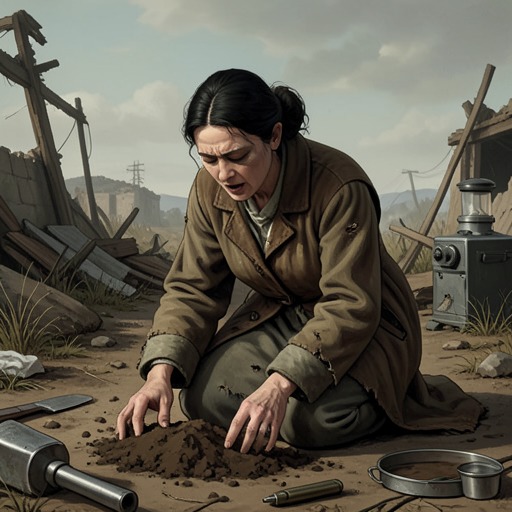
The cry is heard amid a sunroar and branching lightning that plunge among the mountains and fill the land of Rind with thunder. The speaker remembers screams and screeches—“Sombra! sombra!”—from people already blinded and afraid. They rush toward God in search of coolness, but the passage closes on the grim reversal that they do not know God too is in the fire. The word belongs to a moment when the ordinary hope that divine power might offer refuge has become inseparable from the danger itself.
The cry’s circumstances give it a physical urgency. Those who shout are not calmly describing darkness; they are blinded, frightened, and seeking coolness while the fire overwhelms the land. The poem places their appeal within a scene of sensory collapse: thunder, lightning, screams, and the loss of sight. Against that violence, the repeated word sounds like an attempt to summon the condition the disaster has taken away. Its repetition gives the cry a collective character, while the closing recognition—that God too is in the fire—denies any easy separation between the sufferers and the force surrounding them.
Light, Worship, and Vulnerability in Rind
A later passage places religious song and bodily vulnerability in the same landscape of light. A songstress whose eyes have gone dark rises at an altar and sings about the god of Light. She bears witness to how ill she lay in Rind, where she beheld light with her skin as her means of sight; the vision burned her. The account does not state that she repeats the exact cry Sombra! Sombra!, but its placement beside the poem’s remembered cries makes the scenes answer one another: the fire’s victims seek coolness, while the songstress’s encounter with light has itself become a source of injury.
The image then sharpens into an unsettling procession. Saintly-blind among a thousand candles, the songstress is wrapped in a fireproof cloak of kieselguhr and pushed off to the photophage’s wall, where she cries out after light for Rindish ground. The surrounding objects do not resolve the danger into safety. Candles multiply the light; the protective cloak marks the presence of fire as a threat; and the destination remains a wall associated with the photophage. Her longing for light is thus placed beside the earlier crowd’s desperate longing for shade. The contrast is not a simple opposition between faith and fear: both passages show people reaching toward what they need in a world where vision and refuge are compromised.
The Word Returns Through Memory
The poem explicitly links a later cry to the disaster in Xinombra. The speaker addresses a present audience with the appeal, “Oh, spare us this, I hear you crying now,” and then describes penitential shades whose cries are for sombra, like those of the people who shouted sombra in Xinombra. The comparison makes the earlier disaster audible again. The people in Xinombra are not presented in this excerpt through a new account of what happened; they enter as the remembered measure of a later cry.
That return changes the expression’s scale. In Rind, the cry belongs to people blinded and afraid in the fire; in the Xinombra comparison, it persists as a remembered collective utterance against which later suffering can be recognized. The passage’s movement from “I hear you crying now” to the earlier crowd links present distress with inherited catastrophe without claiming that the two scenes are identical. The word travels by echo: a later plea recalls the dead or endangered voices that once made it ring through Xinombra.
Repetition and Meaning
The expression gathers its meaning through contrasts that the poem keeps unresolved: light can be worshipped and can burn; God can be sought for coolness and be found in the fire; darkness can be a desired shelter even as blindness marks terror. The songstress’s scorched vision and the crowd’s search for shade make these contradictions bodily rather than abstract. In this context, Sombra! Sombra! is neither a detached symbol nor a complete explanation of either catastrophe. It is a fragment of speech attached to immediate need, preserved through repetition.
The poem’s handling of the cry also gives sound the work of memory. Screams and screeches register a disaster as it happens; later, the speaker hears a new cry and identifies its likeness to the voices from Xinombra. The word’s recurrence does not undo the earlier suffering or offer protection from the fire. Instead, it makes the old terror available within a later moment, so that a brief appeal for shade carries both the body’s need for relief and the persistence of a collective wound.