A light-year is a grave
Aniara“A light-year is a grave” is a phrase spoken at the close of a conclave, where it converts the scale of the travelers’ journey into an image of death. The surrounding scene gives the words their force: after twenty years of travel, a speaker links that duration to sixteen hours of light-path across the sea of the light-year grave. The phrase is repeated as the crowd’s response shifts from laughter to widespread weeping and, finally, silence.
The Phrase and Its Measure
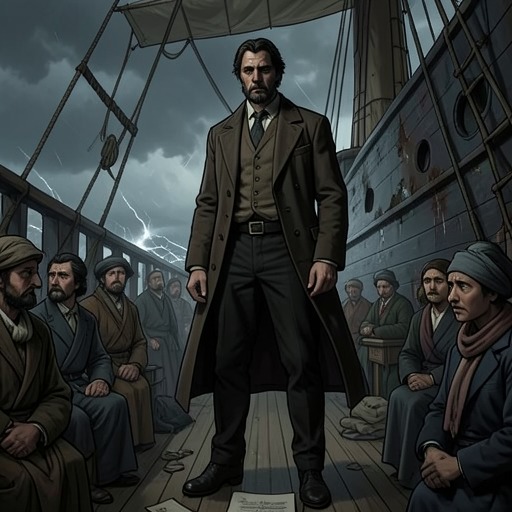
The statement arrives after the crowd has gathered at what the passage calls an “infinite precipice.” Many thousands are weeping, while several hundreds say, “This truly is Fate’s way:” The passage then marks a pause: many stand unspeaking before someone suddenly speaks the grave-image. The phrase is not presented as an explanation from an identified authority. It comes from an unspecified person, interrupting the collective response with a stark comparison.
The next lines supply the comparison’s measure. The travelers’ twenty years of journey are set against sixteen hours of light-path “on the sea of the light-year grave.” The juxtaposition makes the familiar human span of years seem small beside the light-year’s immense reach, while the word “grave” gives that cosmic distance a mortal meaning. The phrase therefore does more than name the scale of the voyage: it makes distance itself seem inseparable from death.
A Change in the Crowd
The words alter the scene’s emotional register. Immediately after the comparison, “none of us were laughing”; nearly all are weeping. The passage repeats the grave-image, this time as “A light year is a grave.” That return makes the line a refrain rather than a single startling remark. Its recurrence registers how the thought has passed from one speaker into the gathering, even though the text does not say that everyone speaks it aloud.
The movement is from a crowd that thrills at the precipice, through tears and a moment of silence, to grief that leaves laughter behind. The passage does not describe an argument or a practical decision prompted by the phrase. Its consequence is rendered in the crowd’s changed response: the measure of light and distance becomes a shared recognition of mortality.
The Conclave’s Ending
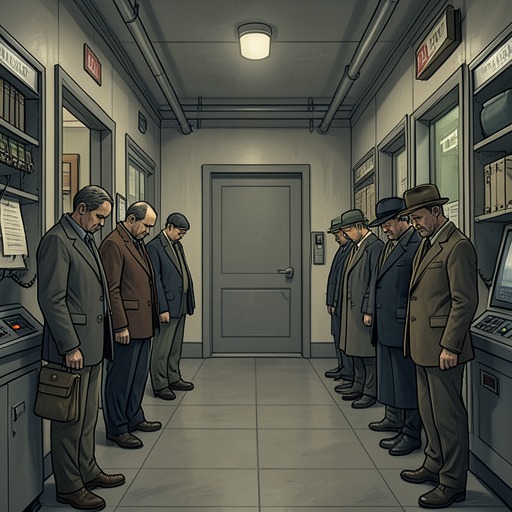
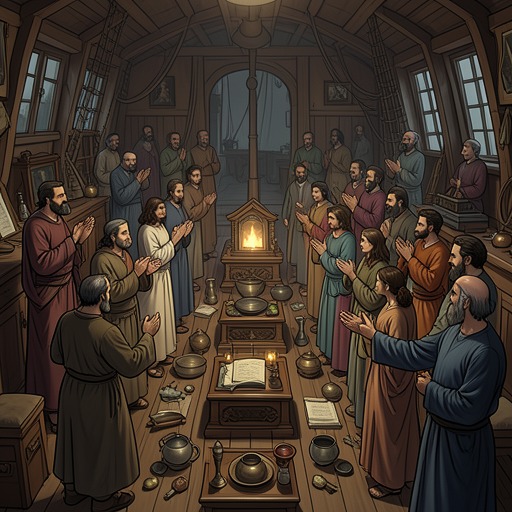
After the repeated phrase, the Goldondier-in-Chief flourishes his stave at the crowd, ending the conclave. Everyone then walks in silence. The gesture closes the gathering, but it does not dispel the image that has taken hold: the phrase occurs again just before the account of the silent departure. In this sequence, the conclusion is both formal and emotional. The conclave ends by gesture; the people leave carrying a sentence that has transformed a twenty-year journey into the prospect of a grave.