The Cast-Iron Song
AniaraThe Cast-Iron Song joins a ballad about a town destroyed in war to a refrain that imagines surviving the forces that consume life. Its defining image, cast-iron tempered with balm, holds together apparent opposites: hardness and soothing, exposure to catastrophe and the hope of remaining intact. The song matters both as a lyric of endurance and as something performed amid grief that its listener does not recognize.
Lyrics and Central Image
The song’s refrain begins, “Soon the time will come of cast-iron and balm,” and returns to the same words at the stanza’s close. Between those repetitions, its speaker imagines keeping intact while fire and cold consume the forms of life around a state of calm. The repeated future tense makes survival a promise deferred: the time is coming, but the lyric does not say that it has arrived. Its assurance therefore carries vulnerability alongside confidence.
Cast-iron suggests a material resistant to destruction, while balm suggests relief or care rather than further hardening. The pairing makes the song’s imagined invulnerability more complicated than simple toughness. The speaker does not envision becoming part of the destruction or mastering it; the forms of life around the speaker are consumed, while the speaker seeks to remain intact. The calm at the center of that image is set against a world made unstable by fire and cold.
The passage places the speaker’s search for incombustibility in relation to vacant space and Mima’s visions. That framing gives the refrain a context of imagined refuge, without establishing that such protection is achieved. Soon the people aboard seek Mima and cry aloud as at a wailing wall. Against that communal appeal, the song’s calm sounds less like a shared answer to grief than a lyric attempt to picture an individual self preserved amid surrounding loss.
Gond, War, and the Song’s Performance
The narrator identifies the song in a later scene as a ballad of cast-iron learned about Gond, a town that melted down in war. This association gives the image a concrete historical referent within the book: cast-iron is not only a metaphor for personal endurance, but part of a song learned in relation to a town’s destruction. The language of a town melting down also sharpens the refrain’s contrast between consuming forces and the wish to stay intact.
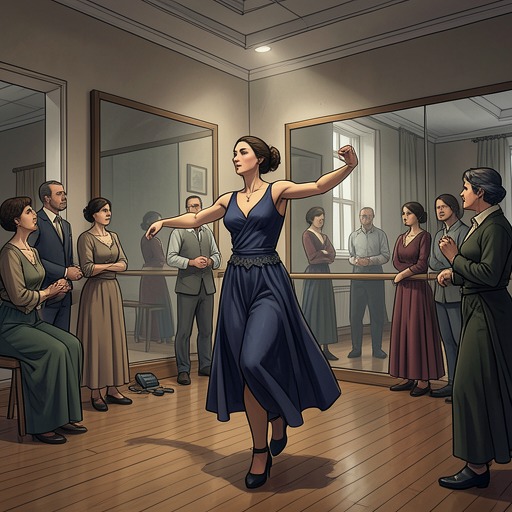
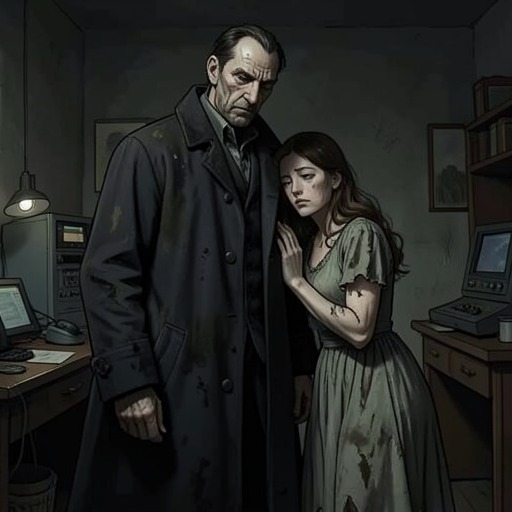
The song enters a scene with Daisy Doody, who urges the narrator to sing along. She is unaware that only some hours earlier she had been widowed of Dorisburg. The narrator takes up the ballad learned about Gond, so the performance brings the memory of one ruined town into the presence of a listener who does not know her own loss. The passage does not say that Daisy recognizes the song’s meaning or that it comforts her; its force comes instead from the disparity between her glad babbling and the bereavement of which she is unaware.
That disparity makes the act of singing more than a simple exchange of music. The narrator responds to Daisy’s invitation with a song tied to destruction, while Daisy remains unknowing. Gond and Dorisburg are not presented as the same loss, and the text does not claim that the ballad describes Dorisburg. Rather, the scene places a remembered catastrophe beside a fresh one, showing how a song about one destroyed place can be sung in the presence of another person’s unrecognized bereavement.
Repetition, Memory, and Contrast
Repetition gives the lyric its strongest formal effect. The opening promise returns unchanged after the image of fire and cold, making the refrain sound like an effort to hold the self steady against what the middle lines describe. Yet the repetition cannot reverse the destruction: the forms of life are still consumed, and the song offers an imagined condition of endurance, not evidence that catastrophe has been escaped. Its recurring words thus combine reassurance with an awareness of what threatens that reassurance.
The scene with Daisy further complicates the song’s promise. The lyric imagines a speaker who can keep intact while life around them is consumed; the prose episode, by contrast, shows a person unable to register the loss that has already overtaken her. The song’s assurance and Daisy’s unawareness are not the same kind of protection. Her ignorance does not restore Dorisburg, just as the refrain’s wish for durability does not undo Gond’s destruction. The juxtaposition lets the song’s language of calm remain poignant without turning it into a cure.
Songs recur elsewhere in the book: a passage under the heading “THE BLIND WOMAN” refers to Songs of Rind made up in the dark. The text does not identify those songs with The Cast-Iron Song. The distinction matters: the reference supports a broader recurrence of song-making, but the Cast-Iron ballad is specifically linked to Gond, war, and the later performance prompted by Daisy. Its significance lies in that particular movement between remembered public destruction and grief present in the room, with the refrain’s promise of endurance sounding against both.