The only world which we are given is this world in Mima
AniaraThe only world which we are given is this world in Mima names a recognition that arrives after the emigrants have been traveling for years: their former world is gone, and their voyage leads toward certain death. Mima, the machine that carries information from across the universe, becomes the remaining world available to them—not a place to return to, but a medium through which the lost world can still be encountered. The phrase’s force lies in holding those two conditions together: the passengers are exiled from Earth, yet the world has not become wholly inaccessible while Mima can still disclose it.
The moment of recognition
The phrase occurs in a sudden change of understanding. The speaker sees that everything has changed, and that the emigrants are realizing what once existed has passed away. Their realization is collective: the passage moves from the speaker’s perception to “all these people, all these emigrants.” The loss is not simply private grief for a home left behind; it is a shared recognition that the world sustaining their former lives can no longer be recovered.
The timing gives the statement its gravity. The journey has entered its sixth long year, and the speaker places the recognition beside the knowledge that the passengers voyage toward certain death through spaces without land or coasts. The phrase does not offer a new destination or promise rescue. It registers what remains after the familiar world has vanished, at the point when the scale and duration of the exile have become impossible to ignore.
Mima as a world-bearing medium
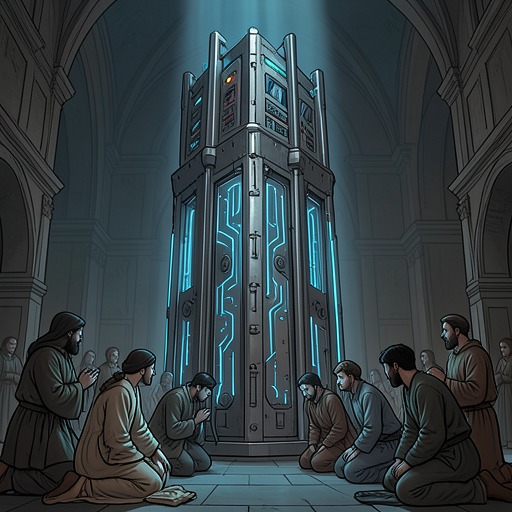
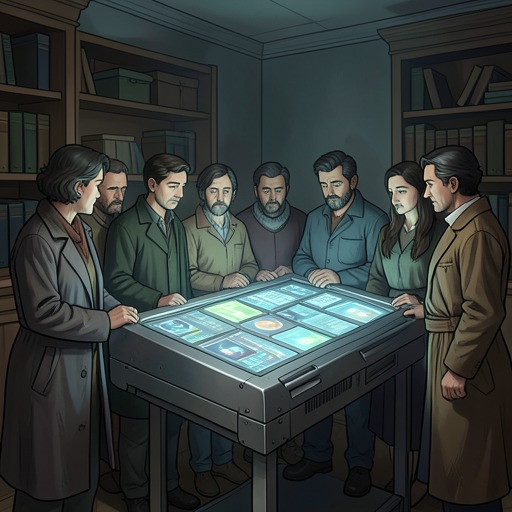
Mima is not merely a vehicle carrying the emigrants. It is a miraculous accessor and transmitter of information from across the universe, and the Mimarobe who tends it is also its confidant. The machine makes knowledge of the wider world available aboard the ship; the phrase gives that function an existential weight. For the emigrants, the world in Mima is what they have left when direct life in their former world has been severed.
That distinction matters: the phrase does not say that Mima restores Earth or reverses the catastrophe. It makes Mima the condition of continued access to a world, not a replacement planet. The machine’s importance rests both on what it transmits and on the passengers’ dependence upon that transmission. As the external world recedes, Mima holds together a relation to things beyond the ship, even though the passengers themselves continue their irreversible journey.
Exile and the machinery of evacuation
The statement belongs to a larger exodus prompted by radiation that has rendered much of Earth uninhabitable. The voyagers are supposed to be taken to labor camps on Mars or Venus until the planet can be detoxified, but the Aniara is knocked off course by an asteroid and its steering mechanism is irreparably damaged. The evacuation thus turns into permanent drifting: the intended camps are never reached, and Earth, described as Dorisvale and a “cosmic Zanzibar,” later explodes in the final nuclear war.
Other details of the evacuation give that exile an administrative texture. A woman fills in cards in the twilight of a concourse and instructs people to sign; elsewhere, fast talking calms disquiet while punch-cards are matched with souls identified by prior testing. One account measures transfers to Tundra Three in nine years and the evacuation of Gond in ten. Against these systems of registration, identification, and allocation, the phrase marks a different kind of accounting: the emigrants are beginning to comprehend not where they have been assigned, but what has already been lost. Mima offers access to a world while no administrative plan can restore their place in it.
Meaning and limits
The phrase makes knowledge both consolation and evidence of deprivation. Mima can present information from the universe, but that reach cannot return the passengers to the world they once inhabited. The emigrants’ recognition therefore does not cancel their isolation; it clarifies it. What survives is a mediated encounter, carried within the same ship that bears them farther from Earth and toward death.
Its emphasis on “the only world” also sharpens the difference between possession and access. The passengers cannot claim the wider cosmos as a home simply because Mima can transmit knowledge of it. Their remaining world is qualified by the words “in Mima”: it is available through the machine, not as land beneath their feet or a shore toward which they can steer. The line makes that limitation the expression’s central significance. In the face of planetary destruction and permanent exile, Mima preserves a relation to the world, but cannot make that world theirs again.