Haemon’s suicide
AntigoneHaemon’s suicide follows the discovery of Antigone dead inside her tomb and makes Creon’s attempt to save her end in a second loss. At the scene’s center, Haemon rejects his father’s appeal, faces him without speaking, and dies beside Antigone; the act brings their conflict into the tomb and leaves Creon confronting the consequences of his rule.
The Scene in the Tomb
After Creon orders the stones removed, an opening is made in the tomb. Antigone is found at its back, hanging from the cords of her sash, which are described as blue, green, and red. Haemon is on his knees, holding her and moaning with his face against her dress. The discovery places his grief and Antigone’s death before Creon can enter.
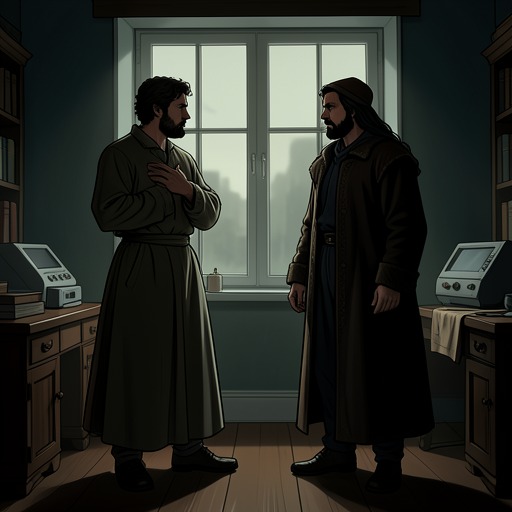
Creon tries to lift Haemon and pleads with him. Haemon does not respond to the appeal at first. He turns, looks silently at his father, and spits in his face before drawing his sword. Creon moves out of reach. The confrontation is brief and wordless: Haemon’s contempt is conveyed through his action and gaze, not through an argument.
Haemon’s Death and Creon’s Loss
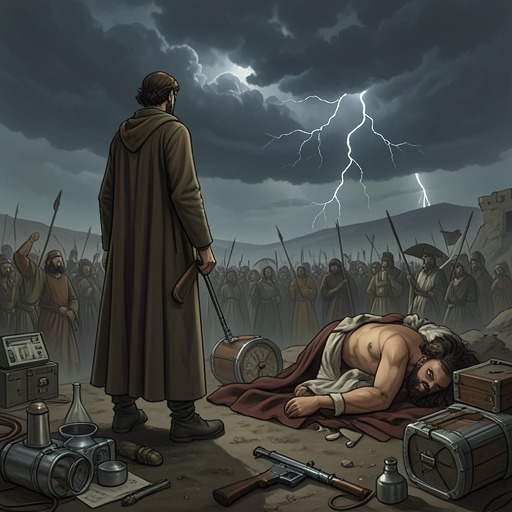
Haemon then looks at Creon, who is trembling at the other end of the cave, and plunges his sword into himself. He collapses against Antigone, embracing her. His death follows immediately upon the sight of her body and his rejection of Creon’s plea; the scene supplies no further explanation from Haemon himself.
Creon’s position changes within the same sequence. He enters the tomb as a king trying to intervene, but Haemon’s refusal leaves him unable to restore either Antigone or his son. Haemon’s suicide therefore turns the attempted rescue into a further consequence of the crisis Creon has tried to contain.
Family Conflict and Tragic Structure
The suicide is also the culmination of an earlier conflict over whether Antigone will yield. She has insisted that the choice to refuse belongs to her alone, while Creon argues that someone must say yes and take responsibility for steering a ship threatened by disorder. Their opposed positions leave little room for compromise: Antigone treats refusal as a choice she can still make, and Creon presents rule as an obligation that demands action despite its costs.
Against that earlier debate, Haemon’s silent response in the tomb gives the family conflict its final form. His refusal to answer Creon is followed by a direct confrontation and then by his death beside Antigone. The ending makes Creon’s plea powerless at the moment it matters most, and connects his effort to preserve authority with the personal losses that follow.