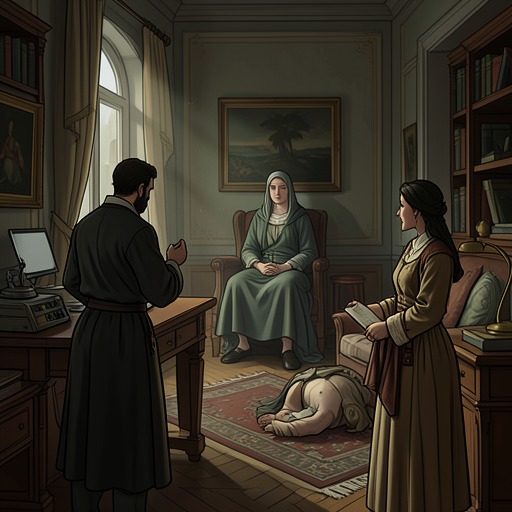
Eurydice’s suicide
AntigoneEurydice’s suicide is the quiet, deliberate aftermath of her son Haemon’s death. Reported by the Chorus to Creon, it unfolds not in public but in the Queen’s familiar room: she finishes a row of knitting, puts down her needles, and cuts her throat. Its calm domestic details sharpen the catastrophe, while the Chorus links the royal deaths to the hardship awaiting the poor of Thebes.
The News and Her Last Actions
The Chorus addresses Creon with a warning that the poor in Thebes will be cold that winter, then recounts what Eurydice did after hearing that her son had died. She finished the row of knitting already in her hands before putting down her needles. The sequence is precise and unhurried: the news does not interrupt the ordinary task so much as bring it to its last small completion.
Eurydice then returned to her room, described as lavender-scented and furnished with cushions and embroidered lace. The Chorus says she cut her throat there. No motive beyond her response to her son’s death is supplied; the report makes the relation between the news and her action plain without inventing an explanation for it.
The Room and the Image of Death
The Chorus locates Eurydice on one of two old-fashioned twin beds, in the very place where Creon had seen her as a young girl one night long ago. Her face bears the same smile, though perhaps a little sadder. The room and remembered image bring her earlier life into the scene, making the Queen’s death seem at once intimate and irrevocable.
The description holds still on the contrast between apparent sleep and unmistakable violence. Without the large red stain on the sheets around her throat, the Chorus says, she might seem to be sleeping. The familiar bed, the composed face, and the visible blood make the scene’s quietness impossible to mistake for peace.
Consequences and Dramatic Significance
Eurydice’s death follows Haemon’s and extends the family tragedy into Creon’s household. The Chorus delivers the news directly to Creon, while its opening reference to the cold that awaits Thebes’s poor places the ruler’s private loss beside the wider consequences of the crisis. The account does not elaborate on Eurydice’s intentions; instead, its ordered gestures and domestic objects give the audience the facts of her final act.
The episode’s restraint is part of its force. Knitting is finished, needles are set down carefully, and the Queen returns to a room associated with her youth; only then does the report name the cut throat and the stain on the sheets. This movement from commonplace routine to death makes the final consequence both stark and measured.