Charlie’s drowning
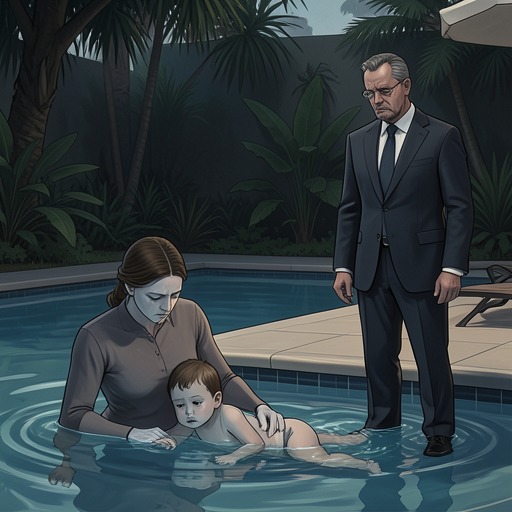
AsylumCharlie Raphael’s drowning is the defining loss in Stella Raphael’s life and the event around which her later guilt takes shape. She stood by and watched her ten-year-old son drown; the novel does not reconstruct the mechanics of the drowning, but returns to it through Stella’s memories, dreams, and the clinical interpretations made by Peter Cleave.
Background and Event
Charlie was the ten-year-old son of Stella and Max Raphael. After his death, Stella was admitted to the psychiatric hospital. Peter later described her as having stood by while her child drowned, making the absence of rescue—not simply the loss itself—the central fact that she had to live with.
Peter regarded the pathology surrounding Charlie’s death as comparatively straightforward. He understood it as an extended suicide: in his account, Stella had wanted to remove the child from a situation she found intolerable, while also projecting onto Charlie the intense hostility she felt toward his father. He called this a classic Medea complex. These are Peter’s clinical explanations of Stella’s actions, not a scene-by-scene account of what happened at the water.
The Drowning’s Return in Memory
Charlie’s death returns in a recurring dream that Stella eventually describes to Peter. She tries to defend herself from the memory, but Charlie comes through those defenses. In the dream, he looks back at her with the serious expression and little frown she remembers, and says, “Mummy, can’t you see I’m drowning?” The question makes the past recur as an accusation: Charlie is dead, yet in Stella’s dream he is still calling for the help she did not give.
The dream’s distress extends into the ordinary morning routine of the ward. Stella tells Peter that its first hours are hardest, when she must wash, dress, and walk to the dining room with the other women while maintaining an outward poise. The child’s voice remains with her even as she tries to resume the day. She dreads sleep as a descent toward horror, and the dream’s aftereffect lengthens into the morning.
Stella’s account also has a rhythm of concealment. Peter sees her only after lunch, by which time the voice has faded and she is more composed; she then plays down the distress, while allowing him to recognize that she is doing so. The timing matters: her calmer presentation does not mean the dream has stopped or that its pain has passed. It means that by the time she speaks with him, its most acute hold has eased.
Clinical Meaning and Aftermath
For Peter, helping Stella recover from Charlie’s death would require guiding her through intense guilt, acceptance of the trauma, and its eventual integration into memory and identity. He distinguishes this work from the more unusual clinical problem he sees in her fixation on Edgar Stark. Yet the drowning is not contained by that clinical distinction: Peter interprets Stella’s vision of the child in the water as Edgar, not Charlie or Max, showing how her attachment to Edgar has become entangled with the trauma of her son’s death.
The dream gives the loss a recurring voice, but it offers no reversal: Charlie cannot be brought back, and Stella remains alone with the knowledge of what happened. Peter tells her he cannot restore her son but can try to relieve her suffering. Later, Stella dies by a fatal overdose in the hospital. The narrative places that death within the broader course of her suffering, without reducing it to a single consequence of Charlie’s drowning.