Stella is remanded and admitted to hospital after Charlie’s death
AsylumStella is remanded and admitted to hospital after Charlie’s death marks the conversion of a family tragedy into a criminal and psychiatric case. After Charlie Raphael drowns, witnesses interpret Stella Raphael’s failure to call for help as evidence of unnatural indifference; she is remanded on a manslaughter charge. Peter Cleave intervenes to bring her to the hospital where she had once lived, offering treatment that she accepts. Her return is both a practical act of care and an exercise of institutional power: she enters in police custody, through the female wing rather than the Main Gate, and is immediately subject to the hospital’s routines and classifications.
The drowning and the public accusation
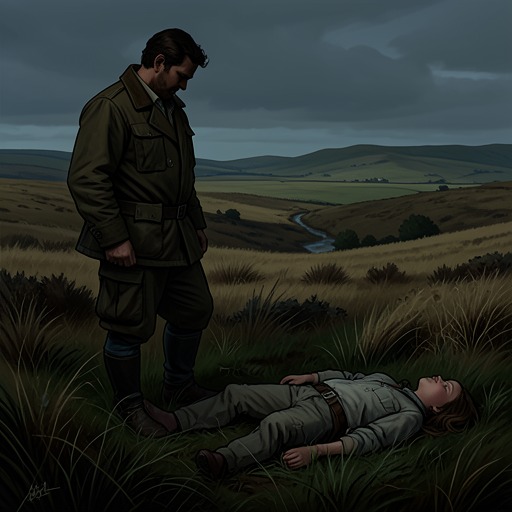
During a family outing, Stella follows Charlie away from the picnic party to a pool below a hill. She sits some distance back while he explores the shallows. As a dissociative episode overtakes her, she experiences the landscape as distorted and distant. Charlie loses his balance and struggles in deeper water; she watches, repeatedly turning away to smoke. When Hugh Griffin comes over the hill, Charlie is in the water and Stella has made no sound or moved to help him.
The account of what might have happened next is contested. Hugh insists that an alarm from Stella might have saved Charlie, but this claim is later disputed because of the distance between the hilltop and the water. The public response, however, turns less on that question than on her stillness. Once people understand that she watched her child drown without calling out, sympathy gives way to horror. She is recast as a mother who did nothing, and the available explanations narrow to monstrosity or madness. In the police station, when asked why she did not shout, she has no answer.
In the days that follow, Stella is repeatedly questioned and remains numb, empty, and detached from the woman being moved from room to room. The narration presents this detachment as an experience of separation from herself: she watches her ordeal from within a psychic refuge and, seemingly, from a point above and beside her body. The inability to give the explanation others demand is therefore not resolved by interrogation. It becomes part of the crisis that makes psychiatric treatment seem necessary to Cleave, even as the charge of manslaughter keeps the event within the law’s reach.
From remand to treatment
Cleave tells Stella that she is going to a hospital because she has been ill and he wants to treat her. He asks whether she wants him to do so; she answers affirmatively and identifies the hospital he means. He then tells her that she will come there and that he will look after her. His decision is not presented as a neutral referral. He believes himself best qualified to treat her and acknowledges that bringing her back under these circumstances could seem unorthodox or dangerous, but he has the position to make it happen.
The decision also places the doctor and patient in a complicated relationship. Cleave warns Stella that Max Raphael will visit. She pleads not to be made to go through with the meeting, but Cleave insists, telling her to trust him and presenting the visit as being for Max as well as for her. His intervention is thus protective in intention but directive in practice: Stella agrees to treatment, yet does not control every condition of her return or the encounters that follow.
The day after their conversation, Stella is driven to the hospital in a police car. She passes her former home and enters not through the Main Gate but through the gate of the female wing. At the admissions room behind the front office, police hand her paperwork to Cleave. He conducts a brief formal interview, then accompanies her with Mary Flynn, a young female attendant, to the admissions ward. Stella brings three suitcases, saying that she needs only a few essentials; Cleave notices that she has packed most of her evening clothes, including Stella’s black silk evening dress.
Admission makes the change in her status tangible. In a communal bathroom, Stella undresses, is bathed in a cubicle, and receives a thorough physical examination. She is given a cotton shift and escorted to a room with a barred window, a toilet, and a basin; the door has a barred grate. The sequence carries her from police custody into hospital confinement through a formal chain of handover, interview, examination, and placement. Her return to familiar grounds is not a homecoming: she crosses a different gate and is assigned a room whose fixtures make confinement visible.
Clinical explanation and institutional life
Cleave frames the drowning through two clinical interpretations that he distinguishes in emphasis. He describes the circumstances of Charlie’s death as comparatively straightforward within the literature on maternal filicide, which he says often understands such acts as an extended suicide. In Stella’s case, he adds his own interpretation: hostility toward Charlie’s father was projected onto the child, a pattern he calls a Medea complex. These are Cleave’s explanatory claims, not an account Stella herself can give at admission. He considers her relationship with Edgar Stark more clinically intriguing and believes that, at the moment of crisis, what she saw in the water was Edgar rather than Charlie or Max.
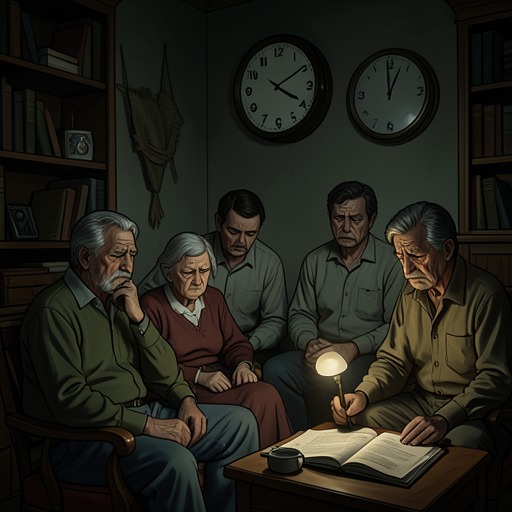
That interpretation helps explain why Cleave wants to treat her, but it also reveals the limits and authority of his perspective. He regards recovery as guidance through an intense period of suffering and guilt, followed by acceptance and integration of the trauma into memory and identity. He anticipates that Stella will resist him and relishes the prospect of removing her defenses. The patient’s silence and distress are therefore read through a psychiatrist’s framework, while the legal process has already assigned the event a different frame: a child is dead, and Stella is under remand for manslaughter.
The female wing is not merely a destination but a regulated environment with its own gradations of freedom. Its two blocks have enclosed yards with flower beds, lawns, and benches; patients with parole privileges may walk among the gardens and down the terrace steps, while an internal wall separates the women from the men. Stella initially enters the admissions ward, where the rules and restrictions are more immediate. Later, after she learns to sustain a composed manner, she is moved downstairs. From the patient’s perspective, the distinction rewards the appearance of accepting confinement without visible distress; in Cleave’s account, the self-control needed to do this is also a first step toward recovery. Downstairs brings greater privacy and freedom of movement, and patients may wear their own clothes. Stella’s transfer thus changes not only her surroundings but also the kind of conduct the institution recognizes as improvement.
Consequences and delayed grief
The admission does not settle what Stella’s silence means. Cleave predicts that the shock will wear off and guilt will follow, potentially so intensely that she may attempt suicide. During a later hospital meeting, Max tells her that he expects her eventually to come to terms with what she has done, and she attacks him, throwing her lighter and trying to reach his face. The episode shows that placement in treatment does not immediately bring calm or reconciliation; the hospital contains conflict as well as care.
As her conduct becomes more controlled, Stella reports headaches after terrifying dreams. She wakes in panic with images that soon vanish, but a sound remains: screaming. She tries to dismiss the dreams and asks only for aspirin. Cleave interprets the screaming as the first return of guilt and specifically as the voice of a drowning child. He believes that she has begun to let go of Edgar and confront Charlie’s death. This is his clinical reading of a delayed and fragmentary experience, not an explanation Stella initially articulates herself.
The event consequently establishes a lasting tension between public judgment, legal responsibility, and psychiatric interpretation. The community’s account fixes on a mother’s apparent failure to act; the police remand her; Cleave treats her as ill and seeks to guide her through trauma. The hospital offers structured care while also imposing observation, confinement, and behavioral tests. Stella’s admission begins no simple passage from guilt to recovery: it places her inside a system that must interpret her silence, while the grief that cannot yet be spoken returns later in dreams and screams.