Stella dies by suicide by overdose
AsylumStella Raphael’s suicide by sedative overdose is the final reversal in the hospital narrative: what Peter Cleave had interpreted as recovery, grief, and a new future with him proves to have concealed Stella’s continuing devotion to Edgar Stark. The black silk dress she wears to the hospital ball becomes the clue that exposes Peter’s misreading, but recognition comes only after she has taken a fatal dose.
Immediate Setting and Warning
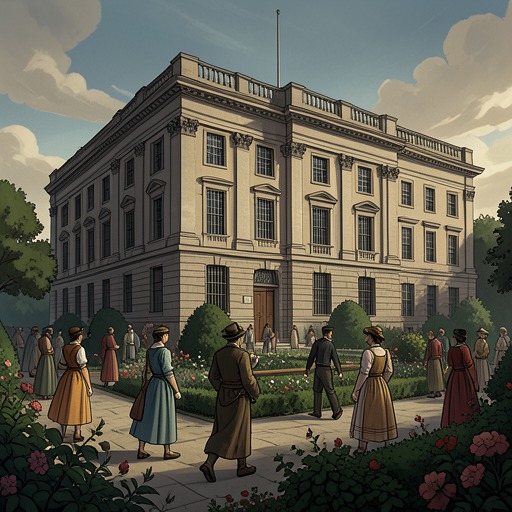
The event follows the hospital ball, where Stella sits out the final dance and returns with the other women to the female wing. After the lights are turned out and the ward falls quiet, she gets out of bed, runs cold water into the basin, and reaches into her cupboard. The narration initially withholds what she is doing. At the same time, Peter is in his office, still unsettled by seeing her at the dance in the black silk evening dress she wore on the night Edgar took her in his arms.
That dress links the ball to the beginning of Stella and Edgar’s sexual relationship. Peter had taken her appearance for a gesture of pride or defiance directed at the hospital community. Looking again, he understands it as a private act of address to Edgar: in his interpretation, it was the dress she had worn on the night she became wedded to him. Its significance is not simply that Stella remembers the affair. It overturns the reassuring meaning Peter had assigned to her recent conduct.
Recognition and Misjudgment
Peter’s realization gathers several earlier signs into a different pattern. Stella’s engagement to him, which he had treated as a real prospect for her future, was instead a masquerade concealing her passionate attachment to Edgar. He also revises his interpretation of her troubled sleep. He had believed that the indistinct screaming in her dreams was the voice of Charlie, and that it marked the beginning of her facing her guilt over her son’s drowning. Now he suspects that the dreams and their screaming concern Edgar instead. What had looked to Peter like the painful but promising return of feeling may have been bound up with her continuing hope of being reunited with her lover.
That hope had, Peter thinks, been stirred when he raised the possibility that Edgar might be at the hospital, then said the possibility was hypothetical. He imagines that the first suggestion had been enough to keep hope alive, even after he withdrew it. Seeing the black dress, he fears that Stella had worn it for Edgar and that his failure to appear might make life intolerable to her. These are Peter’s conclusions, not an account of Stella explaining her decision. The scene makes the limit of his certainty part of the event: he understands the signs only after she has acted, and his own feelings have already clouded his judgment.
The Overdose and Death
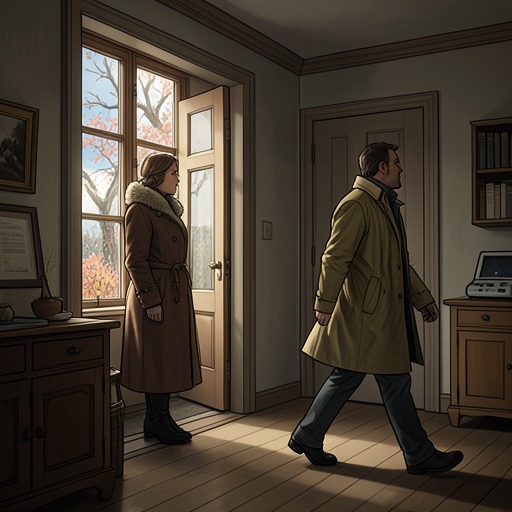
Alarmed, Peter caps his pen, telephones the female wing, and asks the attendant on duty to check Stella’s room. The attendant finds her in bed, apparently asleep and breathing deeply. The brief reassurance does not settle Peter’s unease. He reviews the preceding weeks and recognizes how his personal hopes may have shaped his view of Stella’s recovery and of her engagement to him. He then hurries across the terrace towards the female wing.
The staff spend the long hours of the night trying to save Stella, but she has taken a fatal dose of sedatives. Her familiarity with psychiatrists, Peter observes, has enabled her to judge the dose with precision. She does not regain consciousness and dies shortly before dawn. The account gives no final explanation from Stella herself; instead, it sets the measured preparation in her room against the urgency of the rescue and the belatedness of Peter’s recognition.
After her death, Peter describes her face as changing as she relaxes, her beauty becoming more remarkable and recalling her earlier appearance. He connects that change to the end of her efforts at deception and repression. The image is both intimate and troubling: even at the moment of death, the narrative presents Stella through Peter’s gaze, the same gaze whose interpretations had mistaken performance for recovery.
Burial and Consequences
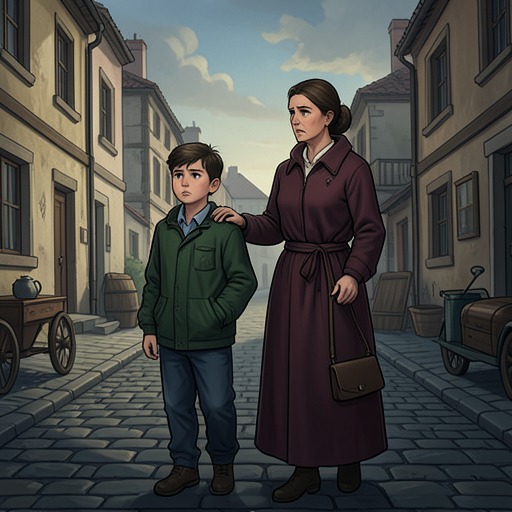
Stella is buried three days later in the hospital cemetery, outside the Wall behind the female wing. The service, conducted by the chaplain, draws few mourners beyond the staff. Max Raphael attends, thin and stooped, supported by his mother, Brenda. Peter receives them in his office afterward. Brenda expresses hope that Stella is at peace; Max gives no sign of recognizing the poignancy of being there, and he has not told his mother of Peter and Stella’s marriage plans.
The death does not resolve the story of Edgar. Peter has not told him that Stella is dead, because he wants first to hear Edgar’s side of events. Edgar remains in the Refractory Block, hostile and uncooperative. Max also continues to suspect that Stella knowingly helped Edgar escape by giving him Max’s clothes, rather than being deceived or acting on impulse. The unresolved suspicion leaves Stella’s actions open to dispute even after her death.
The suicide therefore closes Stella’s personal trajectory without supplying a single, authoritative account of her motives. It also exposes the danger in Peter’s confidence that he could read her recovery: her controlled appearance in the downstairs ward and her engagement seemed to promise a life beyond the hospital, while the dress, the hope attached to Edgar, and the overdose reveal how much remained unseen. Peter’s late recognition is not a cure or a rescue. It is the final consequence of having mistaken the story Stella presented for the whole of her experience.