Tower of Babel occupied and strike
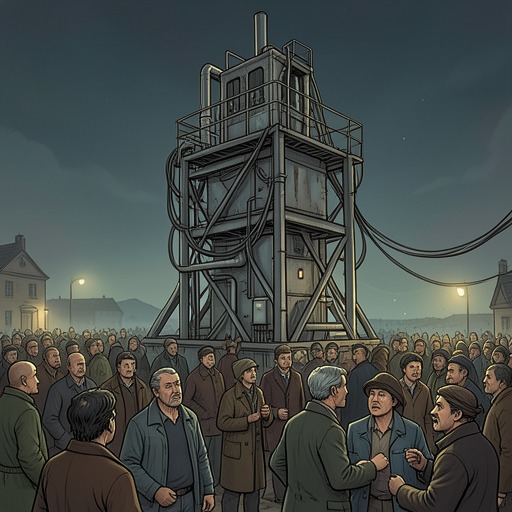
BabelThe Occupation of Babel and the Babel strike mark the decisive transition from secret dissent to public political action. By taking the Royal Institute of Translation and refusing to maintain its silver-working system, Robin Swift and Victoire Desgraves turn the institution’s own infrastructure against the British Empire: a tower built to concentrate power becomes the headquarters of a strike capable of disrupting transport, communications, industry, and the projected invasion of China.
Causes and Political Background
The immediate cause is the British government’s movement toward war after Lin Zexu’s destruction of the opium shipment. Griffin Harley Lovell explains that the House of Lords is debating a military expedition and that victory would give the British Empire access to China’s immense silver reserves, strengthening its warships, artillery, and wider imperial ambitions. The House of Commons has not yet voted, and the antiwar faction includes Sir James Graham, Viscount Mahon, and William Gladstone, whose personal hatred of opium gives the resistance a possible parliamentary ally.
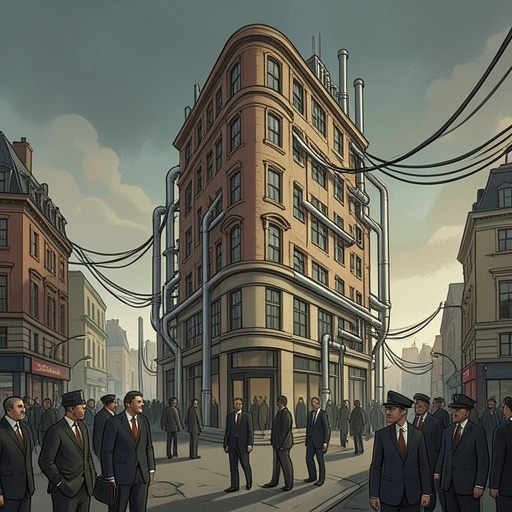
The students understand that Babel’s silver-working is not a neutral academic achievement. London’s mechanical modernity depends on silver: it powers carriages, industrial machinery, breweries, flour mills, locomotives, water systems, and agricultural equipment. The same system that makes the capital faster and richer also makes it dependent on a centralized technical workforce. Babel is therefore both the intellectual centre of a national network and a vulnerable political choke point. Its rods sustain linked bars throughout England, while peripheral installations draw power from the tower in a structure Robin compares to British outposts calling upon the imperial centre for soldiers and supplies.
The proposed strike also grows from a broader critique of imperial extraction. Anthony Ribben argues that resistance cannot rely on justice or human dignity alone, because men who profit from exploitation will listen only to profit. He proposes a coalition joining unlikely sympathizers across racial and class divisions: poor families in Canton, enslaved laborers whose cotton feeds British factories, and unemployed or impoverished workers in Britain are all harmed by the silver industrial revolution, even though the damage is deliberately fragmented so that no single community initially appears powerful enough to challenge the Empire.
The Seizure of the Tower
The conspirators choose the first day of term, when the weather is unusually inviting, the university is occupied indoors, and Babel is closed for reshelving and renovations. The empty lobby means that civilians will not be caught in the crossfire. Robin and Victoire enter after the police have crossed the green, slipping through the tower door behind a group of scholars and passing the threshold without triggering alarms or defensive wards.
The occupation begins with an attempt to command attention. Robin calls for the crowd to listen, but the busy tower ignores him until Victoire takes the ceremonial bell used by Professor Jerome Playfair to announce examination results and shakes it three times. Once the lobby falls silent, Robin declares that the tower is being shut down. He explains that Babel uses the languages of other countries to enrich Britain while extracting knowledge that does not belong to it, and he presents closure as an ethical refusal of that process.
Robin then announces the strike: no clients will enter the lobby, and no one will create, sell, or maintain silver bars. The students will deny Britain translation services until the government capitulates. Professor Playfair objects that the rebels would first need to subdue the scholars inside, but the takeover proves easier than Robin and Victoire expect. They had imagined a violent last stand and had prepared themselves for sacrifice; instead, the tower falls into their hands with surprising ease, leaving them to behave as victors before they have fully understood their victory.
Lockdown and Public Declaration
Robin orders that nothing leave Babel. The silver-working tools are placed under lockdown, routine maintenance is halted, and the occupants wait for the national machine to stop before they do. The plan depends on asymmetry: the strikers are few, but Britain needs their specialized labor. Victoire insists that the authorities cannot simply touch them because the country depends on the Institute too deeply.
The occupation is made visible through ceremony as well as practical control. The blood vials of all but eight scholars who remain in the tower are smashed against the front steps, soaked in oil from unused lamps, and set alight. The destruction is not technically necessary; removing the vials would have been enough. It is instead a theatrical warning, presenting Babel as a castle that has been stormed and its ruling magician expelled. The rebels have learned from Playfair that power is partly a matter of performance.
They prepare one hundred pamphlets by hand because Babel has no printing press. Their declaration demands that Britain cease considering an unlawful war against China and announces the suspension of all translation and silver-working services until that demand is met. Robin reflects on the word “strike” as a form of action through nonaction: refusing to accommodate the system becomes a way of demonstrating the devastating consequences of dependence.
Infrastructure Failure and Wider Alliance
The strike’s effects become apparent with startling speed. Babel’s bars have been designed to last only a few weeks rather than months, because frequent maintenance creates revenue and artificial demand. Once the central scholars stop servicing them, the network begins to fail. By the morning of the third day, transportation is breaking down. Speed-based match-pairs that allow carriages to travel quickly and safely cease to function, while drivers accustomed to relying on the bars fail to compensate. Accidents multiply, Oxford’s roads fill with overturned wagons and cabs, and a family of eight in the Cotswolds tumbles into a ravine when a driver misjudges a difficult turn.
The postal system also collapses. Royal Mail carriages have used the French-English match-pair parcelle-parcel to make heavy loads seem lighter than they are; once the silver-working fails, horses strain beneath roughly three times their accustomed burden and postal vehicles collapse mid-route. These failures reveal that modern convenience has been built upon concealed linguistic labor. The ordinary user experiences only speed, lightness, safety, or regular service, while Babel’s workers carry responsibility for the hidden conditions that make those effects possible.
The consequences extend beyond Oxford. A hundred miles away, white British factory workers crowd Westminster Hall to protest a war in a country many have never visited. Their action links the Babel strike to earlier antisilver revolts, including the Rebecca Riots in Wales, the Bull Ring Riots in Birmingham, and Chartist uprisings in Sheffield and Bradford. What had been represented as isolated unrest now appears as a connected response to the same system of coercion and exploitation. The unlikely coalition Anthony imagined begins to take material shape.
Military Response and Significance
The British Army eventually marches into Oxford. Red-coated troops arrive along High Street in a single column, but their military appearance is oddly weakened by the polite town setting and the townspeople’s reaction, which makes the deployment resemble a parade rather than a punitive occupation. The soldiers halt at the barricades, where their commander confronts an obstruction that the authorities seem not to have anticipated: the state can send troops, but force alone cannot immediately restore the specialized labor Babel has withheld.
Inside the tower, the strikers work to make London understand the cost of prolonging the stoppage. Silver powers the capital’s ice-making machines, brewery engines, flour mills, locomotives, and textile machinery; without it, water becomes foul, air thickens with grime, rail construction stops, and the systems of spinning, weaving, carding, and roving grind to a halt. The countryside is implicated as well, because plough-frames, seed drills, threshing machines, and drainage pipes depend on the same material network. Regional silver-working centres in London, Liverpool, Edinburgh, and Birmingham provide only a temporary buffer, especially because they lack Babel’s maintenance ledgers.
The event’s central reversal is therefore political as much as technological. Babel was designed to serve imperial expansion by concentrating knowledge, language, and power at its centre. Its occupation demonstrates that the centre is also dependent on the people who operate it. A strike that begins with two students entering an apparently ordinary lobby becomes a national crisis because imperial modernity has converted translation and maintenance into indispensable infrastructure. The tower’s seizure does not merely interrupt a service; it exposes the material dependence concealed beneath Britain’s claims to industrial progress and turns that dependence into leverage against war, empire, and the unequal distribution of silver’s benefits.