Ava disrupts Kelly’s memorial assembly
BeautifulAva Spirini disrupts MacGreggor State College’s memorial assembly for Kelly Waititi by challenging the language and symbols the school has chosen to remember her. The outburst turns a ceremony meant to express communal remembrance into a public dispute over what remembrance leaves unsaid: the fact of Kelly’s death, her name, and the difference between the school’s tribute and the person Ava knew.
The ceremony and its omissions
Mrs Bryan presents the newly planted tree as a reminder that the school community should support one another when a member suffers a setback. The language frames loss as a fall from which a community can help someone recover. Ava interrupts that framing with the insistence that Kelly did not merely suffer a setback: she died. Her intervention is not an objection to remembrance itself, but to a form of remembrance that seems to blur death into a more manageable story of communal care.
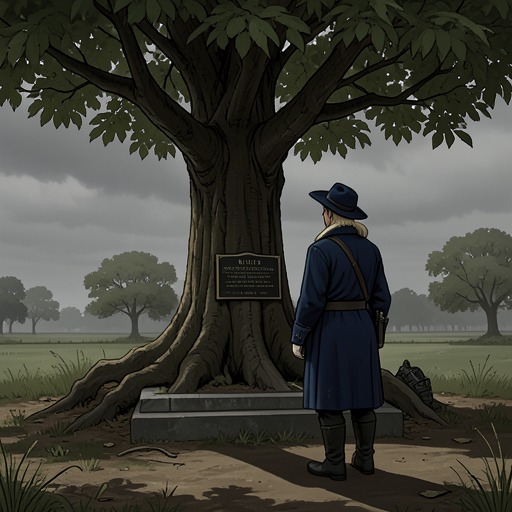
The tree, plaque, and concrete setting give the ceremony visible markers of respect, but those objects do not settle what the school is willing to say. Ava objects that Kelly hated nature, making the tree feel less like a personal tribute than a symbol selected without regard for Kelly’s particular tastes. The ceremony’s physical memorial is therefore also the focus of Ava’s challenge: its presence cannot compensate for the absence of a specific account of the person being commemorated.
Ava’s demand that the school say Kelly’s name sharpens the difference between public tribute and personal recognition. The assembly is speaking about Kelly while, in Ava’s view, withholding the simplest sign that it is speaking about her. Her protest makes naming an action with consequences: it refuses to let an abstract community message replace acknowledgment of the individual whose death occasioned the gathering.
Ava’s intervention
The outburst breaks the restraint Ava had hoped to maintain since returning to school. She had tried to blend in, even writing a reminder to keep a low profile on her hand, while other students stared, whispered, and pointed. Against that intention, the assembly becomes the moment she can no longer stay quiet. The contrast makes the disruption more than a spontaneous refusal of the ceremony: it exposes how fragile her effort to appear unobtrusive has been under the pressure of being watched and of hearing Kelly’s death described indirectly.
Ava speaks first to Mrs Bryan and then addresses the auditorium. She challenges the tree, insists on the reality of the death, and asks that Kelly be named. Her criticism then turns to the choir’s choice of The Climb, a Miley Cyrus song, for the memorial. Ava regards the performance as deeply inappropriate because the song’s image of climbing a mountain does not fit Kelly as she remembers her. The school’s intended tribute and Ava’s response thus use the same occasion for opposing purposes: one offers a broadly uplifting memorial, while the other refuses uplift that seems to erase the dead girl’s individuality.
The assembly’s rupture
The audience’s attention makes the protest public in a way Ava cannot control. Around seven hundred students turn toward her; whispers and laughter spread as Mrs Bryan tries to calm the room. After reaching the aisle, Ava pauses amid the staring students, laughs, and continues rather than returning to her seat. Her laughter and the crowd’s response leave the gathering unstable: the ceremony is no longer proceeding as a solemn, managed act of remembrance, but as a scene in which its assumptions are being challenged in front of the school.
Ava ends the confrontation by making a two-handed obscene gesture toward Mrs Bryan, turning away, and leaving through the auditorium’s double doors. The exit gives the disruption a clear physical conclusion. She does not remain to negotiate the school’s memorial or reconcile her account with its official presentation; she walks out, leaving the assembly behind her. The departure follows her public insistence on naming what the ceremony has softened, and carries that refusal beyond the speech itself.
Significance
The scene sets institutional memorial against personal grief without making the disagreement a simple choice between remembering and forgetting. Mrs Bryan invokes community and support; Ava insists that such language is insufficient when it avoids saying plainly that Kelly is dead. The tree and song are not neutral details in this conflict. They embody a public account of Kelly that Ava finds inaccurate, and their conspicuous place in the ceremony gives her objections concrete targets.
The disruption also joins Ava’s grief to the social experience of returning to school. She has tried to become less noticeable, but the assembly places her before hundreds of students at precisely the point where the tribute’s omissions become unbearable to her. Her protest draws attention even as it expresses anger at how Kelly is being represented. The scene’s force lies in that contradiction: Ava wants the school to recognize Kelly rather than reduce her to a general lesson, yet speaking up makes Ava herself the center of the room. Her exit ends the immediate confrontation, but the assembly has already been transformed from an orderly memorial into a challenge over who gets to say what Kelly’s life and death mean.