Gideon gives up his phone and internet
BeautifulGideon gives up his phone and internet as part of a broader, twelve-week break from electronic devices, prompted by painful memories and a wish to test whether changing his habits might help him feel better. The choice is neither a cure nor a confident declaration of independence: it begins as a cautious experiment, and Gideon admits that its results are still unclear. Its significance lies in that uncertainty, and in his emerging effort to make choices with his own happiness in mind.
Origin and Purpose
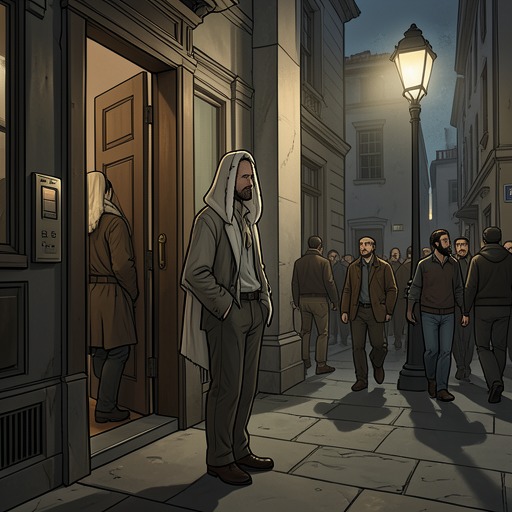
The break follows an apparently minor incident: a photograph from the sports carnival shows four people in Gideon’s grade hugging and smiling, while he appears small and pixelated as he walks across the oval in the background. Someone comments, “Whose that kid?” Gideon says the comment itself was not the real injury. Instead, it acts as a skipped stone over a pool of painful memories, bringing back how he used to feel and the circumstances that led to his family moving. To avoid feeling that way again, he gets rid of his devices.
The decision is deliberately framed as a trial. Six weeks before the moment when he considers what to do next, Gideon had told himself he would go twelve weeks without any device, simply to see what happened. The scope is larger than stepping away from a social-media account: he gives up his phone, laptop, and game consoles, as well as internet access. He says he barely used his phone in the first place, connecting that non-use to having very few friends; the only friends he names are Norma and Andy. The device break therefore begins against a backdrop of social isolation, not from a life of constant online activity.
A Cautious Experiment
Gideon’s plan does not remain a fixed rule without an end point. As he approaches the question of what comes next, he considers small, safe risks discussed with Robbie: handing out résumés to local shops, entering more poetry competitions, and talking to new people. He also considers reconnecting his electronic devices. These possibilities place the device break among a larger set of modest experiments in participation and change. Reconnecting is only something he contemplates; the account does not establish that he does so.
At a conversation with Ava, Gideon confirms that he does not have internet either. When Ava suggests adding him, his lack of access becomes a shared practical obstacle rather than a point of connection through a screen. Asked how life is without devices, he explains that he wanted to see what it was like; when pressed for a verdict, he answers, “I’m still deciding.” His reply preserves the experiment’s open status. The break has lasted long enough to become a real change in his routine, but not long enough—or not clearly enough—to supply a simple answer.
What the Break Reveals
In a letter, Gideon gives a fuller account of the motive he had not wanted to burden Ava with earlier. The short version, he says, is that his phone and internet were not making him happy, so he wanted to find out whether going without them might. He describes the decision as part of trying to make more choices for his own happiness, rather than habitually disregarding it. His admission makes the break less a judgment about technology in general than a personal test of how his own life feels with and without it.
That same letter places the choice beside Gideon’s anxiety and lack of confidence. He says he is not naturally carefree, does not simply go with the flow, and tends to live in a state of anxiety. His self-awareness is mixed with hesitation: he can describe his difficulties, yet is not certain what he wants to say or do next. The break does not erase those difficulties. Rather, it gives him a bounded way to try a different choice without claiming that one change will resolve everything.
Boredom, Memory, and the Unfinished Outcome
Gideon’s later reflection that life has stayed the same is not a triumphant report that the experiment has transformed him. It is an account of continuity: removing the devices has not made everything different, but it has also not brought back the feelings and circumstances he fears. He wonders whether boredom might be good precisely because it means things are not as they were. His stated hope is modest and protective: that life will never again be like it used to be.
The break thus holds two impulses together. Gideon withdraws from devices after a public image and a stranger’s question reopen painful memories; then, when the initial period has passed, he considers risks that could bring him toward work, writing, and other people. Neither the original trigger nor the uncertain outcome is minimized. The twelve-week limit makes the choice provisional, while his attention to small next steps suggests that giving things up is only one part of change. The narrative leaves the decision unresolved: Gideon has not yet decided whether to reconnect, but he has begun to ask what he wants his life to contain.