The jail
BelovedThe jail in Cincinnati is the place where Sethe is confined after she kills her crawling-already? baby girl to prevent her return to slavery under schoolteacher. It is a site of punishment, maternal endurance, and the origin of the community's long shunning of Sethe. Within its walls, Sethe nurses Denver, the child she carried across the Ohio River, while rats bite everything in the cell except the baby. The jail also marks the moment when the outside world—the sheriff, the newspaperman, the abolitionist network—first learns of the infanticide, setting in motion the legal and social consequences that will define the rest of Sethe's life in Cincinnati.
Imprisonment and Maternal Care
After the four horsemen—schoolteacher, one nephew, a slave catcher, and a sheriff—arrive at 124 Bluestone Road and discover the two boys bleeding in the sawdust and the dead baby in Sethe's arms, the sheriff takes Sethe into custody. She is placed in the jail, and because Denver is still a nursing infant, the baby goes right along with her. Inside the cell, rats bite everything in there but Denver, a detail that underscores both the squalor of the confinement and the strange protection that seems to surround the child. Sethe's mother-in-law, Baby Suggs, brings food wrapped small enough to pass through the bars, whispering news of the outside: that Mr. Bodwin is going to see the judge—"in chambers," she keeps saying—and that the Colored Ladies of Delaware, Ohio, have drawn up a petition to keep Sethe from being hanged. Two white preachers come around wanting to pray for her, and a newspaperman arrives as well. Sethe tells Baby Suggs she needs something for the rats, and Baby Suggs wants Denver out of the jail, slapping her palms when Sethe refuses to let the child go.
The Gravestone Transaction
While in jail, Sethe's crystal earrings—a wedding present from Mrs. Garner—are taken by the jailer, who claims he is protecting her from herself, fearing she could do some harm with the wire. This loss is part of a larger pattern of dispossession that continues after her release. When Sethe is let out for the burial of her baby girl—not the funeral, just the burial—the sheriff accompanies her and looks away when she nurses Denver in the wagon. Three months later, when Denver is ready for solid food and Sethe is released for good, she goes to get a gravestone for her baby. She has no money for the carving, so she exchanges what she does have: ten minutes of sex with the engraver, his young son looking on, in exchange for the single word "Beloved." She has always regretted not asking for the whole phrase she heard the preacher say at the funeral—"Dearly Beloved"—but what she settled for was the one word that mattered.
Community Estrangement
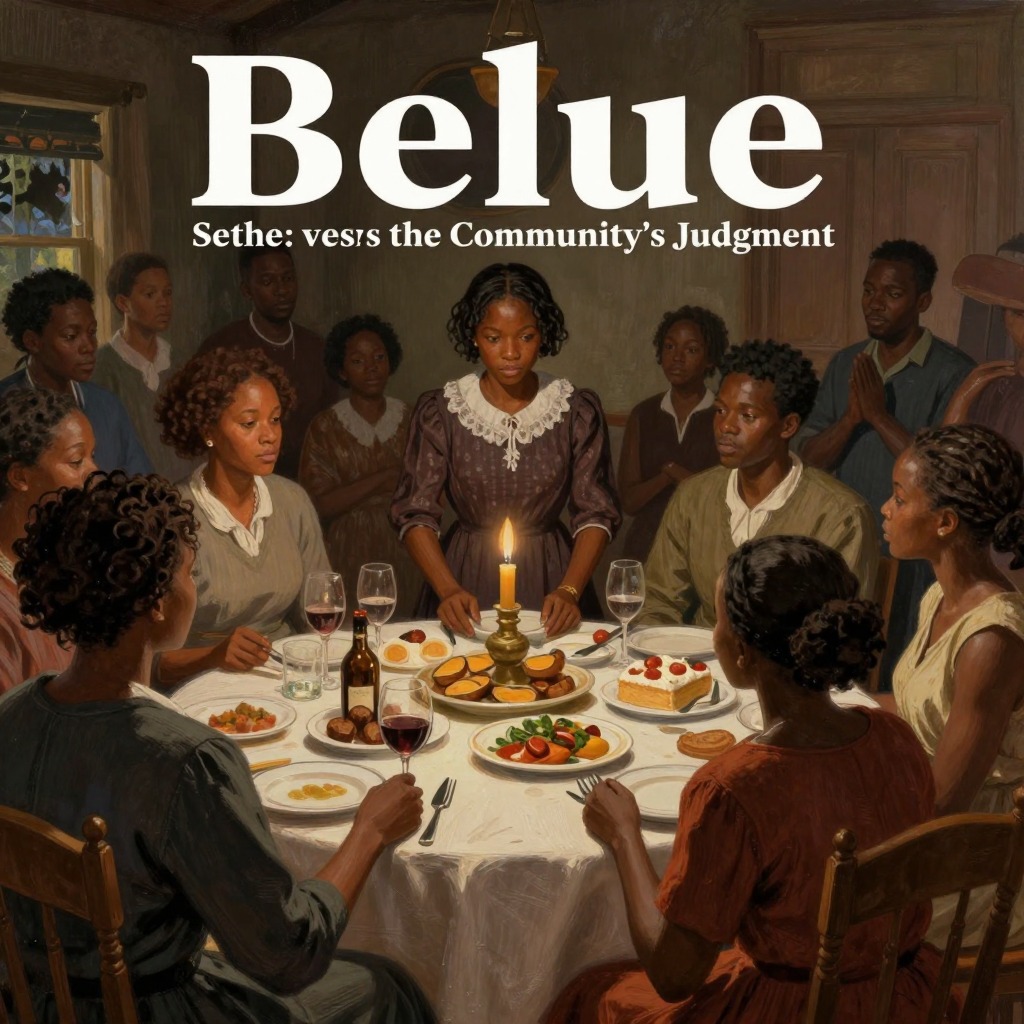
The jail term marks the beginning of the community's withdrawal from Sethe. When she gets out, she makes no gesture toward anybody and lives as though she were alone. Ella, who had been a friend and who helped Sethe cross the Ohio River, junked her after the infanticide and would not give her the time of day. The twenty-eight days of unslaved life—the travel of one whole moon—that Sethe had enjoyed after arriving at 124, days of healing, ease, and real-talk, days of company with forty or fifty other Negroes, all end with the jail. From that point on, 124 becomes a house that people avoid, and Sethe's pride, her refusal to explain or apologize, deepens the rift. The jail thus functions not only as a physical prison but as the catalyst for a social imprisonment that lasts eighteen years, until Paul D arrives and, later, Beloved returns in the flesh.