measuring string
BelovedThe measuring string appears in Toni Morrison's Beloved as a seemingly mundane object that becomes a potent symbol of the dehumanizing logic of slavery. It is used by schoolteacher, the slaveholder who takes over Sweet Home after Mr. Garner's death, to measure Sethe's body—wrapping it around her head, across her nose, and around her behind, and even numbering her teeth. This act of measurement is part of schoolteacher's broader project of classifying enslaved people, recording their "human characteristics" and "animal ones" in his notebook. For Sethe, the measuring string is not merely a tool but an instrument of objectification, reducing her to a set of physical attributes to be cataloged and controlled. Its use marks a critical moment in her growing awareness of the brutality of her condition and fuels her determination to escape, making it a key object in the novel's exploration of identity, dehumanization, and resistance.
The Measuring String and Schoolteacher's Classification
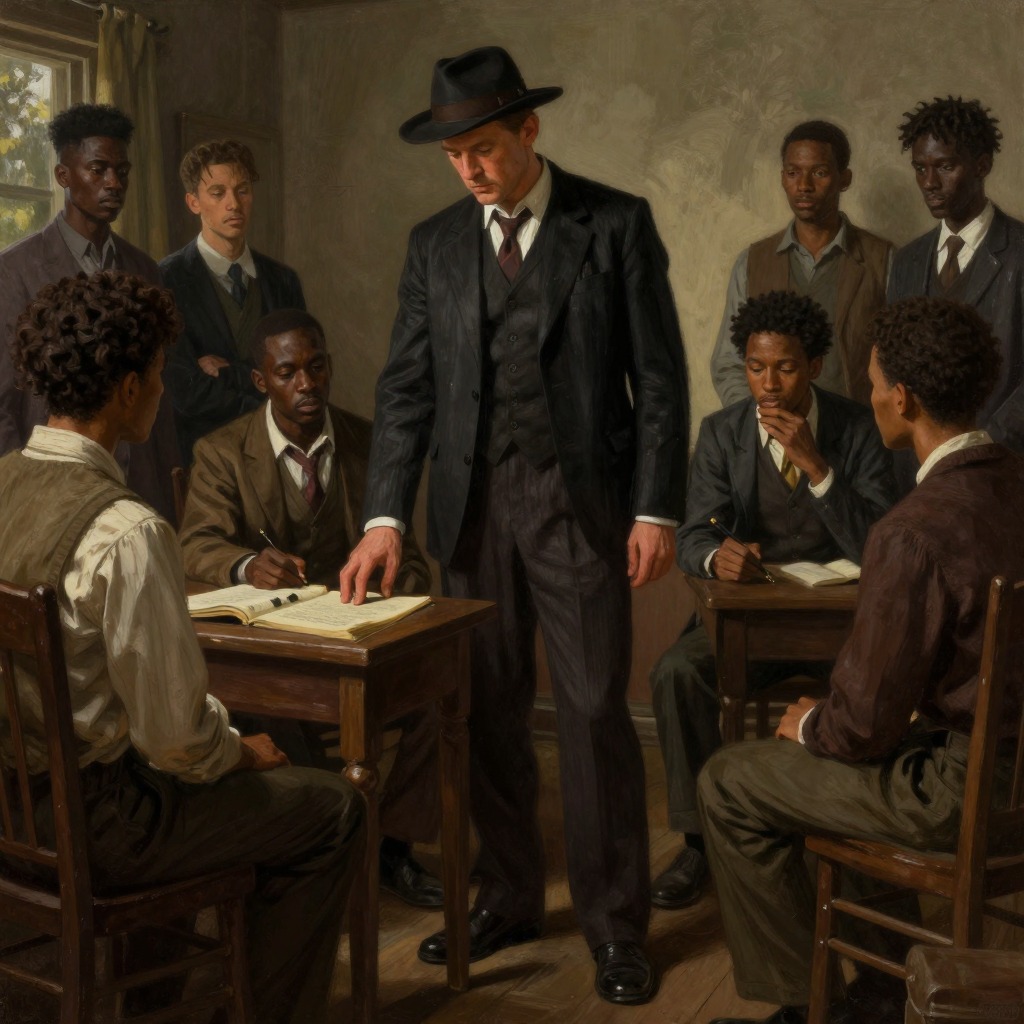
The measuring string is introduced in the context of schoolteacher's scientific racism. He uses it to measure Sethe's body, a practice that aligns with his belief that enslaved people are closer to animals than to humans. This is evident in his instruction to his pupils to list Sethe's "human characteristics" on one side of a page and her "animal ones" on the other. The string is the physical means by which this classification is enacted, turning Sethe's body into a site of measurement and evaluation. Sethe recalls how schoolteacher would "wrap that string all over my head, 'cross my nose, around my behind. Number my teeth." This detailed, invasive measuring reduces her to a collection of parts, denying her wholeness as a person. The string, therefore, is not just a tool but a symbol of the pseudoscientific discourse that justified slavery by dehumanizing the enslaved.
Sethe's Reaction and the Turning Point
Sethe's reaction to the measuring string is one of initial dismissal—she "thought he was a fool"—but the incident has a profound, lasting impact. It is a key moment in her realization that she and her children are not safe at Sweet Home. The measuring string, along with schoolteacher's notebook, represents a threat that is intellectual and systematic, not just physical. This realization contributes to her decision to escape, even while pregnant with Denver. The string becomes a marker of the moment when Sethe understands that her humanity is not recognized by her oppressors, and that she must take drastic action to protect her children from a similar fate. This turning point is crucial to the novel's narrative, as it sets in motion the events that lead to Sethe's flight, the birth of Denver, and the tragic infanticide that haunts the rest of the story.
The String as a Symbol of Dehumanization
The measuring string functions as a powerful symbol of the dehumanization inherent in slavery. It is an object that, in the hands of schoolteacher, transforms Sethe from a person into a specimen. The act of measuring her body parts—her head, nose, behind, and teeth—is a violation that strips her of her individuality and reduces her to a set of quantifiable features. This is consistent with schoolteacher's broader project of defining enslaved people as property, as seen in his notebook where he records their characteristics. The string, therefore, is not merely a tool but an emblem of the pseudoscientific racism that underpinned slavery. It represents the way in which enslaved people were subjected to objectifying scrutiny, their bodies treated as objects to be measured, cataloged, and controlled. In this sense, the measuring string is a potent reminder of the violence—both physical and psychological—that characterized the institution of slavery.
The String's Role in Sethe's Memory and Identity
For Sethe, the measuring string becomes a part of her memory, a symbol of the past she tries to repress but cannot forget. In her later life at 124, she works hard to remember "as close to nothing as was safe," but the memory of the measuring string, like other traumatic events, resurfaces. It is connected to her sense of identity, as she defines herself in opposition to the dehumanizing classification that schoolteacher represented. The string is also linked to her determination to keep her children away from such treatment, as she states, "No notebook for my babies and no measuring string neither." This declaration underscores the string's symbolic weight: it represents the threat of dehumanization that Sethe is determined to shield her children from, even at the cost of their lives. The measuring string, therefore, is not just a historical artifact but a living memory that shapes Sethe's actions and her understanding of herself as a mother and a person.
The Measuring String and the Novel's Critique of Slavery
The measuring string is part of Morrison's broader critique of slavery as a system that dehumanizes both the enslaved and the enslavers. Schoolteacher's use of the string is a manifestation of the "jungle" that white people planted in black people, as described by Stamp Paid. The string is a tool of that jungle, a means of imposing a false hierarchy that justifies brutality. Morrison uses the measuring string to expose the pseudoscientific racism that was used to rationalize slavery, showing how such practices were not neutral but deeply harmful. The string also serves to highlight the contrast between Mr. Garner's "manhood policy," which allowed enslaved men to be seen as men, and schoolteacher's classification, which reduced them to animals. This contrast underscores the novel's argument that slavery, in any form, is dehumanizing, and that the measuring string is a symbol of the violence inherent in the institution.
The String's Legacy and Significance
The measuring string leaves a lasting legacy in the novel, influencing the lives of Sethe and her family. It is a reminder of the past that Sethe cannot escape, and it contributes to her sense of being "broken" and "scattered." The string also has a broader significance, representing the ways in which enslaved people were systematically dehumanized and the ongoing struggle to reclaim one's humanity. In the end, the measuring string is not just an object but a symbol of the novel's central themes: the dehumanizing effects of slavery, the resilience of the human spirit, and the importance of memory and storytelling in confronting the past. It is a testament to Morrison's skill in using everyday objects to carry profound meaning, making the measuring string an unforgettable part of Beloved's literary landscape.