notebook
BelovedThe notebook is schoolteacher's record of the Sweet Home slaves, in which he classifies their human and animal characteristics, a document that exposes the dehumanizing logic of slavery and becomes a catalyst for Sethe's escape and her later confrontation with her past.
The Notebook as an Instrument of Scientific Racism
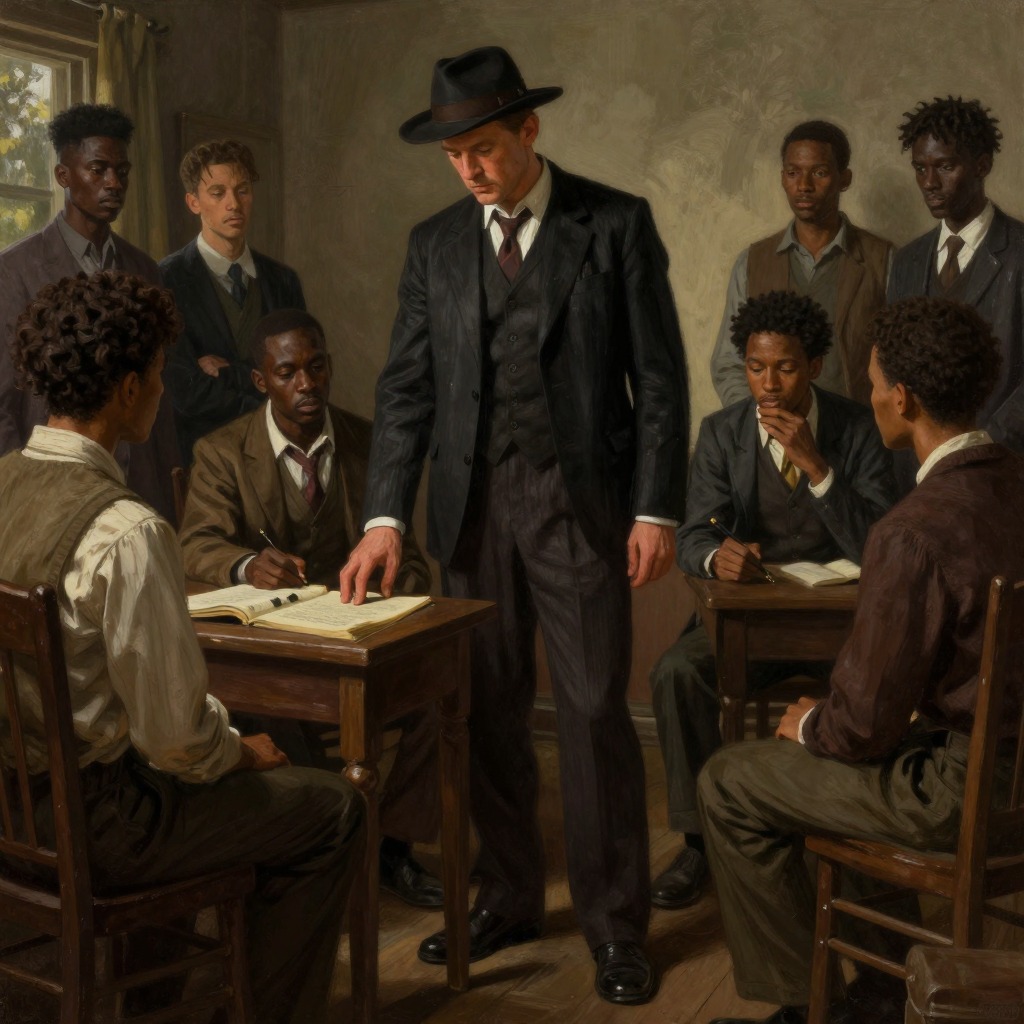
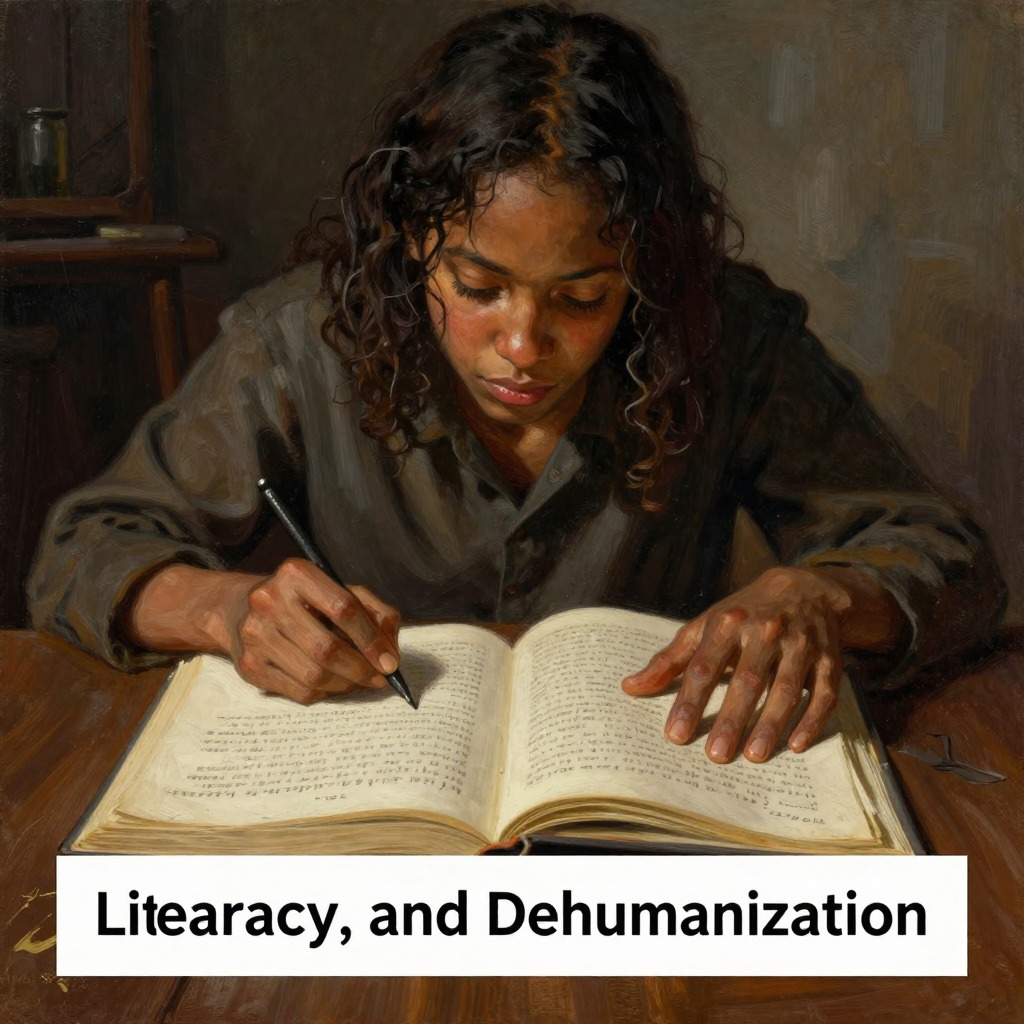
Schoolteacher's notebook is the material embodiment of the pseudoscientific racism that underpins slavery. He carries it everywhere, writing down what the slaves say and do, and he uses it to record his observations of them as though they were specimens. The notebook is not merely a passive record; it is an active tool of control and dehumanization. When Sethe overhears schoolteacher instructing his pupils, she hears him say, "No, no. That's not the way. I told you to put her human characteristics on the left; her animal ones on the right. And don't forget to line them up." This moment reveals the notebook's function: it is a ledger in which Black people are dissected into categories, their humanity denied and their animality emphasized. The notebook thus becomes a symbol of the white supremacist ideology that justifies the brutal treatment of enslaved people, reducing them to objects of study rather than recognizing their full personhood.
The notebook also serves as a tool of surveillance and control. Schoolteacher uses it to document the slaves' behavior, recording their "corrections" and their perceived transgressions. He notes that they "ate too much, rested too much, talked too much," and he develops a variety of punishments to "reeducate" them. The notebook is thus an instrument of power, allowing schoolteacher to monitor and discipline the enslaved people under his authority. It is a physical manifestation of the panoptic gaze, a constant reminder that the slaves are being watched and judged, their every action subject to scrutiny and recorded for future use.
The Notebook and Sethe's Awakening
The notebook plays a pivotal role in Sethe's decision to escape from Sweet Home. When she overhears schoolteacher's instruction to his pupils, she realizes that she is being classified as an animal, her humanity denied. This revelation is a turning point for Sethe, as she understands that her children are also in danger of being dehumanized in the same way. She later tells Paul D, "I made the ink, Paul D. He couldn't have done it if I hadn't made the ink." This statement underscores the irony that Sethe herself, by making the ink, has inadvertently contributed to the creation of the very document that dehumanizes her. The notebook thus becomes a catalyst for her escape, as she resolves to take her children away from a place where they are seen as less than human.
The notebook also haunts Sethe after her escape. When she is at 124, she remembers the measuring string that schoolteacher used to measure her head, nose, and behind, and she recalls the notebook in which he recorded his observations. The notebook is a symbol of the trauma she has endured, a reminder of the violence and degradation she suffered at Sweet Home. It is also a reminder of the constant threat of being re-enslaved, as the notebook represents the legal and ideological apparatus that sought to define her as property. Sethe's fear of the notebook is so great that she later tells Paul D, "I made the ink, Paul D. He couldn't have done it if I hadn't made the ink," as if she feels complicit in her own dehumanization.
The Notebook as a Symbol of White Supremacy
The notebook is not just a personal tool of schoolteacher; it is a symbol of the broader system of white supremacy that pervades the novel. It represents the way in which white people have the power to define Black people, to categorize them, and to deny their humanity. The notebook is a physical manifestation of the "jungle" that white people have planted in Black people, as Stamp Paid reflects: "It was the jungle whitefolks planted in them. And it grew. It spread." The notebook is one of the tools used to create this jungle, to impose a dehumanizing identity on Black people.
The notebook also serves as a contrast to the oral tradition that is central to the Black community in the novel. While the notebook is a written document that seeks to fix and define, the oral stories told by characters like Baby Suggs and Sethe are fluid and communal, allowing for multiple interpretations and a sense of shared history. The notebook represents the white, literate culture that seeks to control and categorize, while the oral tradition represents the Black, communal culture that resists such control. This tension between the written and the oral is a recurring theme in the novel, and the notebook is a key symbol of the oppressive power of the written word.
The Notebook's Legacy and the Power of Naming
The notebook's influence extends beyond Sweet Home, affecting the lives of the characters long after they have escaped. For Sethe, the notebook is a source of shame and trauma, a reminder of the dehumanization she experienced. For Paul D, the notebook is a reminder of the violence and degradation he endured, as he recalls the "iron bit" in his mouth and the "three-spoke collar" around his neck. The notebook is thus a symbol of the enduring legacy of slavery, a reminder that the trauma of the past continues to haunt the present.
The notebook also raises questions about the power of naming and definition. Schoolteacher uses the notebook to define the slaves as animals, but the novel ultimately rejects this definition. Through the characters' stories and their acts of resistance, the novel asserts the humanity of Black people, refusing to accept the dehumanizing labels imposed by the notebook. The notebook is thus a symbol of the struggle for self-definition, a reminder that the power to name and define is a crucial site of resistance.
In the end, the notebook is a testament to the dehumanizing logic of slavery, but it is also a testament to the resilience of those who refuse to be defined by it. Sethe's escape, her determination to keep her children safe, and her eventual reconciliation with Paul D all represent a rejection of the notebook's dehumanizing categories. The notebook may record the "animal" characteristics of the slaves, but it cannot capture their humanity, their love, or their capacity for resistance. In this way, the notebook is a symbol of the limits of white supremacy, a reminder that the power to define is not absolute and that the human spirit can transcend even the most dehumanizing of circumstances.
The notebook, as a symbol of the dehumanizing pseudoscience underpinning slavery, has drawn critical attention for its role in exposing the violent logic of racial classification. Morrison's novel itself received the Pulitzer Prize for Fiction in 1988, along with several other honors, and has been widely discussed as an exploration of trauma, memory, and the restoration of the historical record. The epigraph "60 million and more" references estimates that half of enslaved Africans perished during the Middle Passage, a context that deepens the notebook's significance as a tool of erasure. Beloved has also faced frequent censorship in U.S. schools, with objections often citing scenes of violence and sexuality, including the dehumanizing documentation practices the notebook represents. In 2007, a Kentucky high school briefly banned the novel after a parent complained about language on page 13, though the ban was later lifted. Such controversies underscore the enduring power of Morrison's critique of institutionalized racism, a critique crystallized in the notebook's cold taxonomy of human worth.