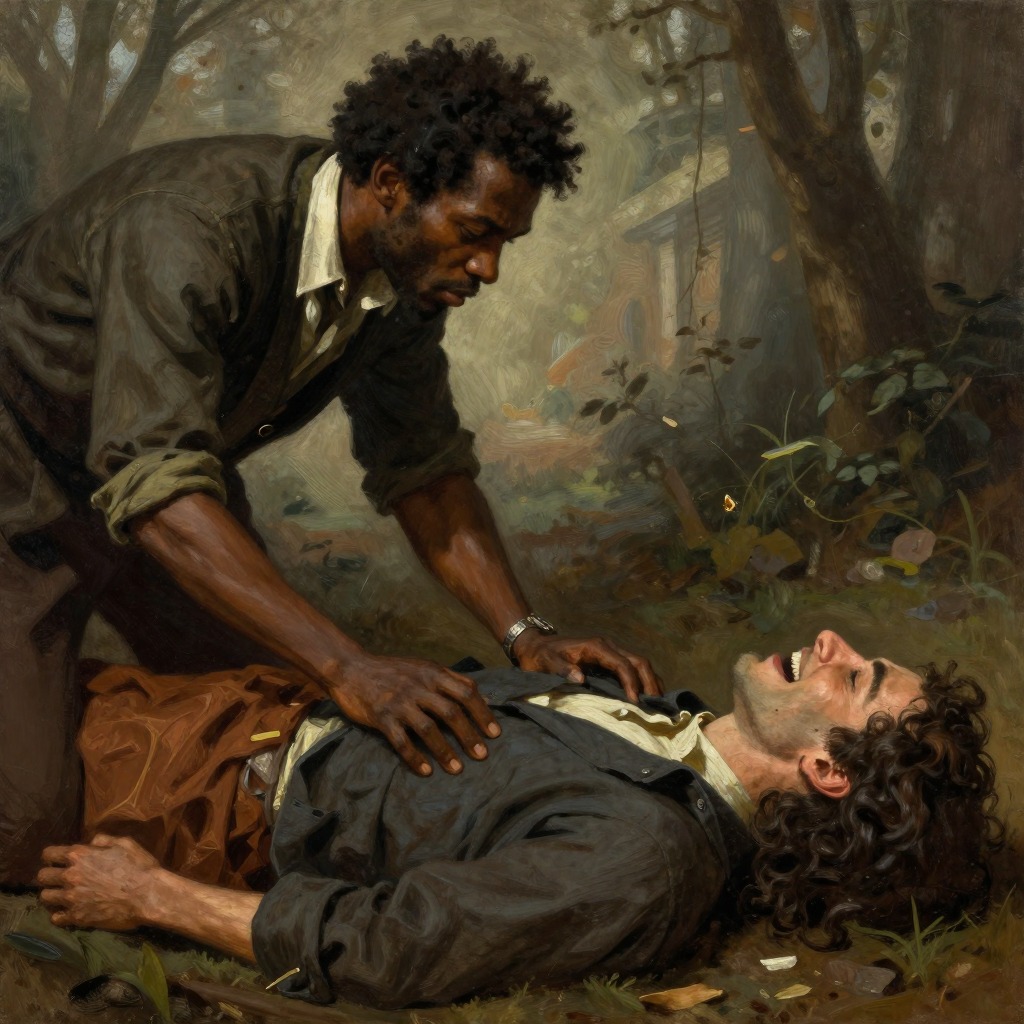
rifle
BelovedThe rifle is a potent symbol in Toni Morrison's Beloved, representing the ever-present threat of white violence and the machinery of slavery. It appears at critical moments, most notably when schoolteacher and his party arrive at 124 Bluestone Road to reclaim Sethe and her children. The weapon is not merely a tool but an extension of the authority that defines the lives of the enslaved, a constant reminder that their freedom is precarious and their bodies are subject to the will of others.
The Rifle as Instrument of Recapture
When the four horsemen—schoolteacher, one nephew, a slave catcher, and a sheriff—approach the house on Bluestone Road, the rifle is central to their mission. The slave catcher remains mounted, "his rifle ready, his eyes trained away from the house to the left and to the right," anticipating that the fugitive might attempt to escape. The weapon is a means of control, used to motion the six or seven Negroes walking up the road to stand still, and to signal the authority of the white men. The rifle's presence underscores the futility of resistance; as the narrative notes, a fugitive might "grab the rifle at its mouth; throw himself at the one holding it—anything," but such acts are desperate and often fatal. The rifle thus embodies the power that makes recapture possible, a power that Sethe's infanticide is meant to preempt.
The Rifle and the Threat of Violence
The rifle is also a symbol of the broader violence that pervades the world of the novel. It is associated with the "righteous Look" that Negroes learn to recognize, a precursor to "the faggot, the whip, the fist, the lie." The weapon is part of the apparatus of terror that includes the cowhide, the bit, and the chain. In the scene of the recapture, the rifle is held by the slave catcher, who uses it to keep the onlookers at bay, and its presence contributes to the atmosphere of menace. The rifle's role is not just physical but psychological; it is a constant reminder that the characters' lives are not their own, that they can be taken at any moment.
The Rifle in the Climax: Sethe's Misidentification
Years later, the rifle's symbolic weight returns in the novel's climax. When Mr. Bodwin drives his cart toward 124 to pick up Denver for her first night of work, Sethe, consumed by the belief that Beloved is her dead daughter returned, sees him as a threat. She mistakes him for schoolteacher, the man who once came to take her children back into slavery. In that moment, "she hears wings. Little hummingbirds stick needle beaks right through her headcloth into her hair and beat their wings. And if she thinks anything, it is no. No no. Nonono. She flies." She attacks him with an ice pick, not a rifle, but the rifle's legacy is present: the fear of white men coming to take her children, a fear that the rifle once embodied. The rifle, though absent, haunts this scene, representing the trauma that drives Sethe to violence.
The Rifle as a Symbol of Power and Resistance
The rifle also appears in the context of resistance. At Sweet Home, Mr. Garner allowed his enslaved men to have guns, a privilege that schoolteacher later revokes. This act of disarming is a form of control, stripping the men of a means of defense and asserting white dominance. The rifle, in this context, is a symbol of the limited agency that Garner's "manhood policy" permitted, and its removal marks the beginning of schoolteacher's harsher regime. The weapon thus becomes a marker of the shifting power dynamics between master and enslaved, and a reminder that even the smallest concessions can be taken away.
The Rifle and the Legacy of Trauma
The rifle's presence in the novel is not limited to physical appearances; it permeates the characters' memories and fears. Paul D, who was sold after attempting to kill Brandywine, the man schoolteacher sold him to, carries the trauma of being hunted and captured. The rifle is part of that memory, a symbol of the violence that shaped his life. For Sethe, the rifle is tied to the moment she killed her daughter to prevent her recapture, an act born of the desperate belief that death was preferable to returning to slavery. The rifle, then, is not just a weapon but a symbol of the impossible choices that slavery forces upon its victims, and the lasting psychological scars those choices leave behind.