Promise Squadron
BlackwaterPromise Squadron is a Tharcian naval force operating under the pressures of a war in which information, logistics, and battlefield positioning matter as much as weapons. Its campaign shows the squadron repeatedly trying to shape what the Union believes: first through a task-force feint built around electronic warfare, then through false broadcasts and layered attacks. When combat becomes unavoidable, the squadron turns those deceptions into openings for coordinated missile, mine, and close-range fire.
Composition and Operational Limits
The Blackwater gives the squadron substantial combat capacity despite being described as an escort: it carries thirty-six Panzerters and is fast enough to serve more as a squadron than as a conventional escort carrier. That aircraft complement is not immediately available to its commander, Henri Marcell, however; he must physically retrieve the Panzerters and their pilots. Later, the Blackwater receives spare parts, fuel, and food but not the Panzerters it was supposed to receive, a shortfall Marcell recognizes as a serious reduction in available firepower.
The squadron’s readiness is also shaped by fuel, ammunition, and the dependability of its weapons. During a later engagement, Rocco Swift reports that an entire salvo has failed, raising the possibility that the magazines are defective. The failure occurs amid a close fight in which Rocco is already attacking enemy Panzerters, making the ammunition problem an immediate operational constraint rather than a remote maintenance concern.
Promise Squadron also operates alongside civilian ships whose ability to travel independently is limited. Civilian vessels must remain near a cutter or warship to communicate and observe beyond short range, and many are crowded with civilians and pets after a hurried evacuation. Marcell orders every ship to report its food and water, while military vessels must also report ammunition counts. He weighs rationing his crew against sharing supplies with civilians, conscious that sustained combat raises the crew’s calorie needs and that inadequate food could harm children over the longer term. The squadron’s fighting strength is therefore inseparable from the welfare and endurance of the people travelling with it.
Deception and Fleet Coordination
A Union task force plans to disrupt Tharcian operations around Phobos by presenting itself as a civilian flotilla fleeing the Amazon Sea. Five reconnaissance and electronic-warfare cruisers are to spoof the task force’s drive signatures; reports relayed toward Deimos are timed to make the Union believe an attack from the Lagrange point began hours earlier than it actually did. The intended effect is to draw Tharcian forces toward Deimos before they are ready, opening an advantage for the main attack.
The feint conceals more than the ships’ identities. Three battlecruisers and two heavy cruisers hide in the radar shadow of lighter vessels, while electronic warfare makes the formation appear to include many additional small ships. Rocco Swift questions whether the larger ships’ drive signatures will give them away, and the task-force commander explains that the radar-shadow arrangement and electronic deception are meant to obscure their scale. The plan depends on managing what the enemy can infer from incomplete sensor information, not simply on remaining unseen.
Marcell later applies the same contest over information from the Tharcian side. Faced with Union jamming and interference between shoal zones, he cannot confirm whether a Union squadron is present in the upper shoal zone. He nevertheless orders an open-channel broadcast claiming that a large force from the belt is five hours away after refuelling at Deimos. The report is deliberately unverified: Marcell hopes the Union will have to respond to the possibility of reinforcements rather than dictate the next move itself. The broadcast is an attempt to make uncertainty an operational resource.
Mines and the Turning of the Engagement
Marcell’s use of mines extends the squadron’s options beyond a direct exchange of fire. The mines use magnets to attach to spaceborne ships, but their sensors distinguish friendly identification signals; once attached, their shaped charges can breach a hull. Clearing a minefield requires ships to move slowly and direct their point defenses manually, leaving them more exposed to fast missiles. The tactic turns caution into vulnerability by forcing the enemy to choose between a slow, laborious clearance and the risk of pressing onward.
The squadron exploits that vulnerability through a layered attack. Marcell’s ships launch missiles while maintaining forward momentum, helping conceal which vessel has fired. Union point defenses engage the incoming weapons and then slacken when one missile begins dispersing mines. The Union commander appears to mistake a third missile for another minelayer and conserves fire; that missile instead releases megathermal warheads into a destroyer. The ship is destroyed, demonstrating how a misreading of the attack’s pattern can make a momentary decision decisive.
Marcell later orders Promise Squadron to fire its minelayers and anti-ship missiles at Union ships moving through the minefield. When the barrage ends, his ships are to leave the shoal zone, close in among the Union formation, and engage at point-blank range; ships still in the minefield are to be attacked once they clear it. The plan combines the mines’ slowing effect with a sudden shift from stand-off weapons to close combat, demanding coordinated action across the squadron.
Close Combat and Consequences
In the later fighting, the Blackwater loses a dorsal railgun to a Union destroyer’s fire, but its remaining batteries continue to strike nearby ships. Marcell orders his squadron to swarm the Union vessels around them, both to reduce the fire those ships can bring to bear and to defend against enemy Panzerters. The ships’ dangerous proximity makes it harder for opposing pilots to attack effectively, though it also makes it more difficult for Promise Squadron to target enemy engineering sections as its crews had trained to do.
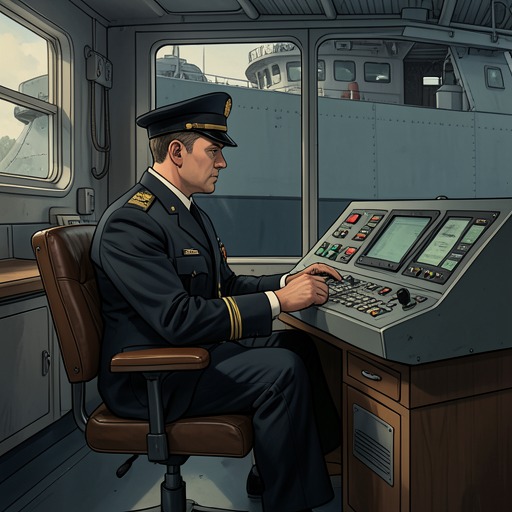
The Blackwater is damaged again when a round hits its port-side torpedo bay. Its torpedo storage room is vacuum-sealed for such an emergency, limiting the danger, but the near miss with the port-side recovery deck makes clear how narrow the margin has become. Marcell keeps his composure for the crew while privately recognizing that the ship cannot withstand much more. Meanwhile, Gunny and the operations officer on the secondary bridge handle the ship’s immediate fighting, leaving Marcell able to direct the battle rather than manage every aspect of the vessel himself.
The balance shifts when fresh Tharcian destroyers emerge from the shoal zone behind an approaching capital ship. They pass it, strip away its escorts with railgun and laser fire, and then turn toward the Union battlecarrier as Tharcian Panzerters join them. A Tharcian unit carrying a torpedo launcher strikes the battlecarrier’s launch bay, damaging its catapult mechanisms. The arrival of the Danubia, sister ship to the lost Battlecruiser Vespa, supplies a major new Tharcian presence in the engagement. The sequence places Promise Squadron’s close-range struggle within a larger fleet action: its tactics buy and exploit openings, while the entrance of fresh forces changes the pressure on the battlefield.