Union Navy
BlackwaterThe Union Navy is a principal military force in the war with Tharcian forces, and its organization is shown through both fleet-scale strategy and the practical pressures on individual ships. Its battlecarrier fleet supplies the backbone of Union naval power, while shipboard accounts reveal the dependence of that power on pilots, aircraft, ammunition, supplies, and administrative coordination.
Fleet Structure and Strategic Purpose
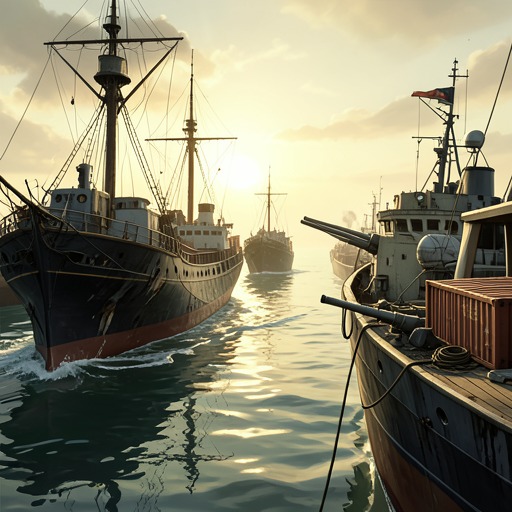
The Union built battlecarriers because it could not produce fleet carriers and battlecruisers as quickly as the Tharcian side. By streamlining a capital ship that could serve in either role when needed, the Union could build in numbers and buy time to develop larger ships. Battlecarriers consequently became the fleet’s backbone, though the account stresses that an isolated ship of this class could be vulnerable to a Tharcian capital ship.
The TNV Blackwater illustrates the mixed capabilities of a ship intended as an escort. It carried thirty-six point-defense cannons, torpedo tubes, missile cells, and sixteen 130-mm railguns arranged so that an attacker approaching from any direction would face half of them. It could also field thirty-six Panzerters, making it closer to a squadron-bearing carrier than a conventional escort. That strength came with a practical dependency: Henri Marcell had to go and collect the aircraft and their pilots himself.
Personnel and Administrative Constraints
The Navy’s ability to put its ships to work is repeatedly complicated by the gap between orders and local administration. When Marcell’s ship was scheduled to receive pilots, the personnel office had allowed them leave. Officials told him he would have to wait or cancel each leave individually; no ready roster was available. Marcell responded by demanding every pilot’s personnel file and qualifications so he could assemble a roster himself, and ordered the pilot then responding to a distress call transferred after completing that duty.
Marcell’s response also shows how shipboard command tries to work around institutional delay. He kept his executive officer, Anna Strauss, and Gunnery Sergeant Hoffmann on the bridge, while directing the communications chief to generate enough requests to keep the unresponsive administrative office occupied. Hoffmann attributed the local officers’ priorities to their position between Deimos and the boundary of the Mars Sphere: removed from the spotlight, yet feeling secure. Marcell expected the local establishment to enable the fleet’s work even if its personnel were not fighters.
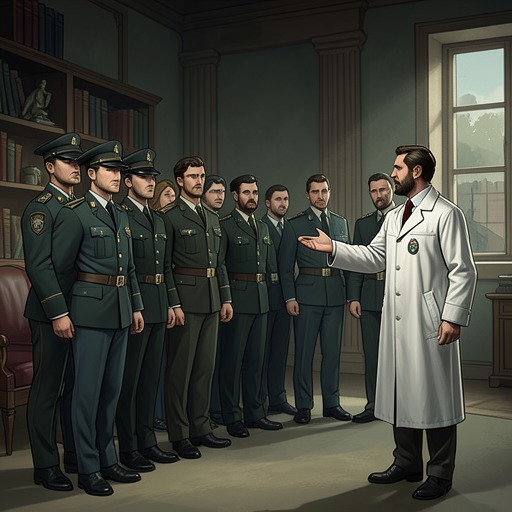
The Navy’s personnel are not always assembled through conventional assignments. A Union battlecarrier’s combat air wing briefing brought together five squadron commanders, the air-wing commander and deputy, and a political officer. In a separate account, Anna describes the purpose of her ship as striking the Union in a way its forces do not expect, explaining why the crew is mismatched. The force’s operational identity therefore includes adaptation to unconventional personnel and mission arrangements, not simply a standard roster.
Operations, Intelligence, and Combat Readiness
Union operations depend on recognizing and countering deceptive signals. When Marcell’s side encountered ships masking their drive signatures, he observed that the Gulf Squadron lacked dedicated electronic-warfare assets, but the orbit patrol had them. His proposed response relied on the possibility that targeting sensors would expose the deception and prompt one ship to fire, causing the broader disguise to collapse. The exchange presents coordination between different naval elements as a means of overcoming a capability gap.
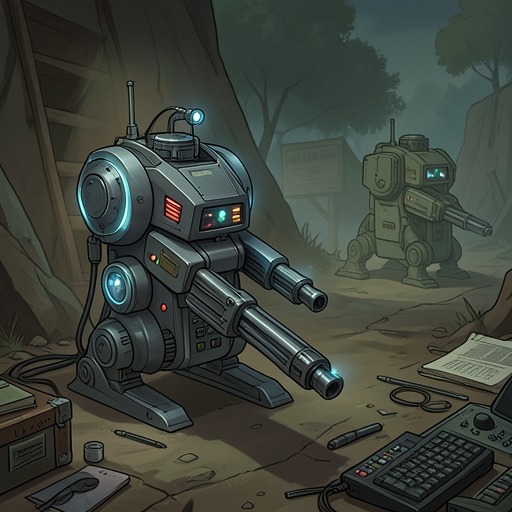
Combat readiness is also materially uncertain. Although Marcell’s ship had received spare parts, fuel, and food, it had not received the Panzerters it was supposed to take aboard, a serious reduction in available firepower. Elsewhere, a Union pilot assessing an enemy flotilla had eight torpedoes and had to weigh how many would be needed against a scout cruiser and its escorts. During another engagement, Rocco was told that an entire salvo consisted of dud rounds and that the magazines might be defective. These incidents make equipment supply and reliability immediate operational concerns rather than background matters.
Union forces also pursue military transports when they appear to carry valuable cargo. Rocco ordered evasive action while keeping his unit on a convoy; after the ships exposed themselves, he identified the transports and their escort positions. The account notes the contrast between the transports’ endurance-oriented engines and the Union Panzerters’ high-thrust approach. The encounter shows how the Navy’s mobile forces seek advantage through speed and positioning, while the convoy’s escorts remain a tactical obstacle.
Civilians, Political Officers, and Naval Work
Naval command includes responsibilities beyond combat. During a period when civilian ships were crowded with evacuees and pets and were poorly equipped for a prolonged journey, Marcell ordered every ship to report its food and water, and military vessels to report their ammunition. He faced a choice between rationing his own crew to provide more freely to civilians or maintaining the crew’s normal food supply so it could remain effective. Sustained combat increased the calories required by his crew, especially as the number of pilots had recently doubled; neglecting civilian needs, however, risked lasting harm to children.
Political officers likewise occupy a variable place in naval life. Rocco’s experience distinguishes between officers who use their authority to enforce party doctrine even when it works against a ship’s interests and Ewart, who instead carries administrative burdens so other officers can concentrate on fighting. His account presents the political officer’s function as dependent on institutional context: the position can generate friction, but it can also support the operational crew by handling shipboard administration.
Institutional Character and Significance
The Union Navy’s strength rests on scale and flexibility: battlecarriers can be produced in large numbers, and unconventional crews and mixed roles can help meet unexpected missions. Yet the same evidence repeatedly qualifies that strength. A ship may lack its promised aircraft, a weapons magazine may contain faulty ammunition, a local office may fail to prepare a pilot roster, and a commander may have to balance combat readiness against civilian survival.
Taken together, these pressures depict naval power as something assembled through people and material systems, not guaranteed by the ship’s designation or armament. The Union Navy’s battlecarriers provide strategic reach, but their effectiveness depends on pilots being available, supplies reaching the fleet, equipment working, and commanders coordinating military needs with the lives carried alongside them.