Luma County Savings and Loan Association
BluebeardThe Luma County Savings and Loan Association, locally nicknamed El Banco Busto, is remembered less as an abstract financial institution than as the force that dismantles the Karabekian family's economic security. Its failure erases the family's savings, costs Rabo's father the building that housed both his home and his shop, and leaves the shop empty and the family dependent on tenancy.
Identity and Local Name
The institution is called the Luma County Savings and Loan Association in the account of its collapse; townspeople called it El Banco Busto. The story does not describe its ordinary operations or leadership, but traces its power through the mortgages it held and the consequences of its failure for depositors who had trusted it with their savings.
Failure and Foreclosures
The Association's failure wipes out the savings of Rabo's father and other residents. The narrative emphasizes the chain of consequences: the bank's receivers liquidate its assets and foreclose mortgages in arrears, and many borrowers are behind precisely because they had entrusted their money to the failed institution. The bank's collapse thus strikes depositors and property owners at once, converting a financial failure into a community-wide loss of homes and livelihoods.
The Karabekian Family's Loss
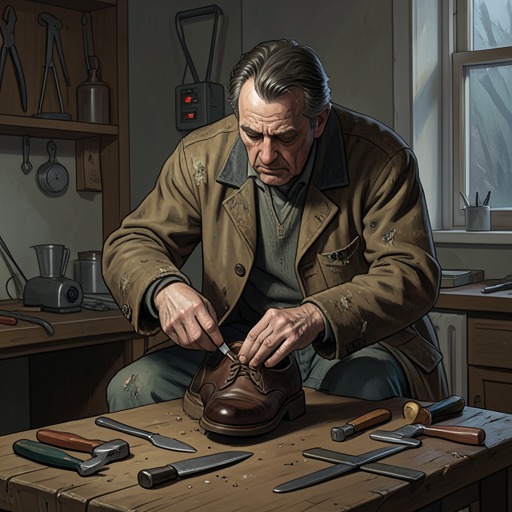
Before the collapse, Rabo's father owned the small building through a loan from the Association. Its first floor housed his shop, while the family lived upstairs. After the receivers foreclose, he becomes a tenant in the building he once owned. The shop downstairs is vacant: he cannot afford to rent it, and his machinery has already been sold at auction to recover whatever money can be raised. The change is concrete and humiliating—not merely a reduced balance, but the loss of ownership, work space, and the equipment of his trade.
Place in the Family Story
When Rabo comes home from school at about fifteen, he finds his father reading Marilee's letters at the kitchen table. His father's circumstances shape his reading of them: he compares their promises to financial instruments and says he has examined the fine print. He calls Marilee a new Vartan Mamigonian, linking her apparent promises to the earlier swindle of his parents in Cairo. The bank's collapse is not presented as the cause of that comparison, but it provides the immediate material history of a family that has already learned how promises and apparent security can fail.
The Association's remembered significance extends beyond this childhood scene. Rabo later recalls standing alone in New York City during the Great Depression, and the collapse helps explain the family's earlier loss of savings and property within that wider economic hardship. In the novel's account, El Banco Busto's name survives as a bitter local joke, while the consequences endure as a changed household: a former owner reduced to a tenant and a shopkeeper stripped of his place of business and machinery.