Cleveland
CherryCleveland is the narrator’s enduring point of reference: a city and surrounding east-side landscape where college, low-wage work, friendships, drug dealing, and domestic instability repeatedly intersect. Its significance lies less in civic description than in the contrast between recognizable routes and the narrator’s growing sense that the everyday world around him is difficult to comprehend.
Streets and ordinary perception
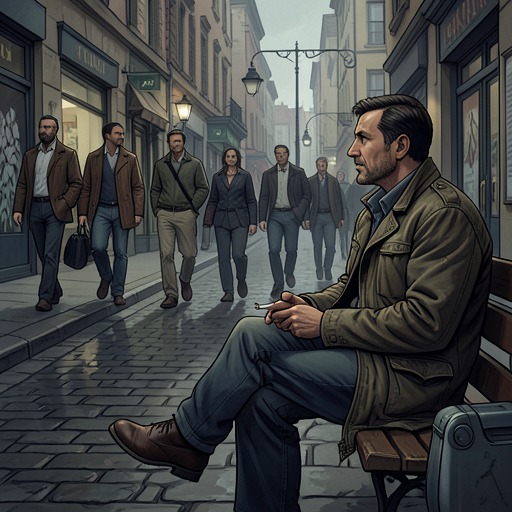
A drive through the east side gives Cleveland its most concrete early form. The narrator follows Black along Cedar Road, then passes South Taylor Road, a pharmacy, an abandoned KFC, a Wendy’s, a high school, a cinema, and Lee Road. The succession is mundane and legible, but it does not reassure him: at twenty-five, he finds people and the structures of their shared life hard to understand, as though the whole place were assembled on nothing. Hearing people talk only sharpens that estrangement.
The drive continues through Meadowbrook Boulevard and Coventry Road to Hampshire Road, where the narrator recognizes a neighborhood changed by time. The road signs have been painted in tie-dye colors, and he remembers having lived there before the alteration. His comparison is intimate rather than civic: the change resembles discovering, halfway through a conversation, that something absurd has been on one’s face all along. Brick apartment buildings line the one-way stretch, some with balconies. The trees remain beautiful to him even though he cannot make sense of them either. In this landscape, attachment and incomprehension coexist: he can love the trees without claiming to understand them.
Home ground and interrupted education
The narrator has lived in Cleveland’s eastern suburbs since he was ten. In 2003, that established home contrasts with Madison Kowalski’s move to Rutgers University in New Jersey. He attends a local Jesuit university, a respectable institution populated by students he regards as privileged, though his own family has enough money to make college seem like the expected course. His parents present higher education as an opportunity they themselves would have valued; he experiences that expectation less as a chosen direction than as an inherited script. Cleveland is therefore both a place of belonging and the setting for a life he feels he entered by default.
That unease appears in the mismatch between the narrator’s circumstances and his sense of purpose. He sells drugs, works at a shoe store for six dollars an hour, and still goes to work almost every afternoon, despite having no interest in shoes. His account connects the routine to shame and a determination, however limited, to keep showing up. College and employment are not stable ladders out of his surroundings; they are attempts at conventional life that he already regards as mistakes.
After leaving his parents’ home, he lives in May in an apartment on Murray Hill with Roy, Roy’s cousin Joe, and others, including James Lightfoot. The household has its own rough social order. Roy is a large Irishman who wears the same shabby sport coat and drinks large bottles of beer; Joe, adopted into Roy’s family, is a handsome, combative presence who is preparing to join the Marines. Joe and Roy earn money painting houses until Joe’s departure for Parris Island. Roy, meanwhile, helps the narrator find restaurant work on Mayfield after inventing an excuse for his absence from a pizzeria job. The narrator starts as a busboy but is moved to salad preparation because he lacks the personality for the first role and his shoes are unsuitable. Cleveland’s workaday geography is thus made from apartments, restaurants, and precarious arrangements rather than from a single defining landmark.
A city of traffic, commerce, and drug exchange
Cleveland’s public places also sustain the drug economy. The Rock-and-Roll McDonald’s on Carnegie Avenue is a well-known site for buying and selling drugs, so familiar to law enforcement that undercover officers are regularly present. Even so, the narrator regards going there and accepting its risks as part of remaining socially connected; without such participation, he feels he would amount to nothing. The location’s ordinary fast-food setting and illicit traffic occupy the same space. The narrator once sees the mayor of Cleveland cut ahead of him and five other cars in the drive-through line, a petty civic encounter that makes the city seem small and socially compressed.
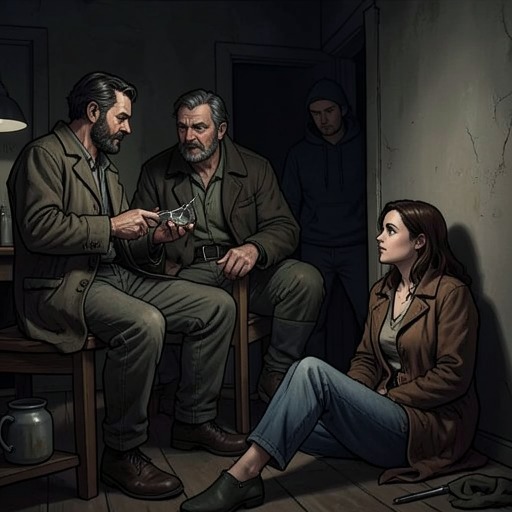
Drug access also extends from conspicuous public sites into residential streets. A house where Pistol sells heroin stands on a pleasant suburban street near the narrator’s own, lined with large trees, probably oaks. Cars carrying people in withdrawal, including Emily and the narrator, wait for hours. Pistol serves them one at a time through a side door so that his ankle monitor will not be triggered. The tree-lined street and the hidden transaction are not separate worlds: the same neighborhood setting accommodates domestic calm on its surface and an anxious, improvised market behind a house.
Cleveland as a base for instability
Later, the city and its surrounding communities remain the setting for attempts to manage an increasingly disordered life. After being told that he must repay money received for a university semester, the narrator turns to his parents for help. He and Emily adopt Livinia, a shy, mixed-breed dog from a Brook Park animal shelter, for sixty dollars, and promise to protect her while both say they will stop using drugs. The modest acts of seeking help and taking responsibility for an animal stand beside the continuing financial and substance-use pressures; the neighborhood does not provide an easy break from either.
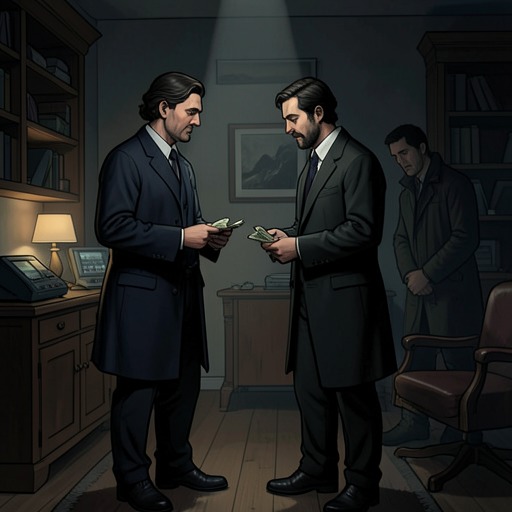
That pressure becomes literal when a landlord announces an inspection with a municipal inspector in two hours. Emily and the narrator have to dismantle their grow room: he cuts up the flowering plants, packs them and the soil into garbage bags, and loads the bags into the car while Emily takes apart the equipment and strips Mylar from the walls. The hurried cleanup leaves them worse off, though they hope the landlord will learn nothing. In another episode, after Black goes to prison, Raul offers to supply heroin. The narrator meets him near the exit from St. Clair Avenue, waits until almost ten at night, and exchanges money for a small packet wrapped in white plastic. Cleveland’s streets repeatedly connect the private consequences of addiction with the practical routes required to sustain it.
The city also frames movement without resolving what drives it. In one escape after a bank robbery, sirens approach as the narrator and Raul merge into traffic; the narrator puts the license plate back in view, and the street becomes a river of light. The image belongs to a pattern established throughout the book: Cleveland is navigable, full of roads, landmarks, and familiar meeting places, yet movement through it offers no corresponding certainty about where a life is headed. Its ordinary geography holds the narrator’s attachments and his alienation at once.