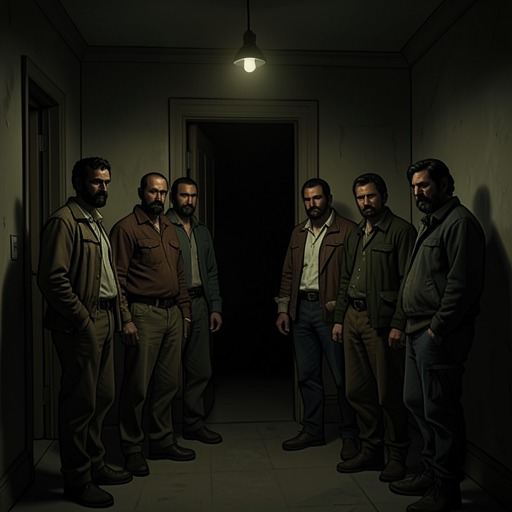
Mike Is Robbed at Gunpoint During a Cocaine Deal
CherryMike’s armed robbery turns an ordinary drug-buying day into a demonstration of how quickly trust and violence intersect in the narrator’s circle. Lured by an offer to sell twenty-eight grams of cocaine, Mike is threatened at gunpoint by one of Raul’s associates and loses both the cocaine and his car. Raul is not present, and the narrator cannot establish whether he knew about the setup; even so, he returns to the network for heroin before the day is over.
Background and Vulnerability
The robbery takes place inside a routine governed by addiction. The narrator describes a day as beginning not on waking, but when the remaining drugs run out and it is time to seek more. That Saturday, he and Emily injected what they had left, then considered how to spend their money. Buying larger quantities of heroin offered no guarantee of receiving more of the drug, since it could be heavily cut; pills, by contrast, were not cut. They went to Big and bought ten pills. At about two in the afternoon they were home, and the day seemed to be going well when the narrator’s phone rang.
That sense of security rests on an informal market in which access depends on personal connections, and those connections are unreliable. Elsewhere in the same account, Manny owes Cookie six hundred dollars for drugs advanced on credit and has a history of dealing with his debts by informing on suppliers. A surveillance van appears near Pistol’s house, where customers continue to come for heroin despite seeing police officers watching and recognizing that their own license plates are visible. These episodes do not explain who arranged Mike’s robbery, but they establish the surrounding conditions: people depend on dealers and intermediaries even as surveillance, debts, and betrayal make every transaction precarious.
The Robbery
Mike tells the narrator that he has just been robbed and that the narrator’s associate set him up. When the narrator asks what happened, Mike explains that Raul said his associate wanted to buy twenty-eight grams of cocaine. Mike drove to meet the prospective buyer, who produced a gun and threatened him. Raul himself was not there; Mike was alone with the man who robbed him. The distinction matters: the deal came through Raul, but the evidence does not show Raul at the scene or confirm that he knowingly arranged the assault.
Mike’s car remains behind at the meeting place, so the immediate problem is not only the stolen cocaine but how to retrieve the vehicle. The narrator apologizes and agrees to accompany him. Mike asks whether he should wear a bulletproof vest, a question that brings the threat of the gun into their next decision without establishing that the robbers are still there or that another confrontation follows. The narrator and Mike first shoot drugs together with Emily; the narrator frames this as the response they chose after Mike had been robbed, not as a practical remedy for his loss.
Retrieving the Car
The car is a blue Mercury parked outside apartments on Coventry Boulevard, just north of Mayfield Road at the edge of East Cleveland. Its doors are all open. The location does not match the narrator’s idea of a place notorious for danger: two little girls are jumping rope nearby. The contrast between an armed robbery and this ordinary street scene makes the episode feel less like a carefully controlled criminal operation than a sudden, exposed humiliation.
Mike gets out of the narrator’s car, rushes into his own, and the two leave. Mike is wearing the bulletproof vest, but the narrator says they look like fools. That judgment captures the uneasy aftermath: the vest is a visible precaution, yet it cannot undo the robbery or make their situation seem secure. The narrator later gives Mike another pill and Mike goes home. The episode’s consequences are tangible—the cocaine is gone, the car has been abandoned with its doors open, and Mike needs help getting away—but the account records no arrest, recovery of the drugs, or further confrontation.
Suspicion and Continued Dependence
After Mike leaves, the narrator calls Black, who says he has found something and invites him to come by. The narrator goes, buys a gram of heroin, and does not bother to call Raul. He tells Black about the robbery; Black says he knew nothing about it. The narrator does not believe him, but says that it makes no difference. The account thus ends without resolving responsibility. Suspicion attaches to people in the network, but the narrator’s need for drugs keeps him moving through it rather than withdrawing from it.
That unresolved ending connects the robbery to the broader pattern of the narrator’s drug life. Earlier, a particularly potent heroin supply—an ill-smelling tar that cost one hundred dollars a gram and made their ears ring—lasted only about two weeks before Manny was forced to identify its suppliers. The narrator recognizes the danger and thinks about getting out, yet the next day he records that he will remember the thought rather than act on it. Mike’s robbery repeats the same bind in a different form: the people and arrangements that make drugs available may also expose someone to betrayal and violence. The narrator witnesses the cost, helps Mike leave, and then buys heroin through another connection.