Jane Grey and Robert Adam Marry
ChowringheeJane Grey and Robert Adam’s marriage turns a contested choice into a shared life: Robert refuses to let objections determine his decision, and Jane gives up her position at the Hotel Shahjahan before they marry. The few people at the church contrast with the warmth of their home afterward, where an ordinary visit becomes a small but revealing picture of their happiness.
Objections and Decision
Robert’s decision to marry Jane meets objections, but he does not heed them. The available account does not detail who raised each objection or the full arguments behind them; it does make clear that opposition does not change his course. His response is consequential rather than merely defiant: he tells his employer that he will not sign a contract and will leave his employment.
The employer offers no further argument, instead reminding Robert that people reap what they sow. Robert thanks him for the advice and departs. The exchange gives the decision a practical cost: marriage is accompanied by the loss of a job, not simply a change in Robert’s private circumstances. The employer’s warning leaves the choice—and its future consequences—with the couple.
Wedding at Dharmatala
After Robert has ended his contract at the Hotel Shahjahan, Jane goes to marry him. The ceremony takes place at the church in Dharmatala on a day the narrator describes as promising. There are few people present. The sparse attendance is a concrete feature of the wedding, though the account does not establish why so few attended or whether their absence was deliberate.
The narration places the wedding after Jane’s departure from the hotel and Robert’s resignation, making the sequence of choices central to the event. Their marriage follows a break with employment rather than being fitted around it. The church ceremony marks their commitment, while the limited gathering keeps the scene modest in scale; the passage offers no account of a large celebration or public approval.
Married Life and the Narrator’s Visit
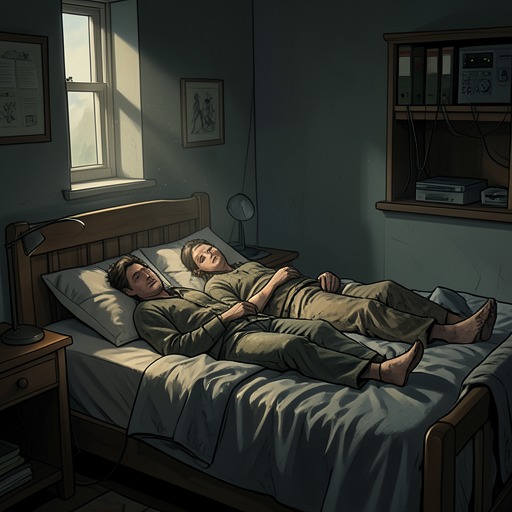
After the wedding, Jane and Robert establish a home, and the narrator visits them one morning. They welcome the visitor warmly. Robert brings out a bottle of brandy and serves it to Jane; as she watches him pour, she begins to laugh, and the narrator joins her.
This domestic moment supplies a counterpoint to the objections and employment decisions preceding the wedding. The account does not claim that marriage resolves every difficulty facing the couple, but it does show them together in a home of their own, sharing an easy moment with a visitor. The bottle and the act of serving are unremarkable gestures, yet they make the result of the earlier choice visible as companionship rather than ceremony alone. The narrator’s laughter joins Jane’s, briefly placing the visitor inside the couple’s welcome.