Marco Polo and Lisa’s fabricated adultery relationship
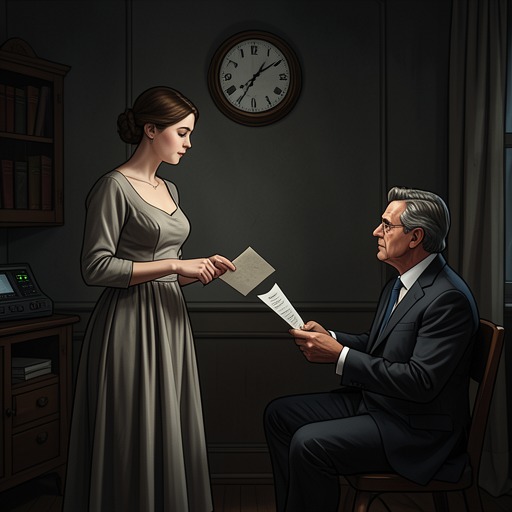
ChowringheeMarco Polo and Lisa’s fabricated adultery relationship is a legal fiction devised to make Marco Polo and Susan Munro’s divorce possible. Lisa agrees to appear as Marco Polo’s lover and to help create evidence of an affair, while the couple and their lawyer must hide the arrangement from the court. Their connection is therefore defined not by a disclosed romance but by staged encounters, invented correspondence, money, and the risk that the performance will be exposed as collusion.
The divorce problem and Lisa’s proposed role
Susan Munro proposes Lisa when Marco Polo cannot find a woman willing to be named in a fabricated adultery case. She argues that Lisa has little reputation to lose and that Susan has done her favors. The suggestion makes Lisa a practical solution to the divorce problem, not its original instigator: Susan identifies her as a possible participant, and Marco Polo later approaches her with the plan.
Lisa receives Marco Polo and Susan together and laughs at the sight of the supposed good wife and adulterous husband. Marco Polo explains the arrangement. Lisa says she understands the situation because her own divorce proceedings took place in the same court. Her prior experience gives her familiarity with the legal setting, though the account does not establish that her earlier divorce involved the same kind of scheme.
The proposed story also relies on a true detail that can be made to serve a false purpose. Susan is to tell the court that she introduced Marco Polo and Lisa; Marco Polo points out that she did, in fact, introduce them. That small factual foothold allows the participants to build a larger fiction around an authentic connection, making the arrangement depend on the difference between a truthful detail and the misleading account it supports.
Manufacturing the appearance of an affair
Marco Polo struggles to describe the adulterous conduct he is supposed to have committed. He proposes that, on four or five specified nights, he was caught spending the night at Lisa’s place, and asks Susan to record the dates in her notebook. His embarrassment interrupts the explanation; Lisa supplies the euphemism of having spent the night and laughs as she settles onto the bed. Her amusement contrasts with his discomfort and makes the scene resemble a theatrical rehearsal more than a confession.
The planned evidence extends beyond the alleged nights. Marco Polo says he will write letters to Lisa after consulting the lawyer, which Lisa can send to Susan in separate envelopes as proof. He suggests that Lisa might write some of them herself, and forces out a sample of the clandestine, intimate language the letters would need. He also proposes that they be seen together in restaurants on a couple of occasions. The case is thus to be supported by a coordinated pattern: dates recorded by Susan, letters routed through her, and public appearances that can retrospectively be treated as signs of an affair.
Lisa calls the arrangement an interesting piece of theatre. She nevertheless agrees that they could spend time together that night. Marco Polo thanks her on behalf of himself and his wife, presenting Lisa’s assistance as a favor for their marriage even as the plan casts her as the evidence of its breach. The account records the proposed encounter and the preparations around it, but does not establish that the fabricated sexual relationship was consummated.
Payment and the concealed agreement
After Marco Polo has been alone in Lisa’s room, Susan emerges about ten minutes later. On the way home, she asks how much he can contribute. She explains that Lisa wants money in return for becoming involved in the scheme; when Marco Polo asks the amount, Susan names two thousand. The requested payment makes the practical terms explicit: Lisa is not simply helping an acquaintance, but accepting compensation for taking on the risks and work of the role.
Marco Polo is financially strained. He says that Susan already knows his circumstances, and later explains that what little money remains must also go to the lawyer. Nonetheless, he writes Lisa two timid letters in a restaurant that afternoon, feeling physically sick at the thought of what he must do to satisfy the law. That evening he goes to her home. He gives her one thousand rupees, promising to send more when he returns, and explains that he must reserve the rest for the lawyer. The promised total and the partial payment show the arrangement proceeding under the pressure of his limited means.
Filing the petition and the risk of exposure
After the lawyer has been paid, Susan’s adultery petition is filed in court. At the signing, the lawyer warns the participants that the petition must deny any agreement between the parties to obtain the divorce. He identifies such collusion as dangerous if the court suspects it, and specifically cautions that nobody can know Lisa was paid. From that point, he says, Susan alone is the firm’s client and the couple must not write to him.
The warning reveals the contradiction at the heart of Marco Polo and Lisa’s arrangement: the staged affair must appear to be the cause of the divorce, while the actual agreement creating that appearance must remain hidden. The correspondence and restaurant appearances intended to make the charge persuasive become liabilities if they also expose coordination. The lawyer’s instruction to sever contact underscores that even ordinary communication could endanger the case.
What the arrangement means
The relationship is built from outward signs that have been assigned a legal meaning in advance: a night together, letters, and public sightings. Its theatrical quality is explicit in Lisa’s response, but the performance carries consequences beyond the joke. Susan’s petition proceeds, Lisa receives an initial payment, and Marco Polo assumes financial and emotional strain to supply the acts the law requires. The available account ends with the petition filed and the warning delivered; it does not disclose the final result of the divorce case.
Lisa’s prior experience in the same court and her willingness to participate help make the scheme workable, while Susan’s role as introducer and organizer binds the supposed lovers into a carefully managed story. The arrangement exposes the gap between the intimate conduct alleged in court and the practical machinery used to make that allegation credible. For Marco Polo and Lisa, adultery exists here as a rehearsed public narrative, not as an established private romance.