Sohrabji and his daughter
ChowringheeSohrabji and his daughter share a tender, sustaining bond that reaches across distance, education, and his life behind a bar. She is his greatest source of pride, but also the person whose concern for the families affected by his trade makes him question whether an honest business can still carry moral responsibility. Her departure for England leaves him with that question unanswered and, eventually, with a changed position behind the bar.
Affection, Pride, and Distance
Sohrabji describes his daughter with unmistakable admiration. Though he himself received no education, he values people who study and think, and sees those qualities in her: she is intelligent, well-informed, beautiful, and immersed in substantial books. She is studying abroad, and her letters arrive daily. The regular correspondence keeps their closeness alive across the distance, while his pride in her contrasts with his embarrassment about his own limited schooling.
He would like to answer her with long letters, but feels ashamed of his poor spelling. His daughter has explicitly told him not to worry about it and encouraged him to write at length. The obstacle, then, is not any lack of affection or invitation from her; it is his own sense of inadequacy. Their letters reveal a daughter trying to make communication easy and a father who loves her but remains self-conscious about putting his thoughts on paper.
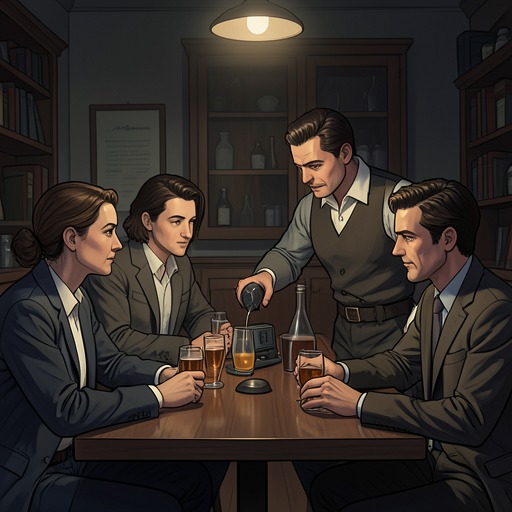
Sohrabji speaks of his daughter while trying to understand the business that occupies his life. He asks why people drink and wonders whether anyone has considered the responsibility of those who sell alcohol. His inability to take such questions to his daughter directly—despite trusting her intelligence—shows both the intimacy between them and the limits imposed by his embarrassment. He tells the narrator instead, using the story of their relationship to approach a question he cannot settle by himself.
The Visit That Changes His View
One day, Sohrabji’s daughter tells him she wants to come to the bar with him. He refuses, saying he has too much work there and is always occupied. When she asks what is wrong with her visiting, his answer does not resolve the matter. Her wish to see where he works makes the bar, which he has kept apart from family life, a meeting point between his private affection and his public livelihood.
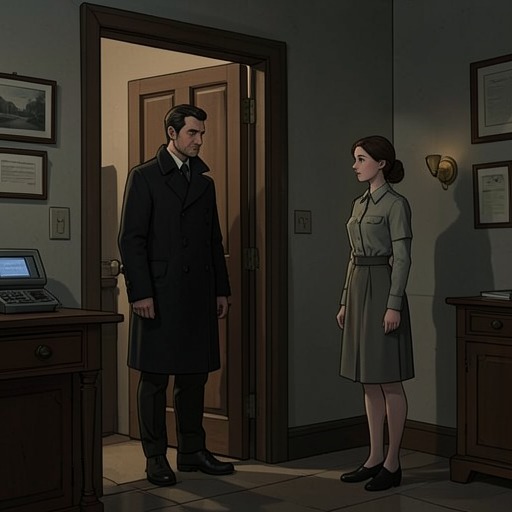
She later arrives unexpectedly, hoping to surprise her father and take him home. She will be leaving again in a few days for a long time, so the visit carries the urgency of a brief chance to be together. Sohrabji is shocked to find her in the bar. When she asks him to go with her, he takes her hand and trembles, but tells her to go home without him: he cannot close the bar then, because the customers would break everything. His response makes visible the hold the business has over him. Even in a moment shaped by his daughter’s imminent departure, he feels bound to manage the crowd and protect the premises.
On another occasion, she explains what she fears after seeing the people in the bar: their mothers, sisters, wives, and daughters may be crying at home, and those families may never forgive the people contributing to their suffering. Sohrabji has not thought about his work in those terms before. He is close to defending himself by reasoning that he does not force anyone to drink and runs his business honestly, but he cannot bring himself to say it to her. Her intervention is not an accusation that he has personally compelled his customers; it is a new way of making him see the consequences that extend beyond the bar.
Moral Doubt and the Sale of the Bar
After his daughter leaves by train for Bombay and then sails for England, her distressed expression and question about the customers’ families remain with Sohrabji. He tries to justify himself: customers choose to come, can leave after one drink, and could go elsewhere if he refused to serve them. He also reasons that their wives and daughters might stop them. Yet these arguments do not quiet his doubts. The more he repeats them, the more the same question pursues him.
The story gives this conflict a powerful inward consequence. Sohrabji begins dreaming that the mothers, sisters, wives, and daughters of his customers are cursing him through their tears, and fears that the curses might reach his own family, including his daughter. Unable to convince himself that he bears no responsibility, he reaches a state of desperation and sells the bar. Her concern has thus changed more than his opinion: it leads him to give up the business that had structured his days and income.
Separation, Financial Reversal, and Return
Selling the bar does not free Sohrabji from anxiety. He deposits the proceeds in a bank, intending to support his small family, but the bank collapses two days after he deposits the cheque. With his daughter’s education still to pay for and little prospect of work for an uneducated man, he is forced back behind a bar. The sequence sharply complicates the apparent moral resolution: he acts on the doubts his daughter awakened, but the loss of his savings makes that choice difficult to sustain.
Sohrabji returns not as the owner, but as an employee. He tells the narrator that he is no longer responsible for anything and that curses directed at the bar will not affect him. This distinction offers him a defense against the moral burden that had become unbearable, though the account does not establish that it ends his unease. His daughter’s question has altered how he understands his work, and financial necessity has brought him back to the same environment under a different relationship to it. Their bond is therefore marked not by a simple resolution, but by lasting affection, her brief but consequential challenge, and a separation after which he must continue living with what she made him see.