Sohrabji Sells His Bar after His Daughter's Visit
ChowringheeSohrabji’s sale of his bar follows a visit from his daughter that turns an ordinary workplace into a moral reckoning. Seeing the customers’ drunkenness through her eyes, he can no longer rest easily in the claim that he merely serves what people choose to drink. Selling the business briefly seems to offer an exit from that responsibility, but financial disaster forces him back behind a bar in a diminished role that cannot entirely silence his doubts.
The Daughter’s Visit
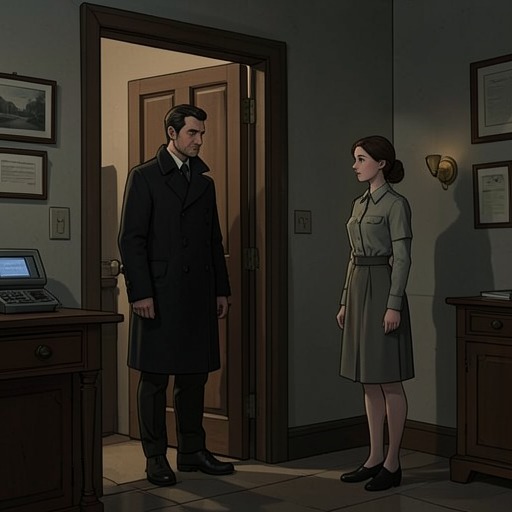
The visit comes as a surprise. Sohrabji’s daughter has arrived intending to take her father home with her; in a few days she will leave for a long time. Inside the bar she encounters men at many stages of intoxication, including one who has been lying on the floor and rises to demand a long drink. At the sight of his daughter, the drink measure in Sohrabji’s hand shakes, spilling liquor onto the table. The gesture makes his disturbance visible before he can explain it.
Outside, his daughter asks him to come with her. She has seen the people drinking in his bar and imagines their mothers, sisters, wives, and daughters waiting at home in tears. Her question is not about whether Sohrabji has forced anyone to drink; it is whether the families harmed by those men could ever forgive him. He has no answer. The visit exposes a cost that his ordinary understanding of the business has kept at a distance: the consequences of the customers’ drinking extend beyond the bar and fall upon people who are not there to choose or refuse a drink.
His daughter leaves by train for Bombay and then sails to England. Sohrabji watches her go with her sorrowful face fixed in his mind, and her question remains with him after she is gone. Her departure gives the encounter a lasting force: she cannot stay to keep challenging him, but the moral accusation she has raised continues in her absence.
Guilt and the Decision to Sell
Sohrabji tries to defend himself by returning to the logic of commerce. He does not make customers order multiple drinks, he reasons; if he refused to serve them, they could simply go to another bar. Their families, he tells himself, might have been able to stop them. He is only selling drinks, and the customers come of their own accord. Yet each argument fails to settle the matter. The more insistently he justifies his conduct, the more he feels his daughter’s question pressing against it.
His unease becomes fear. He dreams that the mothers, sisters, wives, and daughters of his customers curse him through their tears, and that the curses will reach not only him but his family, including his daughter. The imagined judgment enlarges the responsibility he had tried to confine to a transaction between seller and customer. In a state of desperation, he sells the bar. The decision is a concrete break with the business, but it does not amount to a resolution: even after the sale, he cannot convince himself that he was blameless.
That unresolved conflict follows him into a letter to his daughter. He writes that the men came voluntarily and destroyed their families, asking how their choices could be his fault. The letter repeats the defense he had rehearsed internally, but its very address to the person whose question troubled him shows that the argument has not ended the matter. Selling the bar removes him from ownership; it does not remove the memory of the people who drank there or the families he imagines suffering beyond its doors.
The Failed Escape
Sohrabji intends to put the proceeds from the sale in a bank and use them to support his small family. His daughter’s education remains a particular financial need, making the money more than a reward for giving up the business: it is supposed to provide a way forward for the household. Two days after he deposits the cheque, however, the bank fails. The timing turns his attempt to secure a different future into another crisis. The money is lost just as he has surrendered the source of income he owned.
He wonders whether the failure might be the consequence of the imagined curses and weeping that have haunted him. The question does not establish that the sale or the bank’s collapse is supernatural punishment; it reveals how thoroughly his daughter’s appeal has altered the way he interprets misfortune. An ordinary financial disaster now seems capable of belonging to the moral reckoning he fears. At the same time, the immediate practical problem is unmistakable: he needs work, must pay for his daughter’s education, and has little prospect of employment because he lacks an education himself.
Return as an Employee
Necessity drives Sohrabji back behind a bar, this time as an employee rather than its owner. He tells the narrator in a whisper that he is no longer responsible for anything and that a curse directed at the bar will not affect him. The distinction between employer and worker becomes his last available defense: he now serves within someone else’s business and tries to place responsibility with its owner. It is a change in position, not a release from the moral question his daughter raised.
Sohrabji closes his eyes, perhaps praying, and insists to himself that working there cannot be wrong when he has a family to support. His return therefore ends the attempted escape in a compromised form. He has relinquished ownership but not the need to sell drinks for a living; he has found a new justification but remains caught between economic duty and the suffering he associates with the bar. The episode’s central reversal is stark: he sells the business to evade responsibility, loses the sale’s proceeds, and returns to the same trade under another person’s authority.