Barbara Franklin's accidental poisoning death
CurtainBarbara Franklin's accidental poisoning death is the fatal reversal at the center of Poirot's later reconstruction: coffee containing Calabar-bean alkaloids, intended for John Franklin, is drunk by Barbara instead. She becomes violently ill and dies the following morning. The account ultimately implicates Arthur Hastings in the chain of events—not as a knowing poisoner, but as the unwitting participant whose movements contributed to the exchange—and shows Poirot choosing to present the death as suicide to protect people he believes innocent.
The illness and its cause
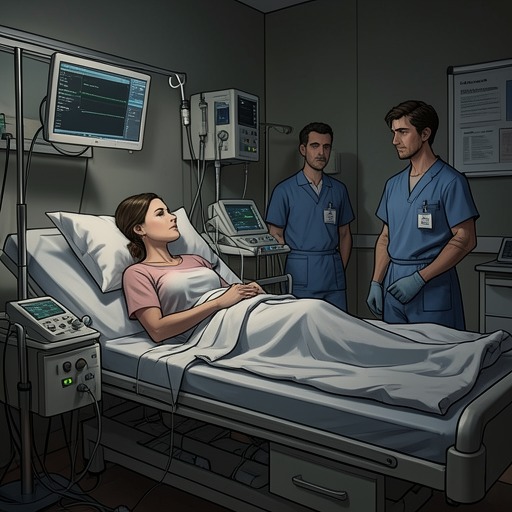
On the night in question, Hastings had reassured Poirot that nothing had happened and was likely to happen. That assurance proved mistaken: Barbara was taken violently ill, and two additional doctors were summoned, but their efforts did not save her. She died the next morning. The illness and death therefore follow an apparently ordinary gathering, rather than an openly recognized attack.
The poisoning was not identified immediately. Only twenty-four hours after Barbara's death did those present learn that she had died from physostigmine poisoning. The delayed discovery distinguishes the observable fact of her sudden illness from the later explanation of its cause: at first the death is a medical emergency, and only afterward a poisoning case.
Coffee and the mistaken exchange
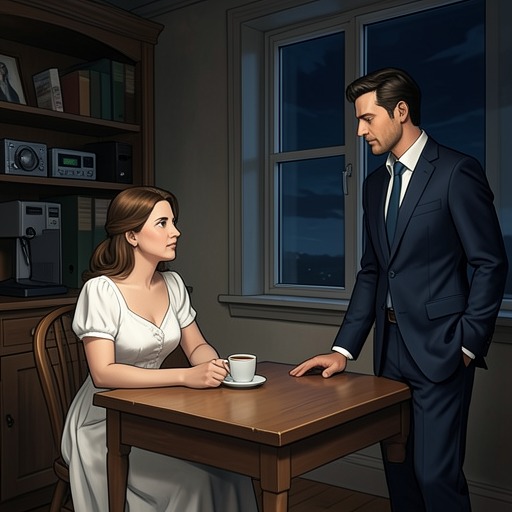
Poirot's reconstruction centers on the coffee Barbara prepares in her room. She makes a display of serving it, and Hastings later recalls that Barbara's own cup stood beside her while her husband's was on the other side of the bookcase table. The arrangement places two separate cups in the room before the fatal change in who drinks them.
The group then goes outside to watch shooting stars. Hastings is left behind with his crossword puzzle and memories; seeking a Shakespeare quotation and concealing his emotion, he swings around the bookcase. When the others return, the cups' intended recipients have, in effect, been reversed: Barbara drinks the coffee containing the Calabar-bean alkaloids intended for John, while John drinks the plain coffee intended for Barbara. The poisoning takes effect through this mistaken exchange, not through Barbara knowingly taking the poison meant for her husband.
Hastings's part and Poirot's interpretation
When Poirot later tells Hastings that he killed Barbara, Hastings's responsibility is framed as unwitting and circumstantial. Poirot points to a further angle in the triangle that neither he nor Hastings had fully taken into account: Stephen Norton had employed tactics that went unseen and unheard by them. He suggests that Norton's influence formed part of the circumstances around the event, while explaining that Hastings's movements at the bookcase helped produce the fatal outcome.
Poirot also says that, once he understood what had happened, he could not prove it. This limits what his reconstruction can establish publicly: he presents a private explanation to Hastings, but does not claim that he can demonstrate the exchange to others. The stark language of blame thus coexists with the account's emphasis on accident, unseen influence, and the absence of proof.
The suicide explanation and its consequences
Poirot says he stressed Barbara's unconvincing remarks about ending her life and repeated them with conviction, so that her death would be accepted as suicide. He judged that any other interpretation would inevitably direct suspicion toward John or Judith Hastings, whom he considered utterly innocent. His intervention therefore changes the public meaning of the death: a poisoning caused by a mistaken exchange is treated as suicide rather than as a crime attributable to either of them.
The event consequently turns on a distinction between what happened and what can be established. Barbara dies after drinking the poisoned coffee; Poirot believes Hastings's actions helped bring about the exchange, yet sees no way to prove the sequence. His chosen explanation shields John and Judith from suspicion, but leaves Hastings to learn that his ordinary movements had been part of a fatal chain of events. The death's accidental character does not lessen its consequence; it makes responsibility harder to separate from mischance and from Norton's concealed intervention.