Poirot murders Stephen Norton
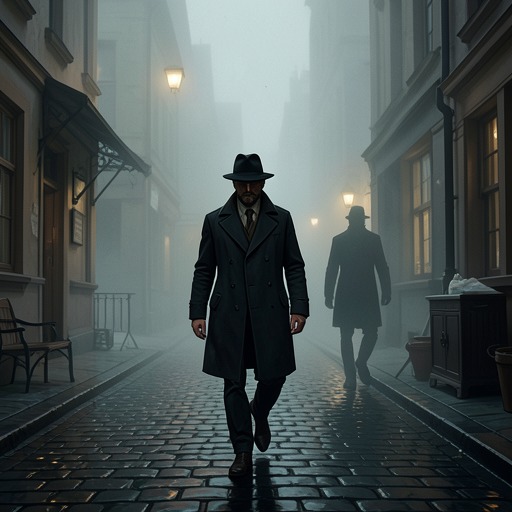
CurtainHercule Poirot murders Stephen Norton in a planned act that ends the contest between them while turning the conventions of a locked-room mystery into instruments of concealment. Poirot first declares that Norton was deliberately killed; in the account he leaves for Arthur Hastings, he reveals that he himself did it. The explanation resolves the apparent suicide but does not erase its moral contradiction: Poirot invokes the danger Norton poses, yet carries out the killing and fabricates the evidence that will make it appear otherwise.
The decision to act
The murder follows Poirot’s recognition that Norton is behind the crimes and manipulations gathered around the people at Styles. Poirot says that he decided the matter had to be dealt with immediately and arranged for Arthur Hastings to bring Norton to his room that night. The urgency is part of the plan: Poirot intends to prevent Norton from presenting his own version of events and from continuing to exploit uncertainty about the deaths at the house.
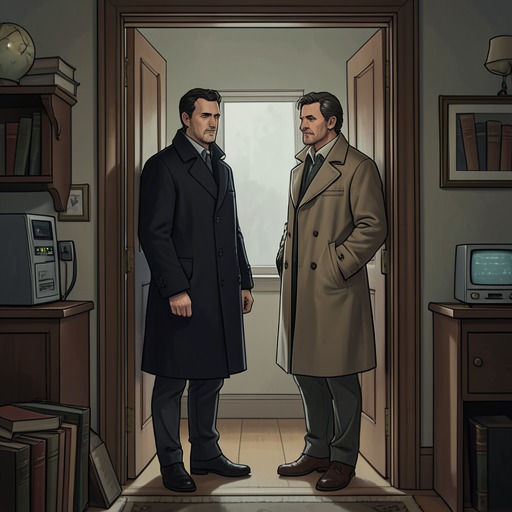
Norton arrives prepared to tell an arranged story, but Poirot gives him no opportunity to do so. He tells Norton plainly what he knows. Norton does not deny it; instead, he sits back and smirks, then asks what Poirot intends to do about his idea. Poirot answers that he intends to execute him. The exchange makes the decision explicit: this is neither an accidental death nor a spontaneous response to a sudden threat, but a deliberate killing announced before it is carried out.
Poison in the chocolate
At the time of the confrontation, the two men are about to have chocolate. Poirot identifies poison as the simplest means and hands Norton the cup he has just poured. Norton asks to drink from Poirot’s cup instead of his own, and Poirot agrees because the exchange does not disrupt the plan: the sleeping drug is in the chocolate itself, and both men drink the same preparation.
Poirot explains that he too takes sleeping tablets nightly and has developed a tolerance. A dose that will put Norton to sleep will have little effect on him; he further says that his strychnine tonic counteracts the remaining effect on himself. The shared drink therefore conceals an unequal outcome. Norton falls asleep, while Poirot remains able to continue the staged sequence. The chocolate is not merely a means of incapacitation but the first part of a plan that turns an apparently ordinary shared refreshment into cover for murder.
Staging the locked-room death
Once Norton is asleep, Poirot places him in Poirot’s wheelchair, which he says has several mechanisms, and wheels him to its customary position in the window embrasure behind the curtains. Curtiss then puts Poirot to bed. When the house is quiet, Poirot moves Norton to his own room, relying on Arthur Hastings as an unwitting witness to the next part of the deception.
Poirot discloses that he wears a wig and a false moustache, and that he had obtained a replica after pretending to burn the original. He puts on Norton’s dressing gown, ruffles his grey hair, and goes into the passage to knock on Hastings’s door. Hastings sees what appears to be Norton leaving the bathroom and limping into his own room, and hears the key turn in the lock from inside. The sight and sound are staged to establish a false chronology: they make it appear that Norton entered the locked room alive and alone.
After Hastings has returned to his room, Poirot puts the dressing gown back on Norton, lays him on the bed, and shoots him with a small pistol he had acquired abroad and kept locked away. Poirot says he had twice placed the pistol conspicuously on Norton’s dressing table while Norton was elsewhere, giving the weapon an apparent connection to Norton. He then leaves the room, puts the key in Norton’s pocket, locks the door from outside with a duplicate key he has possessed for some time, and wheels the chair back to his own room. The disguise, planted sighting of the pistol, duplicate key, and Hastings’s mistaken observation together manufacture the appearance of suicide in a locked room.
The public verdict and the concealed truth
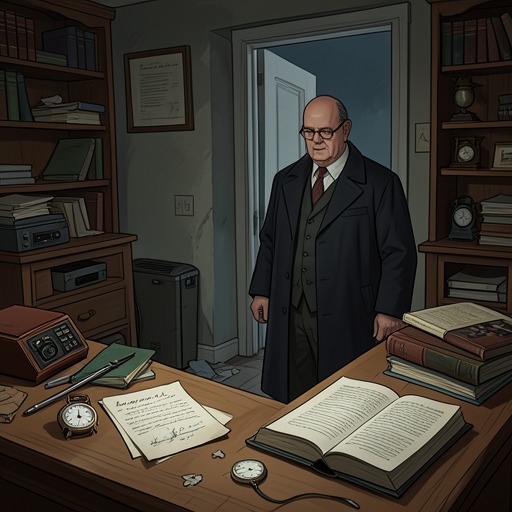
Poirot’s confession overturns the official account of Norton’s death. At the inquest, the verdict is suicide. The door was locked from the inside, the key was in Norton’s pocket, the shutters were closed, and the pistol was in his hand. A surgeon raises one doubt: it was unusual for a man to shoot himself in the exact centre of his forehead. That objection remains only a shadow of doubt beside the assembled signs of suicide. Norton’s headaches and poor investments are offered as possible reasons, although they are hardly convincing; the pistol, meanwhile, had been seen on his dressing table by a housemaid during his stay at Styles.
The contrast is central to the murder’s design. Poirot’s reconstruction explains why the physical scene looked so complete: he arranged the locked door, the key, the pistol, and Hastings’s testimony to support the false conclusion. The inquest’s verdict therefore records not what happened but what the evidence, deliberately staged, appeared to prove. Poirot’s own earlier declaration that Norton was deliberately killed gives the reader the truth before his final account identifies the killer; the confession then reveals how the apparent suicide was made.
Meaning and consequence
The act is a decisive reversal for Poirot. He had stated, “I do not approve of murder”; here, he deliberately kills Norton and engineers a false suicide verdict. His certainty that Norton must be stopped does not make the methods lawful or truthful. The case therefore places the detective’s commitment to order in conflict with his decision to become both executioner and fabricator of evidence.
Poirot’s explanation is written after the killing, when he says he is tired and that his exertions have strained him. It serves as a final disclosure to Arthur Hastings: the mystery is solved for his friend, but the truth is not delivered through an official investigation. Norton’s death remains publicly classified as suicide, while the private account establishes that Poirot planned and carried it out. The result is not a clean restoration of justice, but an ending in which the investigator wins the contest by violating the principles that had defined his opposition to murder.