Ashathjhuri
DevdasAshathjhuri is the village where Chandramukhi has lived for two years by the time the narrative returns to her in Chapter 15. On the banks of a river, she has made a modest home among farmers and other villagers, building a life shaped by practical care for her neighbors. The village’s quiet routines become the ground from which she acts when her letters to Devdas go unanswered and he disappears from her news.
Setting and domestic life
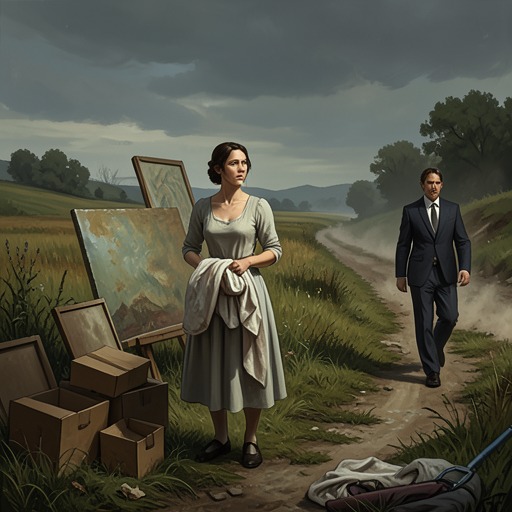
The village takes its name from an ancient peepul tree whose hanging roots have spread into the ground over a wide area. Chandramukhi’s ramshackle hut stands on a slight slope beside the river. It has two rooms, one serving as both kitchen and storeroom and the other as a bedroom; a shed beside it houses a healthy black cow. A swept yard, maintained each day by Rama Bagdi’s daughter, is edged with thorn bushes, with a berry tree in the middle and a tulsi plant given a prominent corner.
Chandramukhi has had palm trees cut down to make steps from her hut to the river, steps used only by her. The river also makes the home vulnerable: during the rains, water rises over the banks and laps around her doorstep. When this happens, villagers arrive with shovels and spades to raise the ground with soil. The detail makes her home both private and dependent on the community around it.
Neighbors and mutual support
Ashathjhuri is described as a settlement of farmers, people from lower castes, a few milkmen, and several cobbler families, rather than genteel residents. Chandramukhi’s relations with these neighbors are practical and reciprocal. After settling in the village, she writes to Devdas; he sends money with his reply, and she lends it in small sums to villagers in need. She charges no interest and does not insist on repayment. Those who can repay do so, while others bring vegetables, milk, or grain as gifts; when borrowers fail to return the money, she answers with a lighthearted warning that she will lend to them no more.
The villagers also turn to her with requests for help beyond immediate loans. They kneel and ask her to pray for good rains, and she does so. When harvests disappoint or taxes press on them, they return for assistance, and she gives what she can. Her generosity extends to a milkman’s family: she helps them build a home near her hut, pays their son’s dowry, and buys farm implements. The family becomes dependent on her and remains deeply loyal.
From refuge to point of departure
Ashathjhuri offers Chandramukhi a settled existence, but it also becomes the base for renewed movement. She has received no news from Devdas for six months. Her letters go unanswered, and registered letters are returned undelivered. Concerned by this silence, she asks Bhairav, the milkman, how far Talshonapur is. He explains that the estate lies beyond two meadows and belongs to a landlord’s family: the former zamindar died three years earlier, and his two sons now run the estate.
Chandramukhi asks Bhairav to take her there. When he agrees, she presses to leave that very day. The village’s location thus acquires a narrative purpose: from her riverside home, she can turn the care she has given others outward into a search for Devdas. Ashathjhuri is not simply a retreat from her former life; it is the home and community from which she chooses to act when distance and silence threaten to make him unreachable.