Hatipota
DevdasHatipota is the village estate of Bhuvan Chowdhury, the wealthy zamindar whom Parvati marries, and the setting where her life as a wife and stepmother takes shape. Its imposing mansion offers her a position of authority and material abundance, but not the companionship that might make its scale feel like a home. Later, when she tries to bring Devdas there to care for him, Hatipota becomes the goal of a journey he cannot complete in time: he arrives at the estate gravely ill and dies beneath the peepul tree outside the house.
Setting and Marriage
Hatipota is about twenty miles from Parvati’s family home, in the Burdwan district. Her father arranges her marriage to Bhuvan Chowdhury, the village zamindar, a wealthy widower seeking to marry again after his wife’s death. The match is unwelcome to many in Parvati’s household, but the prospect of two to three thousand rupees from Bhuvan weighs heavily in the decision. The marriage places Parvati in a new household whose wealth is immediately visible, and whose social arrangements are as consequential as its buildings.
The ceremony takes place at the Chakravarty home rather than in Hatipota. Nearly ten days after Parvati injures her forehead, Bhuvan arrives in groom’s finery for a simple second wedding. He is described as well over forty, fair and plump, with a salt-and-pepper moustache and a receding hairline. The restrained ceremony and the subdued response of the women around him frame the match as a practical alliance rather than a celebration of young romance. Hatipota is the destination that gives this arrangement its material reality: Parvati is to leave her childhood home for the estate of an older, wealthy widower.
The Mansion and Its Household
On arriving at her husband’s house, Parvati finds a huge mansion built on old money, with outer courtyards, inner chambers, rooms for worship and visitors, guest apartments, office rooms, and a large staff of maids and servants. She had known that Bhuvan was wealthy, but not that his household was so extensive. Its scale does not bring a corresponding fullness of social life. The inner chambers seem empty, and the people who welcome her are few: an elderly aunt and the household staff.
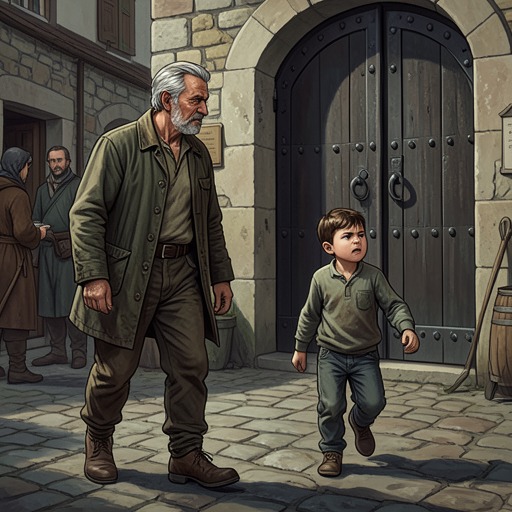
Parvati is immediately recognized as the lady of the house. The role is more than a title, because her place in the household is defined through new family obligations. Just before dusk, a young man of about twenty approaches, keeps his distance, and identifies himself as her eldest son while seeking her blessing. Parvati looks at him through her veil and says nothing. Hatipota therefore introduces her not only as Bhuvan’s new wife but also as a mother by marriage, with an established family structure into which she must enter.
She begins to act within that role by reaching out to the household’s estranged relationships. After her father visits, Parvati tells Mahendra to fetch her eldest daughter, anticipating that Yashoda may resist coming. Mahendra thinks his father would be a better person to send; the following day, however, he goes himself, and Yashoda arrives four days later. Parvati receives her in a display of the estate’s wealth, wearing the many costly jewels Bhuvan has recently brought from Calcutta. Yet the important gesture is not the jewelry alone: Parvati leads Yashoda to her room, sits her down, fans her, and gently acknowledges that Yashoda may be angry with her. She then removes her ornaments one by one and places them on Yashoda. In the large household, Parvati uses her new status and possessions to make an approach toward a daughter who has reason to resent the changed family order.
A Place of Chosen Care
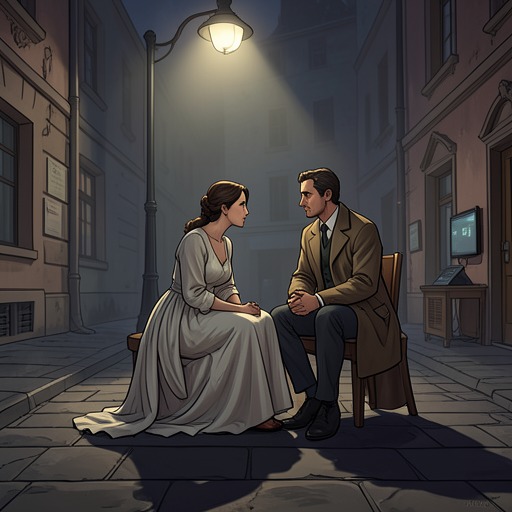
Hatipota’s role changes when Parvati’s concern turns toward Devdas. After receiving a letter, she calls for two palanquins and thirty-two bearers and sets out for Talshonapur. Devdas has already left for Calcutta by the time she arrives, but she meets Manorama and explains that she has come not to visit him briefly but to take him home, because there is no one there to care for him. When Manorama asks whether she would feel ashamed, Parvati rejects the premise: in her view, she is reclaiming someone who rightfully belongs with her. Her words make Hatipota more than the wealthy husband’s residence; it is the home she means to offer Devdas as a place of shelter and care.
That offer also reverses the emotional meaning of the estate. Parvati entered it through a marriage arranged amid family pressure and financial calculation, yet she later seeks to use its household as a refuge for the man she had hoped to marry. Devdas, meanwhile, spends six months at home after his father’s death before restlessness and thoughts of Parvati unsettle him again. The novel thus places Hatipota within an unfinished history of childhood intimacy, thwarted marriage, and belated care. Parvati can command a household and make room for Devdas, but she cannot make him arrive when she first goes looking for him.
Devdas’s Final Arrival
On his last journey, Devdas leaves the train at Pandua in the early hours after a night of rain. He is shivering, and the coachman he approaches warns that the roads are too bad for his horses to travel all the way to Hatipota. Devdas asks for a palanquin, then learns that the trip may take a couple of days. He silently measures that estimate against his failing life. He nevertheless insists on going: he has promised Parvati he will come, and he remembers the taunts and mischief with which he hurt her. He also thinks of his mother and of Chandramukhi, whom he had long spurned; her face now comes to mind beside his mother’s. Still, he regards the promise to see Parvati one last time as an obligation he must honor.
The sixteen-mile cart journey proceeds over damaged, rain-soaked roads. The cart moves slowly, sometimes needing to be pushed, while the bullocks are driven onward. Devdas’s fever returns after dusk, and he grows so breathless that he cannot answer the coachman. Though the cart is meant to arrive by ten, it reaches the huge peepul tree before Bhuvan’s house close to midnight. The coachman calls to him, but receives no answer.
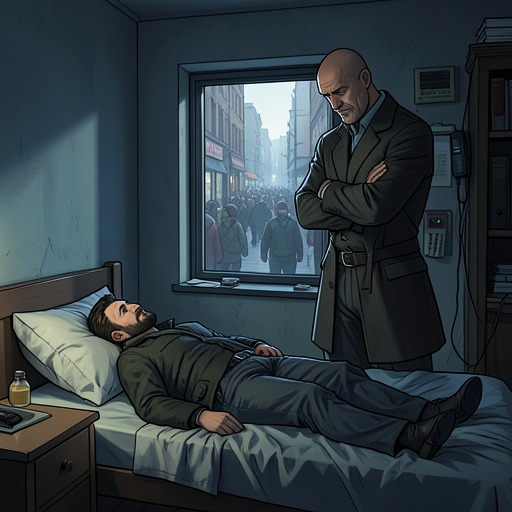
The coachman lays hay on the stone platform around the tree and lifts Devdas out of the cart. The zamindar’s household is asleep, and no one is initially there to receive the dying traveler. Devdas manages to take a hundred-rupee note from his pocket and hand it to the coachman, who ties it into his shawl after recognizing how critical Devdas’s condition is. Wrapped in Devdas’s own shawl, he remains beneath the lantern while his companion sits at his feet. At dawn, people from the estate emerge and find a well-dressed man dying beneath the tree, with expensive shoes and rings. Bhuvan sends for a doctor and comes out himself; Devdas looks at those gathered but can no longer speak, and tears continue to run down his face. The doctor says that death is imminent. Hatipota, the home Parvati had meant to share with him, becomes instead the threshold at which his promised return ends without their meeting.