Talshonapur
DevdasTalshonapur is the village that anchors the early relationship between Devdas Mukherjee and Parvati Chakravarty, then returns at decisive moments when their possible reunion fails. It is both a place of childhood attachment and a marker of obligations that neither Devdas nor Parvati can escape: family opposition, Parvati’s wedding, and, finally, the distance between a homecoming hoped for and one that arrives too late.
Village and Early Attachment
The narrative identifies Talshonapur as Devdas’s village and connects it to the childhood memories he sometimes recalls after years away in Calcutta. By then, his interests and habits have changed: he talks of politics, meetings, organizations, cricket, and football, while thoughts of childhood briefly surface before other enthusiasms displace them. The narrator’s rueful reference to Parvati and the village together makes Talshonapur more than a geographic point. It represents a familiar life that Devdas has left behind, and a bond whose importance he does not consistently attend to.
That contrast gives the village an emotional function without making it a refuge from conflict. Devdas’s occasional memories do not bring him back to the simplicity of their earlier companionship; they are fleeting, and his attention moves elsewhere. Talshonapur consequently figures as a past that remains present but does not control his choices. When he later returns, he does so within the constraints of family decisions and Parvati’s impending marriage, not as someone free to restore what the years apart have altered.
The Wedding and a Failed Meeting
During Devdas’s visit, he is unable to secure even a few minutes alone with Parvati. Her mother tells him that, since he is there, he should stay for Parvati’s wedding, and he agrees. The exchange places him in the village at the very moment when their relationship is becoming subject to a public family arrangement. His assent does not resolve the conflict or establish that he accepts the marriage emotionally; it records what he says when invited to remain for an event already approaching.
Parvati’s uncertainty about what Devdas will do sharpens the difference between physical proximity and meaningful reunion. She hopes the previous night will not have been in vain and imagines him returning to tell her he cannot bear to see her marry someone else. Instead, a few days later, she receives his letter. He explains that neither of his parents wants them to marry, that opposing them would wound them beyond what he feels capable of doing, and that Parvati’s family is not considered high-born. Talshonapur is therefore bound to a private hope that collides with family authority and status. The village brings the two characters near each other, but it cannot make their wishes prevail over the conditions governing their marriage.
Arrival and Absence
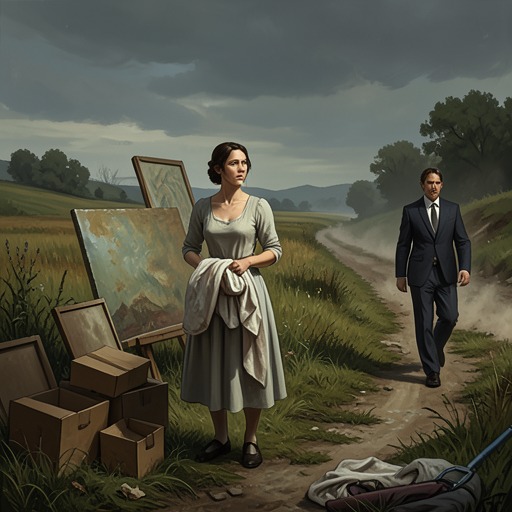
Talshonapur’s most pointed recurrence comes when Parvati travels there intending to take Devdas home with her. The palanquins arrive shortly after dusk, but Devdas has already left for Calcutta, having departed at noon. The gap is only part of a day, yet it overturns the purpose of her journey: she reaches the place where she expects to find him after he has gone. Parvati strikes her brow and blames her fate, then meets Manorama. The missed encounter makes the village a threshold of separation rather than the site of a reunion.
Parvati clarifies her purpose to Manorama. She says she has not come merely to see Devdas, but to take him home because no one there is caring for him. Her words give the journey a practical as well as emotional aim: she seeks to remove him from neglect and bring him into a household where he can be looked after. But Talshonapur cannot hold him in place long enough for that care to reach him. His departure precedes her arrival, turning the village’s familiar role as a point of return into another setting for missed timing.
The Village Name After Death
Talshonapur remains present even when the story’s action has moved elsewhere. After Devdas dies, the letters found in his pocket include one addressed to him from Dwijodas Mukherjee of Talshonapur. The letter says that it is impossible to send any more money. This detail connects the village to Devdas’s dependence on support from home and to a material limit that has become visible only after his death. Talshonapur is not simply remembered as the place he left; it is also the source named in a final piece of correspondence, evidence of an ongoing tie that did not prevent his isolation.
The village name prompts another recognition at the death scene. When Mahendra hears it, he identifies Talshonapur as his mother’s hometown and begins to suggest that she could look at the body. Bhuvan Babu dismisses the suggestion, asking whether Mahendra wants her to come identify the corpse. The exchange gives Talshonapur a connection to another household and makes its name momentarily summon the possibility of family recognition. That possibility is immediately refused. Across the novel’s recurrences, the village is associated with origins, marriage, intended care, and kinship, but each association meets an impediment: changing attention, social barriers, departure, or death. Its significance lies in that repeated contrast between the home to which people are attached and the reunion or protection that home cannot guarantee.