Columbia, Maryland
ErasureColumbia, Maryland is both a planned city whose original design was overtaken by its growth and the location beside which Thelonious Ellison’s mother enters residential care. The convalescence retreat just outside the city becomes the setting for a difficult change in family life: a place presented as comfortable and reassuring, but experienced by Thelonious as the point at which he can no longer keep his mother safe at home.
City and Care Facility
Columbia had been planned as a city, but its population eventually exceeded the plan, after which the original design began to work against the place it was meant to shape. Just outside the city stood the retreat where Thelonious would arrange care for his mother. The facility’s name softened its institutional character, and its presentation emphasized comfort: patterned clothes rather than conventional hospital uniforms, seven recreation areas showing both vintage and newer films, and food its representative urged visitors to try. She also said a physician was on the grounds at all times.
The retreat’s surroundings and amenities initially make it appear reassuring. The staff are described as young and fit, and they smile as they attend to residents whose faces often show little response. The grounds include an expansive green lawn and a wrought-iron fence. Yet the cheerful order of the place cannot conceal what it means to Thelonious: his mother will live among people waiting in a setting designed around dependency and care.
The Decision to Admit His Mother
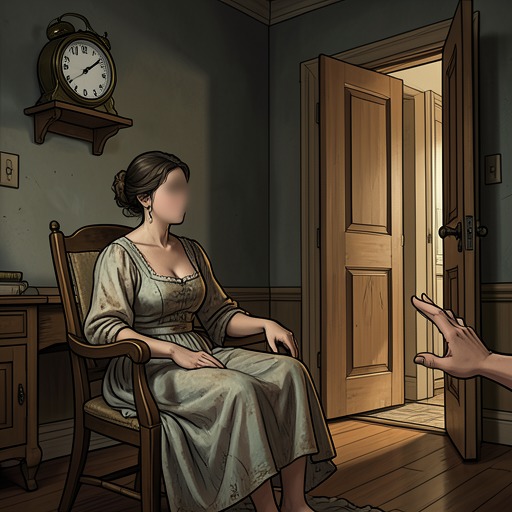
The move follows a period in which Thelonious’s responsibility for his mother has become difficult to separate from fear for her safety. After Lorraine’s wedding, he stays awake beside his mother, exhausted and afraid that she might leave her bed and be injured or die. He recognizes that admitting her has become urgent, even as he is desperate to stop feeling desperate. The next morning, his mother briefly recognizes him and greets him as Monksie, a moment of familiarity that sits uneasily beside the decision ahead.
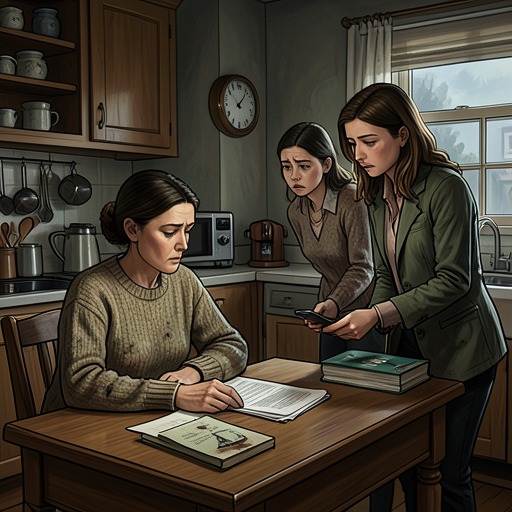
Thelonious tells Bill Ellison that their mother will be admitted the following day. Bill says he will fly in; Thelonious discourages him, saying the day will be difficult and that he plans to take their mother and stay with her. Bill insists that he will come anyway. Their exchange makes the admission a family crisis even though Thelonious is the one organizing it and expecting to accompany her through the transition.
Admission and the Grounds
During the admissions process, Mother Ellison is unusually clear-headed. Thelonious is ready to take her back to the beach, but the administrator proceeds with the questions and forms without hesitation. Her new suite is more like an apartment than a hospital room, though it has no kitchen. When Thelonious offers to bring belongings from home, his mother leaves the choice to him. He ultimately brings no furniture: the retreat’s furniture has rounded edges and soft surfaces wherever possible, making its design part of the practical care environment.
Outside, the grounds sharpen the emotional difference between a residence and a place of treatment. One older woman seeks acknowledgment from Thelonious as he passes her wheelchair, while other residents occupy the lawn. Mother Ellison wanders toward the fence and shows no recognition when he turns her back. The nurse who has been accompanying them helps settle her into bed and then gently guides Thelonious out, offering to sit with her. His mother’s lucidity during paperwork has not prevented this sudden rupture in recognition; the admission makes visible how unevenly her condition can appear.
Ongoing Care and Significance
The retreat remains part of Thelonious’s life after the initial admission. On a later visit, Mother Ellison’s incontinence has worsened, and although she seems physically able to move, she chooses not to. A nurse and an orderly are caring for her when Thelonious arrives, and he steps into the corridor. He remembers the woman who once described seeing colors while listening to Mahler’s Fourth Symphony, an image that measures the distance between her former expressive life and her present dependence without making them the same person.
Columbia’s retreat therefore represents both a response to real care needs and a painful limit on Thelonious’s ability to provide care himself. The facility offers staff, supervision, and an environment adapted for residents, while the admission brings the loss of familiar surroundings and the practical separation of mother and son. Its calm lawns and reassuring amenities cannot resolve that conflict; they frame the moment when love and responsibility require Thelonious to entrust his mother’s safety to others.