Charlie’s Firestarting Safety Rules
FirestarterCharlie’s Firestarting Safety Rules are the family’s attempt to turn a frightening, involuntary power into something Charlie McGee can manage without harming herself or anyone else. First taught by her parents after she burns her mother, the rules emphasize restraint, redirection, and the danger of directing fire at a person. Later, as Charlie and Andy McGee face a situation in which they may have to defend themselves, the rules meet a harsher question: whether using a power she considers bad can nevertheless be necessary.
What the Rules Are Designed to Address
Charlie’s mother identifies the ability as pyrokinesis, explaining that it can sometimes light fires through thought and tends to occur when Charlie is upset. The explanation is explicitly tentative: her mother frames it as what the family can tell, rather than as a complete account of how the power works. She also describes its effects as uneven. Some people may have such a power without knowing it; in other cases, it can take hold briefly and endanger the person who has it.
Charlie’s father connects that warning to an earlier childhood episode in which Charlie’s hair caught fire. He tells her that she can learn control, but also reassures her that the power’s emergence is not her fault. This distinction is central to the rules that follow: Charlie is not blamed for possessing the ability, yet she is asked to take responsibility for what she does when it appears. The family’s concern is practical as well as moral. A frightening episode cannot simply be wished away, so they try to give Charlie actions to take when she feels unable to prevent one.
The Household Safety Protocol
The parents’ instructions begin with prevention. Charlie is asked to avoid becoming upset in the way that starts fires whenever she can. The absolute quality of this request is softened by the recognition that she may not always be able to control her feelings. If she cannot stop the episode, she should push the fire away from herself, direct it toward an unoccupied target such as a wastebasket or ashtray, try to get outside, and aim it at water if water is available.
These instructions are a sequence of alternatives rather than a claim that Charlie has complete control. They move from trying to avoid the trigger, to moving the danger away from her body, to seeking a safer setting or target. Water has a particular place in the protocol as a possible destination for the fire, but the advice is conditional on its being nearby. The parents offer no guarantee that any one step will work; instead, they give Charlie options to recall in a moment when fear and upset may make the power difficult to manage.
The clearest boundary is interpersonal: Charlie must never direct the fire at a person. Her mother explains that doing so could kill someone. The rule therefore does more than protect property or prevent an accident. It identifies a threshold between an episode Charlie must try to manage and an act that could make another person its victim. The parents’ instruction is severe, but its stated reason is the possible consequence, not a judgment that Charlie is inherently dangerous or bad.
The First Breach and Its Meaning
The rules are formed in the aftermath of a specific failure. Charlie recalls that she became angry after being told she could not visit Deenie because she had not tidied her room. The fire appeared suddenly, and she directed it at her mother. By the time the family discusses the power, her mother’s hands are bandaged. Charlie understands why her father has been reading her frightening stories and reacts with terror and remorse.
That episode gives the safety instructions their urgency and their emotional cost. The family is not discussing a hypothetical danger: Charlie has already crossed the boundary against directing the power at someone close to her. At the same time, the scene preserves the distinction between intention and outcome. Charlie’s anger precedes the fire, but she has only just learned what the ability is and says she did not understand it. Her parents respond by naming the danger and setting rules, while her father insists that the power itself is not her fault. The rules thus ask for care without treating a child’s first, poorly understood episode as proof of deliberate cruelty.
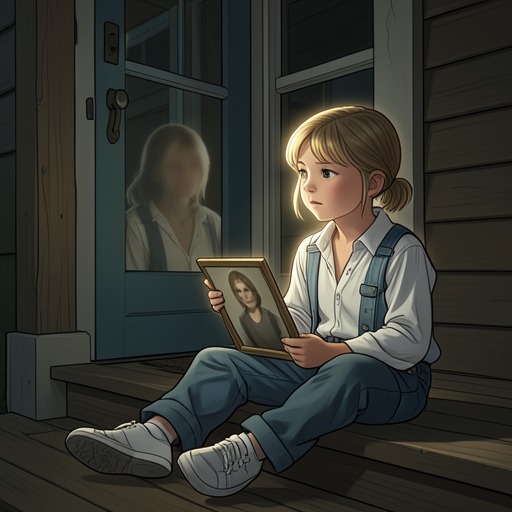
Charlie’s fear also persists as part of the problem the rules are meant to address. She pleads that she will never use the power again, while her parents instead try to teach control and safer redirection. Their approach does not promise that the power can be erased. It asks Charlie to live with the possibility that it may recur and to remember what to do if it does.
The Rules Under Survival Pressure
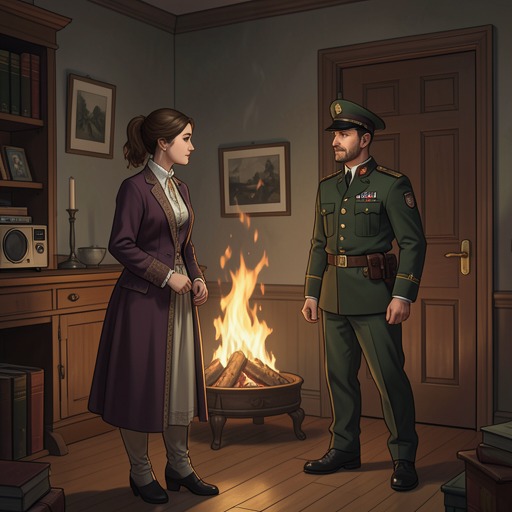
A later exchange with Andy McGee brings the safety code into conflict with immediate danger. Charlie recognizes that using the power against the people confronting them could be bad and says she could kill them. Andy does not deny either point. He acknowledges that the situation may have become one of killing or being killed, but he also tells her not to use the power if she cannot handle doing so, even for him.
That answer does not simply cancel the childhood rule. It preserves the seriousness of harming another person while acknowledging that refusing to act may also carry mortal danger. Andy gives Charlie no easy absolution and does not ask her to act merely to save him. Instead, he leaves the decision connected to what she can bear. Charlie’s quiet question about whether he will still love her if she does something shows how closely her fear of using the power is tied to fear of moral rejection. The available exchange ends on that question; it does not establish Andy’s reply.
Significance
The rules change in force as Charlie’s circumstances change. In the childhood lesson, the central aim is prevention: avoid the emotional trigger if possible, redirect the fire, and never direct it at a person. In the later conversation, the absolute prohibition remains morally serious, but the possibility of self-defense complicates its application. The same power that once emerged in anger may become relevant in a life-or-death confrontation, without ceasing to be dangerous.
The safety code is therefore both a practical protocol and a measure of Charlie’s developing responsibility. It gives her concrete alternatives without pretending she has flawless control, and it insists that another person’s life matters even when Charlie is frightened. The later exchange adds that responsibility is not painless or simple: survival may demand a choice she fears, and the evidence does not resolve that choice for her. The rules’ significance lies in holding both truths together—the danger of what Charlie can do and the difficulty of deciding what she must do.