The Shop’s Ban on Charlie Seeing Andy
FirestarterThe Shop’s Ban on Charlie Seeing Andy is a deliberate barrier between Charlie McGee and Andy McGee, maintained because an actual reunion could expose the Shop’s deception and end its ability to control Charlie. The separation is more than a denied visit: Patrick Hockstetter and John Rainbird make the hope of seeing her father conditional on obedience, while the Shop withholds the meeting it knows she most wants.
The Separation as a Means of Control
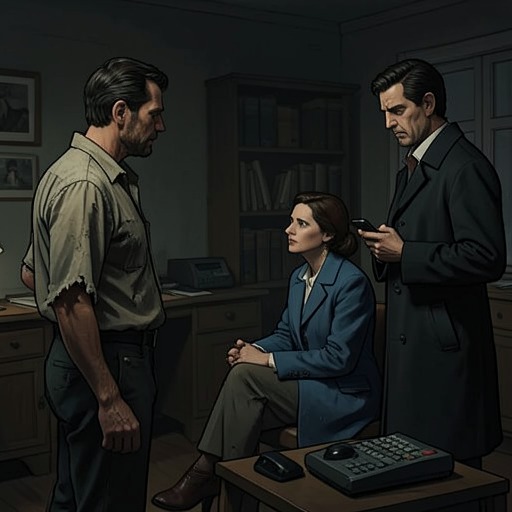
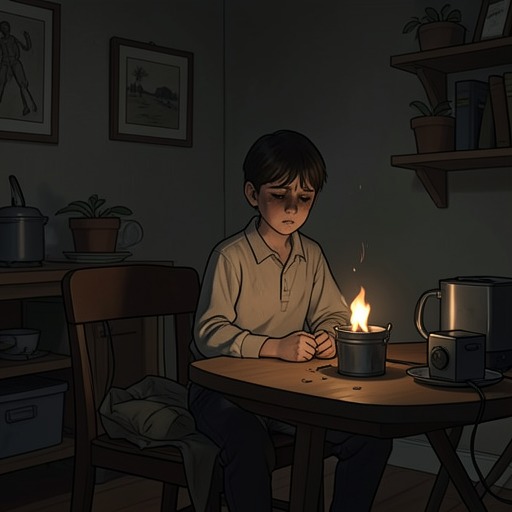
The ban is expressed through the Shop’s refusal to let Charlie see her father, not through an announced rule with a stated duration. Its practical force is clear: Charlie asks when she can see Andy, and Patrick Hockstetter answers by making access depend on her lighting a tray of curly wood shavings. He promises to take her to Andy immediately if she does so. The offer converts a child’s need for contact into pressure to perform the act the Shop wants from her.
Charlie answers that she will light the shavings, but asks for a match. Patrick Hockstetter corrects her: she can do it by thinking about it. The exchange makes the coercion specific. The requested fire is not an incidental task; it is the condition placed on the reunion, and the Shop expects Charlie to use her ability on command. Her fear that she might give in is intensified by her knowledge that Patrick Hockstetter will use whatever means he can. The ban therefore operates both as deprivation and as an inducement: the absent father becomes the promised reward for compliance.
Andy as a Withheld Promise
Charlie’s longing makes the pressure effective. She wants to feel Andy’s arms around her and thinks of him constantly; when Patrick Hockstetter claims that Andy wants her to make fires, the claim exploits that attachment rather than easing her separation. He also tells her that Andy is sad and suggests that Andy believes she no longer loves him. These assertions are not reliable messages from Andy. They are part of the manipulation surrounding a meeting the Shop does not intend to arrange.
After the encounter, Charlie cries hard, while Patrick Hockstetter watches without sympathy, sorrow, or kindness. The narration emphasizes calculation in his attention. Three weeks later, Charlie has stopped mentioning her father, but Patrick Hockstetter continues to dangle him before her. Her silence is not evidence that the wish has passed: the account connects it to the repeated emotional pressure and to her awareness that asking again will bring a predictable answer. The ban thus restricts not only physical contact but also the possibility of an honest exchange between father and daughter.
Deception and the Shop’s Strategy
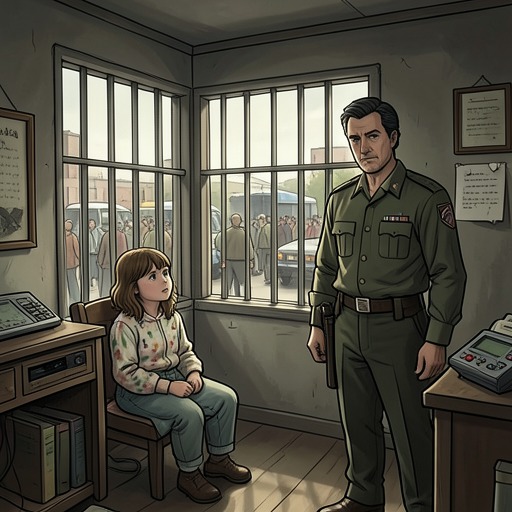
John Rainbird’s role reveals why the separation must be preserved. While presenting himself to Charlie as a friendly orderly, he encourages the idea that she might gain privileges by using “strings,” perhaps getting outside, going into Longmont to shop, or seeing other children. When Charlie asks, “And see my father?” Rainbird says yes. Yet the narration makes plain that this is another false promise: John Rainbird has never passed a message from Charlie to Andy, and he has not arranged for them to meet.
The Shop’s reasoning is strategic. Patrick Hockstetter fears that passing messages would create risk without benefit, and John Rainbird agrees. Andy might recognize that the supposed friendly treatment is a coordinated good-cop-and-bad-cop routine, even though he is heavily drugged. A reunion would give him information Charlie does not have and could let them compare accounts. The ban therefore protects the Shop’s control over what each of them knows, as well as keeping their relationship from interrupting its efforts to obtain Charlie’s cooperation.
The Breaking Point and Its Significance
The Shop’s managers understand that the arrangement cannot hold indefinitely. Cap Hollister tells John Rainbird that Charlie’s ultimate request—to see her father—will eventually come, and that granting it could end her usefulness to the Shop. John Rainbird agrees: once Charlie sees Andy, she would discover that the account of her father’s condition was a lie and infer that John Rainbird had been working for the Shop all along. The reunion is dangerous to the Shop precisely because it could convert private suspicion into shared knowledge.
John Rainbird also recognizes a limit to the coercion: Charlie is a child who wants her father, not a laboratory animal, and the Shop cannot expect her to light fires without end. That admission does not remove the ban; it clarifies the pressure it creates. The Shop depends on sustaining Charlie’s hope while refusing its fulfillment, even as it knows that the demand for a real meeting may bring its deception to an end. The separation consequently exposes the moral structure of the tests: the Shop treats a child’s attachment as an instrument, and the relationship it withholds becomes the clearest threat to its control.