Echo effect and ricochet
FirestarterThe echo effect and ricochet are the escalating psychological risks of Andy McGee’s push: a suggestion can awaken an obscure trace memory, then amplify a buried fear or impulse until the person being pushed is in danger. Andy had learned to recognize and interrupt this process in earlier cases, but he could not stop it in Herman Pynchot’s, whose death made the limit of Andy’s control painfully clear.
How the Effect Works
A push places its target in a state of extreme suggestibility. Sometimes it also triggers an almost hypnotic trace memory through an association that is not immediately apparent. Andy calls the developing chain an echo: a suggestion catches on something already present in the person’s mind, and the echo may intensify into a ricochet. The result is not reliably predictable. Andy fears that, once the process accelerates, it may lead to almost anything.
The danger lies in the interaction between the suggestion and the target’s existing psychological vulnerabilities. Andy thinks of the human mind as containing deep-seated fears, guilt, and potentially suicidal, schizophrenic, paranoid, or murderous impulses. The push does not simply implant a thought and leave it there; under the right conditions, it can direct a highly suggestible person down one of these dark paths. A trace memory that seems incidental can therefore become the hinge on which a person’s response turns.
Earlier Cases and Interruption
Before the events involving Pynchot, Andy had encountered echoes he could still stop. One woman in his Weight-Off program began experiencing frightening catatonic lapses. In another case, a quiet, sandy-haired bank officer confessed an urge to take his service pistol from a closet and play Russian roulette. The urge was connected in his mind to Edgar Allan Poe’s story “William Wilson,” which he had read in high school.
Andy prevented that businessman’s echo from becoming a ricochet with another push and a suggestion that he had never read the Poe story. The intervention broke the association. Andy says he had become fairly adept at correcting these dangerous chains by the time he and Charlie McGee had to flee New York City. These earlier outcomes establish that the echo was not inevitably destructive: Andy could sometimes recognize the escalation and disrupt the particular connection sustaining it.
Pynchot and the Failure to Stop the Chain
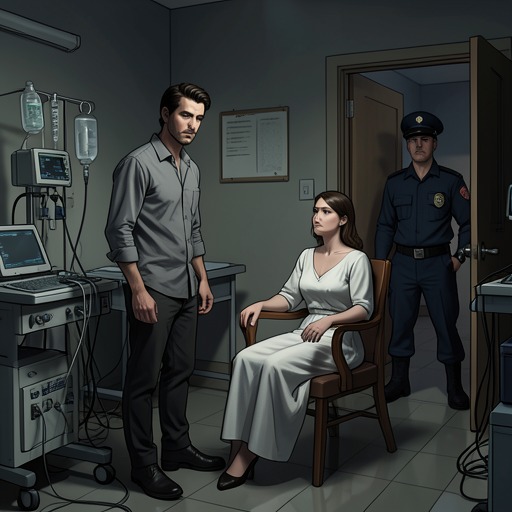
While pressing Pynchot for information about the countryside and roads near their location, Andy pushed lightly again. Pynchot answered dreamily, and Andy let the conversation lapse rather than interrupt him. From experience, Andy knew that interrupting a trace memory could worsen matters by setting up an echo and possibly a ricochet. His caution, however, did not give him a way to control what the association would become.
Pynchot’s echo ultimately turned into a lethal ricochet, and Andy had no opportunity to break it as he had in the earlier cases. At the funeral, Andy recalls that Pynchot had shown arrogance and enjoyed exercising what little power he had over another person. Concern for Charlie McGee had also left Andy with little guilt at first about the chain he had inadvertently started. Seeing Pynchot’s wife and two stunned sons changed the emotional weight of that recollection: the consequences could no longer be held at the distance of Pynchot’s character or Andy’s reasons for opposing him.
Significance and Limits
The rule complicates Andy’s use of the push. It is a means of influencing other people, but its effects depend on associations and vulnerabilities he may not know are present. His earlier successes show that the process can sometimes be reversed; Pynchot’s death shows that intervention is neither guaranteed nor always available. The distinction between an echo that can be broken and a ricochet that has become fatal marks the boundary between Andy’s capacity to direct a mind and his inability to foresee or repair every consequence.