Jason Gearneigh Hall
FirestarterJason Gearneigh Hall is the college setting for the Lot Six experiment and for Andy McGee’s return to Room 70, where he finds that the room has been cleared but not made free of the past. The building connects the experiment’s organized, institutional appearance with Andy’s growing unease about what happened there; five days later, it also becomes the place to which he reluctantly brings Vicky Tomlinson McGee.
Setting and Use
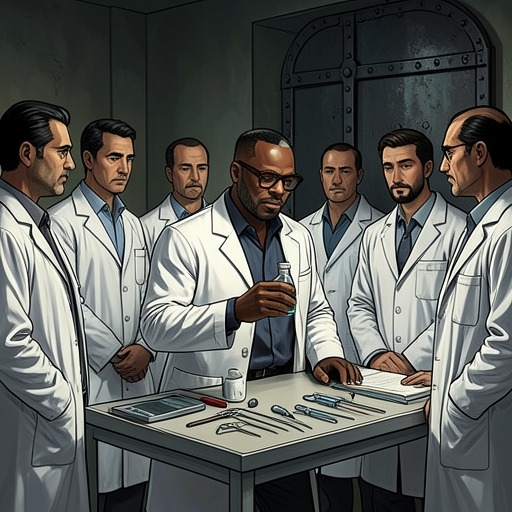
Room 70 is upstairs in Jason Gearneigh Hall. During the experiment, a dozen cots supplied by the college infirmary were set up there for the twelve volunteers. They lay propped on hypoallergenic foam pillows while the research staff attended to them. Dr. Wanless moved between the cots, speaking to the participants, while a graduate assistant handled an intravenous line. These practical details establish a clinical arrangement in which the volunteers are organized and cared for within a college building.
The room’s setting also shapes Andy’s response. Dr. Wanless had offered reassurance about the protection of modern science, but Andy did not share that confidence. His thoughts associated scientific progress with destructive as well as beneficial inventions. The discrepancy between institutional reassurance and his distrust gives the hall a particular significance: Room 70 is not merely a place where an experiment is conducted, but the setting in which Andy’s doubts about the experiment’s safety and meaning take form.
Andy’s Return to Room 70
When Andy later climbs to the upper floor, the route to Room 70 has become difficult for him to face. The narrow, shadowed hall and the wind moving through the building intensify his apprehension. He nearly turns back, then tries to reassure himself that the room will be locked. Instead, the door opens. This small reversal brings him directly into the space he has been trying not to revisit.
The room is empty. The cots have been removed, the blackboard erased and washed, and the chart rolled up. Those signs of cleanup suggest an effort to restore the room to ordinary use, but the chart remains available to Andy when he pulls it down. Its diagram of the brain carries the experiment’s clinical framing into his present encounter with the room. In the printed label, a comma-shaped stain interrupts the word “CORPUS CALLOSUM,” leaving the altered form “COR OSUM.” The mark is slight, but Andy reads it as consequential: the room’s surfaces have been cleaned, yet a physical trace of what happened has not disappeared.
This return changes the significance of the hall from an active research space into a site of recognition. Andy does not find the cots or the volunteers; he finds absence, erasure, and one remaining mark. The contrast makes the aftermath legible through objects rather than through a renewed experiment. The chart’s damaged label joins a scientific representation of the brain to the evidence left by the event, prompting Andy’s distress without supplying him with a complete explanation.
Vicky Tomlinson McGee’s Visit
Five days later, Andy brings Vicky Tomlinson McGee to Jason Gearneigh Hall despite her reluctance. She has already decided that she does not want to think about the experiment again. After receiving her two-hundred-dollar check from the Psychology Department, she banked it and wanted to put aside the circumstances in which she had earned it. Her response makes the experiment’s aftermath different for each participant: Andy returns to the place, while Vicky would rather leave the experience behind.
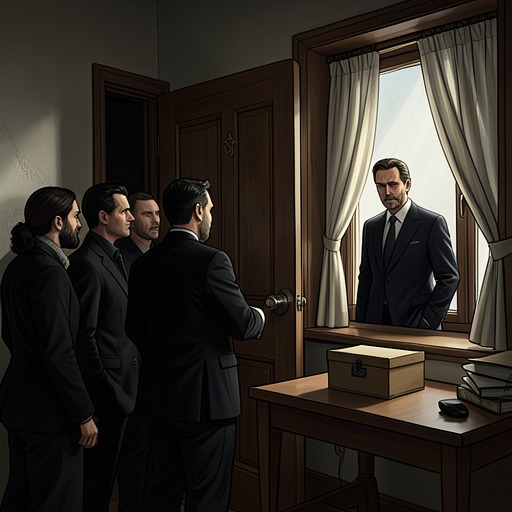
Andy persuades her to come during the change between afternoon classes, when the hall is surrounded by ordinary college activity. He uses the daylight and the presence of other people as reassurance, although the narration indicates that he does not clearly define, even to himself, what he fears. Vicky continues to say that she does not want to go, but she goes with him. The visit therefore brings the two participants back into the experiment’s setting under different emotional conditions: Andy seeks to confront what troubles him, while Vicky’s attendance does not erase her wish to forget.
Narrative Significance
Jason Gearneigh Hall links three stages of the experiment’s immediate story: its formal arrangement in Room 70, Andy’s return to the cleared room, and the later visit he persuades Vicky to make. The building’s function changes with these stages. It first houses the volunteers and research staff; it then offers Andy a scene in which the experiment’s cleanup is incomplete; finally, it becomes the destination of a hesitant return shared by the two participants.
The hall’s significance rests on that contrast between institutional order and unresolved memory. Cots can be removed, a blackboard washed, and a chart put away, but Andy’s encounter with the remaining stain prevents the cleared room from seeming simply restored. Vicky’s reluctance supplies a different response to the same place: for her, the experiment is something to leave behind, whereas for Andy it remains something that demands revisiting. The building thus holds the experiment’s setting and its uneven aftermath together without resolving what either participant should make of it.