
The Futility of Revenge
Frankenstein, or the Modern PrometheusThe pursuit of revenge consumes both Victor and the monster, leading to mutual destruction without satisfaction.
increasing Bearing strength in each event
 decreasing
Bearing strength in each eventdecreasingVictor's Revenge
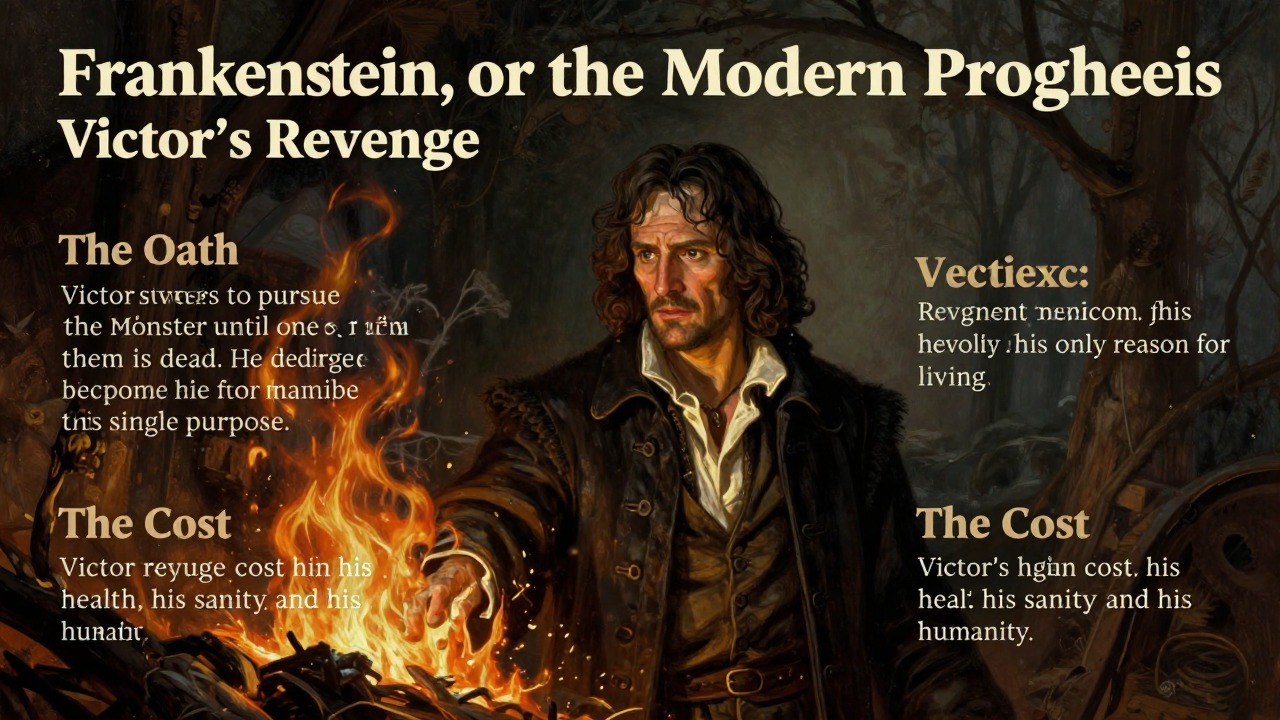
A Consuming Fire
The Oath
Victor swears to pursue the monster until one of them is dead. He dedicates his remaining life to this single purpose. Revenge becomes his only reason for living.
The Cost
Victor's revenge costs him his health, his sanity, and his humanity. He becomes a hollow shell, driven by hatred. He cannot enjoy even the prospect of success; the pursuit is a torment.
The Failure
Victor dies before he can kill the monster. His revenge is unfulfilled. He leaves Walton a legacy of warning rather than satisfaction. The novel suggests that revenge is a futile and self-destructive passion.
The Monster's Revenge
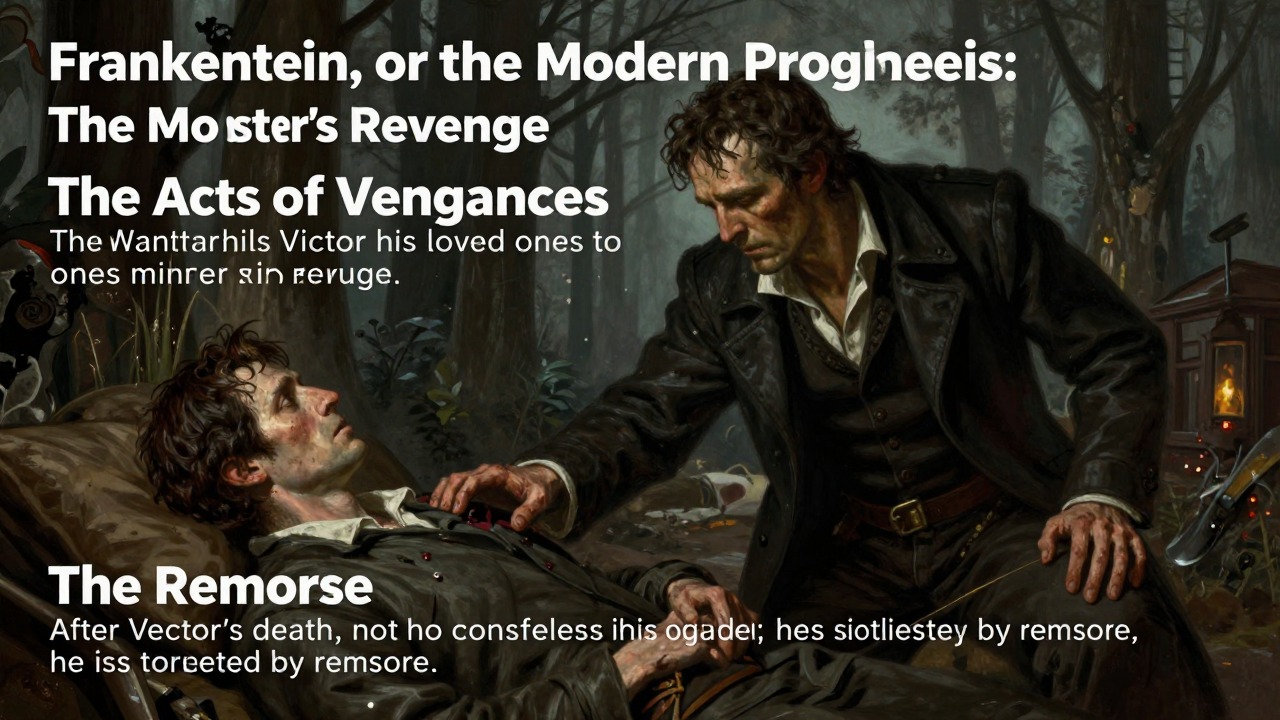
A Cycle of Pain
The Acts of Vengeance
The monster kills Victor's loved ones to make him suffer. Each murder is a calculated act of revenge. But the monster does not find satisfaction; he is tormented by remorse.
The Remorse
After Victor's death, the monster confesses his anguish to Walton. He says that he is miserable, that his revenge has brought him no peace. He is still alone, still in pain.
The Conclusion
The monster decides to end his own life. He realizes that revenge is pointless; it has only deepened his suffering. The novel implies that forgiveness and connection are the only true paths to peace, but both are impossible for the monster.
After the death of Elizabeth, until his own death
From the murder of William to the final confrontation with Walton
