
The Power of Storytelling and Testimony
Frankenstein, or the Modern PrometheusThe novel is structured as a series of recounted narratives, emphasizing the role of testimony in conveying truth and warning.
increasing Bearing strength in each event
 decreasing
Bearing strength in each eventdecreasingVictor's Narrative to Walton
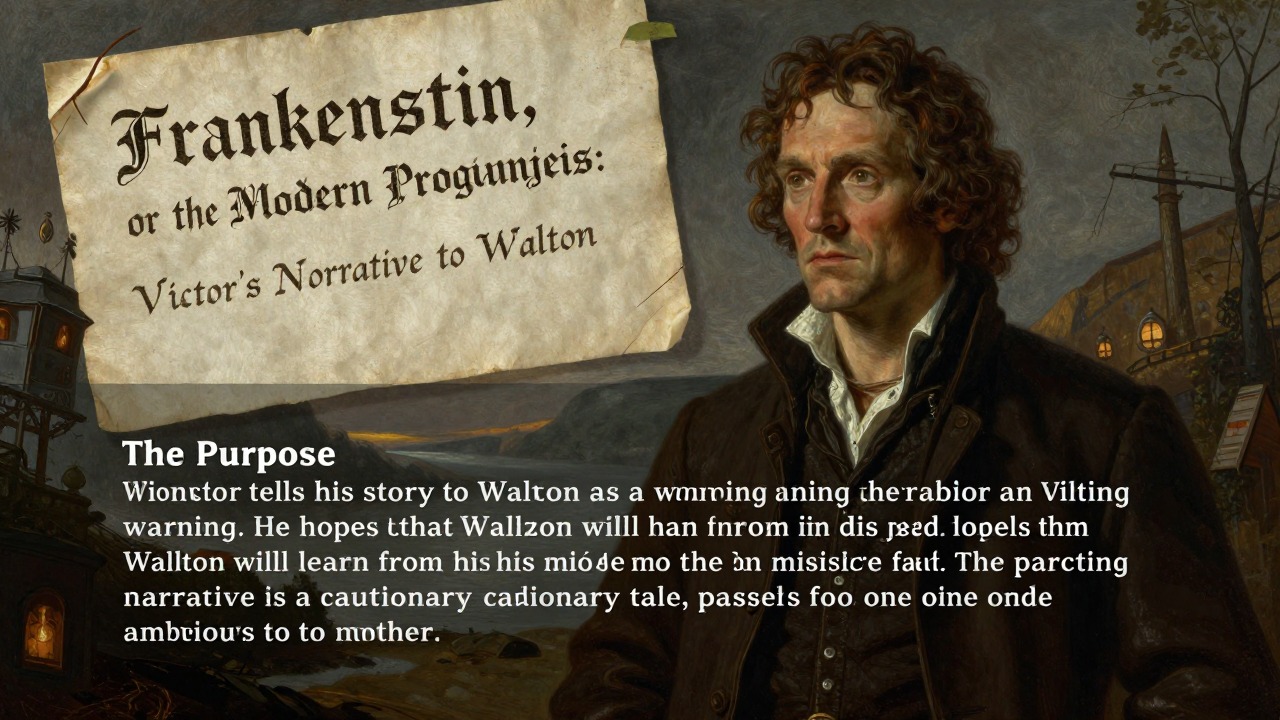
A Tale of Warning
The Purpose
Victor tells his story to Walton as a warning. He hopes that Walton will learn from his mistakes and avoid the same fate. The narrative is a cautionary tale, passed from one ambitious man to another.
The Structure
The novel is framed by Walton's letters. Within that, Victor tells his story. Within that, the monster tells his story. This layered narrative structure emphasizes the power of perspective and the need to hear all sides.
The Truth
Victor's tale is the only account of the monster's existence. Walton is convinced of its truth by the letters and the monster's appearance. The story is a testament to the events that have transpired, a record that will outlive the characters.
The Monster's Self-Justification
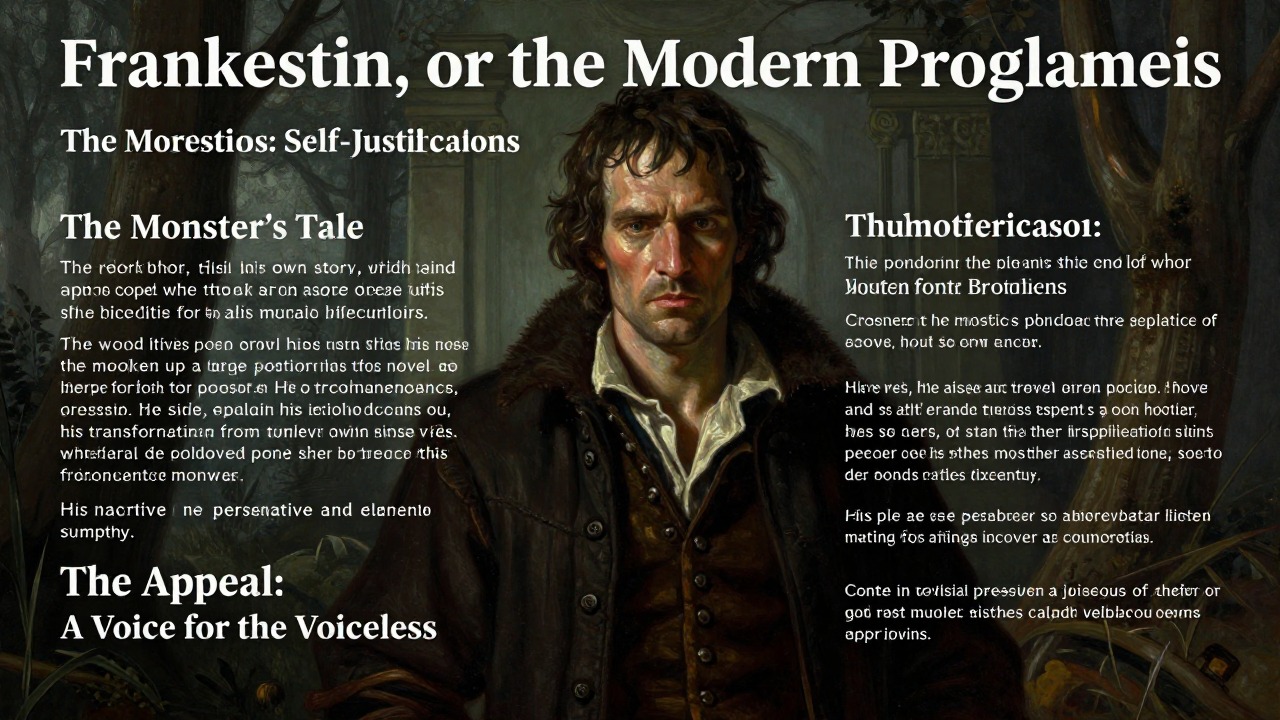
A Voice for the Voiceless
The Monster's Tale
The monster tells his own story, which takes up a large portion of the novel. He presents his side, explaining his transformation from innocent to monster. His narrative is persuasive and elicits sympathy.
The Appeal
He asks Victor to listen before judging him. He says that even the guilty are allowed to speak in their own defense. The monster's story is a powerful plea for understanding.
The Impact
Victor is moved by the monster's tale, but only temporarily. The novel suggests that storytelling can create empathy, but it is not always enough to overcome prejudice. The monster's testimony is a crucial part of the novel's exploration of truth and justice.
Aboard Walton's ship, over several days
On the glacier and later in the hovel
