Plutarch's Lives
Plutarch's Lives is one of three books the monster discovers in a leathern portmanteau during his solitary existence in the hovel attached to the De Laceys' cottage, and it becomes a decisive influence on his moral and intellectual formation. While the other two volumes—Paradise Lost and The Sorrows of Werter—plunge him into despondency and self-pity, Plutarch's Lives elevates him, teaching him to admire virtue and the heroic deeds of the founders of ancient republics, and thereby shaping his aspirations and his understanding of human society.
Discovery and Context
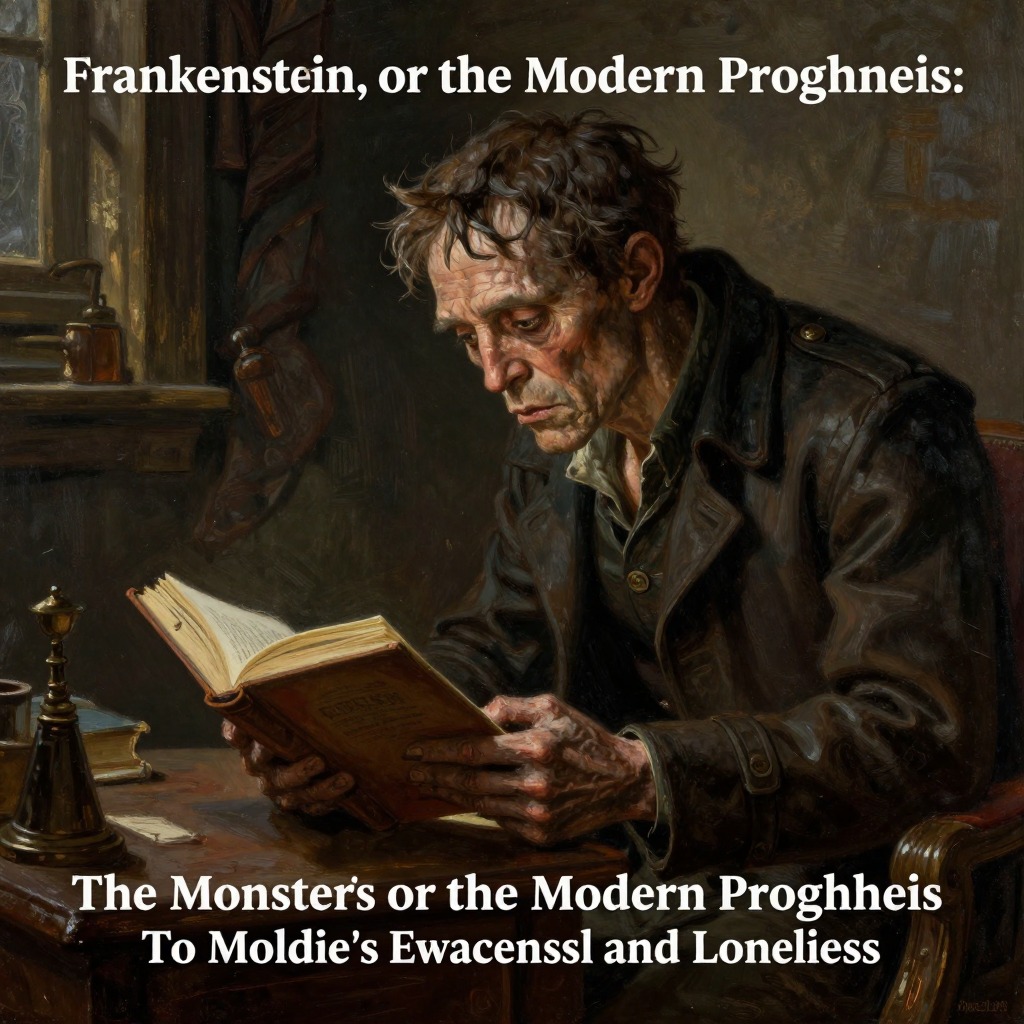
The monster finds the leathern portmanteau containing the books one night during his accustomed visit to the neighbouring wood, where he collects his own food and brings home firing for his protectors. The books are written in the language whose elements he has already acquired at the cottage, and he eagerly seizes the prize and returns with it to his hovel. The possession of these treasures gives him extreme delight, and he now continually studies and exercises his mind upon these histories while his friends are occupied in their ordinary pursuits.
Content and Effect on the Monster
The volume of Plutarch's Lives that the monster possesses contains the histories of the first founders of the ancient republics. This book has a far different effect upon him from The Sorrows of Werter. He learns from Werter's imaginations despondency and gloom, but Plutarch teaches him high thoughts; it elevates him above the wretched sphere of his own reflections, to admire and love the heroes of past ages. Many things he reads surpass his understanding and experience—he has only a very confused knowledge of kingdoms, wide extents of country, mighty rivers, and boundless seas, and he is perfectly unacquainted with towns and large assemblages of men. The cottage of his protectors has been the only school in which he has studied human nature, but this book develops new and mightier scenes of action. He reads of men concerned in public affairs, governing or massacring their species. He feels the greatest ardour for virtue rise within him, and abhorrence for vice, as far as he understands the signification of those terms, relative as they are, as he applies them, to pleasure and pain alone. Induced by these feelings, he is led to admire peaceable lawgivers—Numa, Solon, and Lycurgus—in preference to Romulus and Theseus. The patriarchal lives of his protectors cause these impressions to take a firm hold on his mind; he reflects that if his first introduction to humanity had been made by a young soldier burning for glory and slaughter, he should have been imbued with different sensations.
Contrast with Other Books
Plutarch's Lives stands in sharp contrast to the other two books the monster reads. The Sorrows of Werter fills him with wonder and despondency, and he weeps over the hero's extinction without precisely understanding it. Paradise Lost excites far deeper emotions; he reads it as a true history, and it moves every feeling of wonder and awe. He often refers the several situations, as their similarity strikes him, to his own. Like Adam, he is apparently united by no link to any other being in existence, but Adam's state is far different from his in every other respect—Adam came forth from the hands of God a perfect creature, happy and prosperous, guarded by the especial care of his Creator, allowed to converse with and acquire knowledge from beings of a superior nature, while the monster is wretched, helpless, and alone. Many times he considers Satan as the fitter emblem of his condition, for often, like him, when he views the bliss of his protectors, the bitter gall of envy rises within him. Plutarch's Lives, by contrast, provides a model of virtuous action and civic greatness that the monster can aspire to, even as his own circumstances make such aspirations seem tragically out of reach.
Significance
Plutarch's Lives, together with the other books and the monster's discovery of Victor Frankenstein's journal, completes his education in human nature and society. The journal, which he finds in the pocket of the dress taken from the laboratory, minutely describes every step in the progress of his creation, mingled with accounts of domestic occurrences, and renders his own odious and loathsome person indelible in his mind. The monster sickens as he reads, exclaiming in agony, "Hateful day when I received life!" and "Accursed creator! Why did you form a monster so hideous that even YOU turned from me in disgust?" The contrast between the noble figures of Plutarch and his own monstrous origin deepens his sense of isolation and injustice, yet the book also gives him a framework for understanding virtue and the possibility of a better self—a possibility that the world's rejection ultimately extinguishes.