Anne
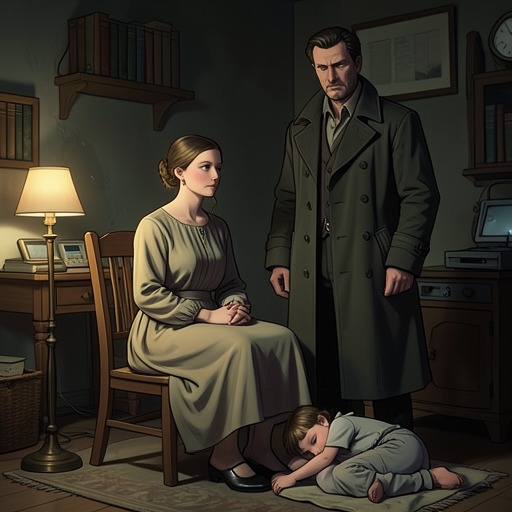
HamnetAnne is Eliza’s sister, dead at eight, whose brief life continues to shape the rooms and relationships of the family she left behind. She is present in the novel chiefly through other people’s memories: the attic where she once joined Eliza and William Shakespeare, the lessons William gave them, and the vacant half of a bed that Eliza still imagines her returning to occupy. Her absence is not a resolved piece of family history but an active part of the survivors’ daily lives.
Identity and Family
Anne was nearly two years apart in age from Eliza. Eliza gives her age at death simply: eight. The smallness of that number matters in the way the book frames her loss. When William Shakespeare hears or speaks her name, he recognizes it as his sister’s, yet finds it strange to pronounce; he has not said it since her funeral, less than two years earlier. The name draws the funeral back into view: a wet cemetery, soaked yews, and a white-wrapped body laid in an open grave. In William’s remembered impression, Anne had seemed too small to be carried alone into the earth.
The family’s memories also place Anne among sisters who died before Eliza was born. Agnes tells Eliza that Anne is with those sisters and that they look after one another. This is offered as consolation, not as something Eliza can verify; Agnes pauses and softens her claim, presenting it as what she believes Anne would want. The exchange shows how Anne’s place in the family extends beyond what the living can know: her relatives remember her, worry about her, and try to imagine where she is now.
The Attic and the Lessons
Before her death, Anne shared an attic refuge with Eliza and their brother. When William returned from school in the afternoons, the three children went up there and pulled away the ladder despite their younger siblings’ protests. The room was nearly empty then, apart from damaged skins their father kept for reasons Eliza did not know. It belonged, in the children’s understanding, to the three of them until their mother called them down to do chores or care for the younger children.
William also taught Anne and Eliza to read there. He traced letters in the dust and showed them how to combine sounds into words. The memory gives Anne a specific place in a small, shared education: she was not simply beside Eliza while her brother taught; she was one of the pupils he addressed. Later, Eliza sees written and rewritten scraps of paper scattered across the attic floor, alongside a candle stub, a knife, and an inkwell. Those objects belong to William’s present use of the space, but the room’s earlier life still includes Anne. Eliza has not returned since Anne died, and she realizes that William has continued to retreat there. The attic thus holds two versions of the siblings’ lives: the childhood refuge they once shared and the private room in which William now works alone.
Eliza’s Grief and the Empty Bed
Anne’s death persists most sharply for Eliza in the ordinary fact of sleeping. When Mary tells her to share a bed with Agnes until the wedding date is settled, she puts an extra blanket on the mattress without looking Eliza in the eye. The half of the bed by the window has been empty since Anne died. Eliza reads the same awareness in Mary’s silence and longs to ask whether her mother, too, still listens for Anne’s steps, voice, or breathing at night. Eliza herself continues to imagine waking beside her sister again, as though a wrinkle in time might return them to the life they had before the death. Instead, she wakes alone each day.
Agnes now occupies the place in the bed that Anne once occupied, but the two are not interchangeable. Agnes is the woman who will marry Eliza’s brother, brought into the household amid hurried arrangements; Eliza has also overheard that Agnes is pregnant. The new presence makes the old absence newly visible rather than filling it. Eliza’s thought of Anne arises in the same domestic space where a future family is being prepared, setting the ongoing fact of loss beside the changes about to come.
Narrative Significance
Anne’s character is made through traces rather than scenes of her own. The novel does not give her an independent account of her life; instead, it lets the survivors’ memories define what she meant to them. The recurring locations—the grave, the attic, and the bed—make remembrance concrete. Each preserves a different measure of her absence: William’s difficulty saying her name, the lost shared refuge and lessons, and Eliza’s continuing expectation of a sister beside her at night.
Eliza’s fear that Anne may be suffering somewhere beyond her reach also shows that grief is not simply memory. Eliza has stayed awake whispering Anne’s name, hoping her voice might comfort her sister, and remains troubled by not knowing whether Anne can hear her. Agnes answers with an image of the dead sisters caring for one another, but cannot make that uncertainty disappear. Anne therefore remains both a beloved child remembered through definite details and a sister whose condition after death is unknowable. Her short life continues to organize the emotional meaning of the family’s present.