John
HamnetJohn is a Stratford glove-maker, former civic officeholder, and father of William Shakespeare whose authority in the family is inseparable from his appetite for control. He has fallen from the public standing he remembers, yet still tries to command people and circumstances as though influence can be recovered by force. His commercial calculation governs his response to William’s marriage, while his temper makes that same household authority dangerous to his son and grandson.
Identity and Former Standing
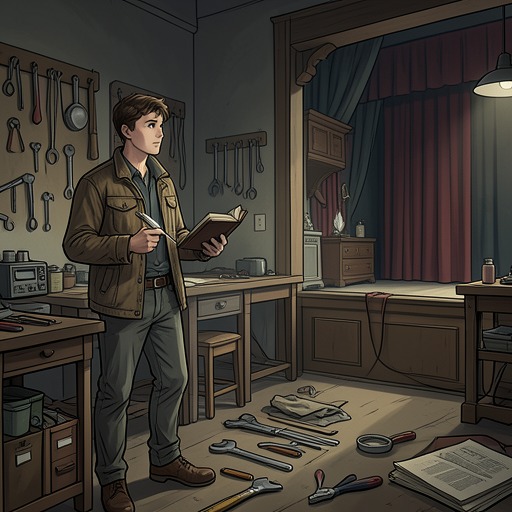
John’s trade is gloves. The workshop is a place where Hamnet is rarely allowed even to stand at the threshold: John rebukes anyone who loiters instead of working, and treats a child’s curiosity as interference. The prohibition gives the workshop more than a practical boundary. It is one small display of John’s insistence that his space, labor, and authority remain under his control.
That control has not prevented his decline. He had been a constable and later an important alderman; he remembers sitting in the church’s front pew and wearing a scarlet robe. Now, as Hamnet passes the town hall, John is trying to insert himself among men gathered there without inviting him. He grips their arms, urges them toward the tavern, and presses for their attention. He wants former acquaintances to recognize his diligence and loyalty to the town, or for the council and town authorities to forgive him or look the other way. His effort to recover the position he once held makes the scene a public counterpart to his private demands: he still expects influence, but can no longer assume it.
His finances underline the reversal. John lives on money sent by his eldest son from London, a dependence he finds exasperating even as he recognizes that the son he once dismissed as idle has become useful. The family’s money and standing are therefore bound up with William’s success, a fact that both sustains John and sharpens the conflict over who should direct the family business.
Temper and Family Violence
John’s temper is established through both remembered violence and Hamnet’s direct experience. After a bundle of hides falls into mud, John suddenly throws a paring knife against the yard wall. William immediately moves Hamnet behind him and warns him to stay out of John’s reach when he is in a bad mood. The warning is not a general caution: William asks his son to promise to keep away when he is not there to protect him, and Hamnet understands that his father fears for him specifically.
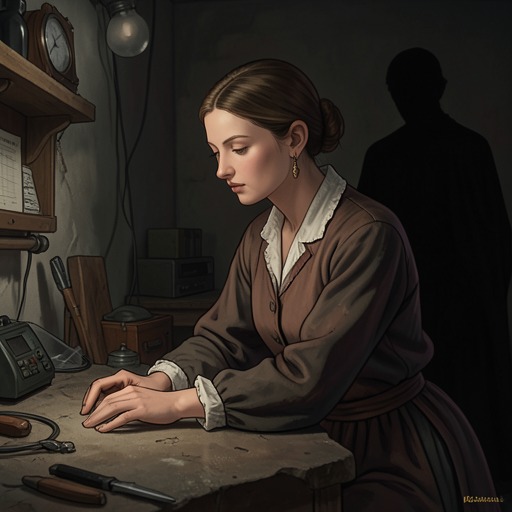
The danger becomes immediate when Hamnet enters John’s workshop area in an otherwise empty house. John is crouched at a table in a dark room, rummaging among papers, a cloth bag, and coins; a jug and cup sit nearby. When Hamnet makes himself known, John turns with a furious expression and raised hand. He orders the boy to help, and Hamnet keeps his distance, believing he is obeying William’s warning. But when Hamnet reaches toward another page, John lunges, catches him by the wrist and elbow, and pulls him across the space he had been told to preserve. Still holding the cup, John strikes him beneath the eyebrow. He then presents the blow as a lesson against spying. Hamnet’s tears come from both the injury and the shock of it: the violence confirms what William’s warning had taught him to fear.
John’s aggression also governs the strained relationship with William. At a dinner, Edmond is irritable and unable to eat; his sore gums and emerging teeth help explain his distress, but John grows angry as the child fusses and spills food. When Edmond’s crust marks John’s sleeve, John rises shouting. William crosses the room and places himself between his father and the crying child. A struggle follows, with curses, a shove, and William restraining John’s arm, while Agnes lifts Edmond and carries him away. The episode reveals a family in which the younger generation anticipates John’s sudden movements: the children shrink when he stands, and Mary closes her eyes as if bracing herself for what may happen.
Marriage, Leverage, and the Separate House
John’s response to William’s marriage is shaped by calculation rather than simple consent. When Agnes’s pregnancy is at issue, John falls silent in a way William recognizes from business negotiations: it is the expression he wears when a bargain favors him and he does not want the other party to see it. William realizes that his father intends to use the marriage to advance dealings with a shepherd’s widow. Agnes’s pregnancy, her arrival at the house, and the child she carries all become, in John’s reckoning, advantages to be used.
John acts quickly. He goes straight to Hewlands rather than pausing at his market stall, where he might harass Eliza or check the stock, and does not stop to speak to a fellow councilman on Rother Street. He walks briskly along the road to Shottery, eager to conclude the bargain before circumstances shift. William is underage and will require a special licence and written parental permission to marry. John also has an old debt between the families to invoke; most important, he believes Agnes must marry because she is pregnant, and that the wedding cannot proceed without his consent. He regards this combination as a decisive advantage and takes pleasure in having the terms in his hands.
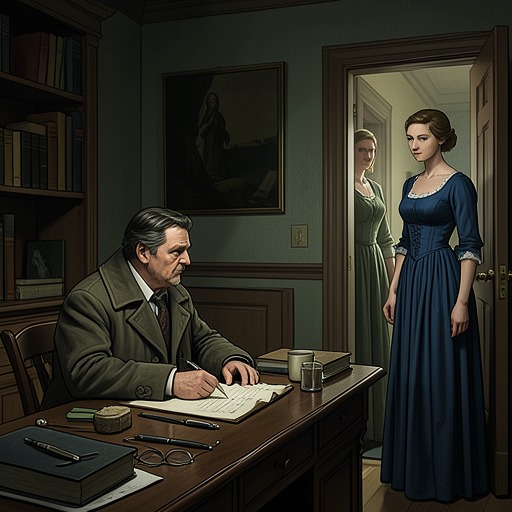
The resulting home makes the negotiation visible in its physical arrangements. The two-storey house stands beside the family home and had been used by John as a storehouse; Agnes recognizes the smell of wool bales that had been kept there for years. After the wool is removed, the rooms become the couple’s home. Bartholomew inspects the narrow rooms and the upper floor before signaling his approval, and John hands the iron key to William only after Bartholomew has nodded twice. The exchange is hesitant on both sides: John gives the key slowly, while William accepts it with an extended arm and only between finger and thumb. John’s brisk pat on his son’s back, meant to speak of home and married life, lands hard enough to make William stagger. William then leaves the key on the table rather than putting it away. Agnes and Bartholomew witness the unease; the separate dwelling, which Bartholomew had insisted on, provides distance from John’s household as well as a home of its own.
Business Ambition and Waning Authority
John’s commercial instincts remain active even as his authority has weakened. When William argues that expanding John’s business could benefit everyone and that he might manage a London branch, Mary interrupts with a list of his past failures: losing deer hides on the road from Charlecote and trading a dozen gloves for a book. Her objections expose the gap between John’s ambition and the confidence others place in William’s ability to carry it out. Mary’s protest is also a plea that her son not leave, but the plan itself belongs to John’s effort to extend the glove business beyond Stratford, where conditions have become difficult.
John’s approach to business is marked by the same guarded self-interest that shapes the marriage bargain. He can recognize a cheap lot of skins, conceal extra wool bales in the loft, or take advantage of an inexperienced trader, all while masking his satisfaction. The narrator names the expression behind that composure as greed and malicious delight. Such calculation is not separate from his family life: he treats the proposed marriage and the house as parts of a favorable arrangement, just as he treats a trader’s inexperience as an opening.
John’s story therefore turns on a contradiction. He remembers a civic identity built on influence and still pursues opportunities to regain it, but his dependence on William’s remittances and his need for others to approve or enable his plans show how much that authority has contracted. He can still command a workshop, press a marriage negotiation, and frighten a child; he cannot make those acts restore the standing he has lost. The iron key, the blows and warnings, and his attempts to gather old associates all register different versions of the same struggle to hold power as it slips away.