Bartholomew
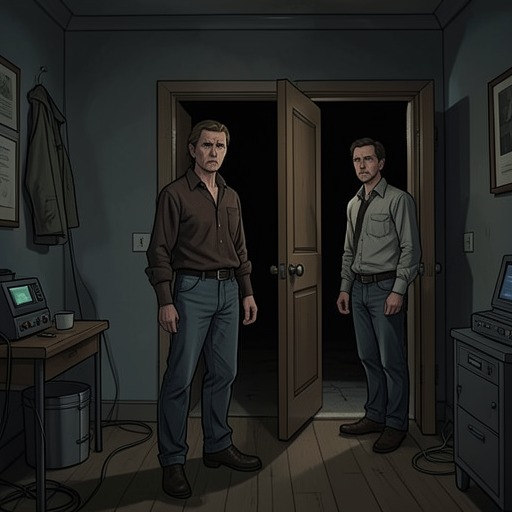
HamnetBartholomew, Agnes’s brother and heir to their father’s farm, is defined by a combination of physical strength, steadiness, and practical care. He works the fields and tends the farm, but his importance to Agnes exceeds that of a fellow household member: he uses his authority to keep her from being cast out, escorts her into marriage, and goes searching when she disappears after giving birth. His protection is often expressed through action rather than explanation, making him a counterweight to the conflicts and uncertainties surrounding her life.
Identity and Background
Bartholomew appears first in Agnes’s recollection of their mother. As a small child, he was carried against her chest while Agnes walked beside them; the two children could look at each other and touch fingers above their mother’s shoulders. Their mother made them matching reed dolls, which Agnes and Bartholomew laid together in a box. The memory gives their sibling bond an early image of closeness and likeness, before their mother’s departure and Joan’s arrival altered the household.
As an adult, Bartholomew inherits the farm from his father. The inheritance gives him a clear claim to the land, but not uncomplicated control of every part of family life. Under the will, Joan is allowed to remain in the house and govern the household, while Bartholomew takes responsibility for the sheep and fields. Their division of labor is formal and recurring: Joan manages the kitchen, yard, and orchard with help from the girls; Bartholomew oversees flocks and fields with the boys, and the two inspect the land together once a week. The arrangement puts him in charge of the farm while leaving domestic authority contested.
Joan’s workload helps define the scale of the household he shares with her. She has six children, or eight when Agnes and Bartholomew are included, and is responsible for cooking for the men and workers as well as the children, tending animals, preserving fruit, brewing, baking, and maintaining the house. Her authority is thus both a matter of the will and the result of substantial daily labor. Bartholomew’s role is different: he takes on field work and livestock, tasks for which his height, strength, and persistence make him particularly suited.
Work and Authority at Home
The farm’s allocation of work does not make Bartholomew passive in disputes over the house. When Joan orders Agnes out after a violent confrontation, Bartholomew comes forward and insists that the house is his by inheritance and that Agnes may remain. Joan argues that the management of the household is hers and that the family’s reputation and position are at stake. Bartholomew calmly repeats that the house belongs to him and that Agnes is staying. The decision turns his inheritance into immediate protection: he does not merely sympathize with his sister but uses the authority the property gives him to prevent her expulsion.
His intervention also comes amid a sharp reversal in the household’s violence. Joan strikes Agnes; Agnes, despite her swollen and bleeding lip, strikes back. Bartholomew restrains Joan from behind while another of Joan’s sons steps between the women. The younger children watch in shock, and one of the girls comforts a crying child. In this crowded scene, Bartholomew’s strength is not simply a marker of physical dominance: he uses it to stop the assault, then makes a decision that gives Agnes somewhere to stay. His support does not erase the household conflict, but it changes what Joan can enforce.
Bartholomew’s relations with Joan remain complicated by the difference between household and farm authority. When he encounters John during a later meeting, he acknowledges that they have matters to discuss, then notices Joan approaching and points her out as someone who will undoubtedly have something to say. The exchange suggests that decisions involving the farm and family cannot be separated from Joan’s influence, even though Bartholomew possesses the land and can assert his own judgment.
Agnes’s Courtship and Marriage
Bartholomew knows that Agnes and the Latin tutor are courting. On the tutor’s last visit to the farm, he and Agnes walk hand in hand toward the far field as evening falls. Joan sees them approaching while she is among the sheep. The evidence places Bartholomew at the center of the farm’s working life and makes the couple’s visible intimacy part of the household’s growing conflict, although it does not show him intervening in Joan’s objection to their marriage.
At the wedding, Bartholomew’s protective role becomes explicit. He takes Agnes’s hand firmly and leads her toward the church door. When the groom comes forward with an arm offered to her, Bartholomew stops them and holds Agnes back long enough to address her future husband privately. He warns the young tutor to care for her properly, making clear that harm to Agnes would bring consequences. Then he turns back to his sister, smiles for the gathered people, and releases her to join the groom. The gesture combines the public form of a brother giving his sister over in marriage with a private insistence that the new husband is answerable for her well-being.
The marriage also involves a new home near the family house. Bartholomew accompanies Agnes and her husband when they first enter it, surveys its narrow rooms, goes upstairs and downstairs, and checks the place from end to end before signaling his approval to John. John then gives his son the iron key, but only after Bartholomew has nodded twice. Agnes notices the father’s reluctance to hand it over and the son’s hesitation to take it; the transfer is awkward rather than triumphant. Bartholomew’s inspection and assent place him inside the practical arrangements surrounding the new marriage, although the evidence presents his involvement as part of a wider family negotiation rather than a decision he makes alone.
Searching and Supporting
When Agnes disappears late in pregnancy, Bartholomew’s response is immediate. He is working near the boundary of his land when her husband comes to find him. Bartholomew drops the straw bale he is carrying and walks toward him. After learning that Agnes has vanished and that no one knows where she is, he grips the front of the man’s coat and reminds him of the responsibility to care for her. His anger grows from the promise he had extracted at the wedding; the disappearance makes that promise feel urgent and possibly broken.
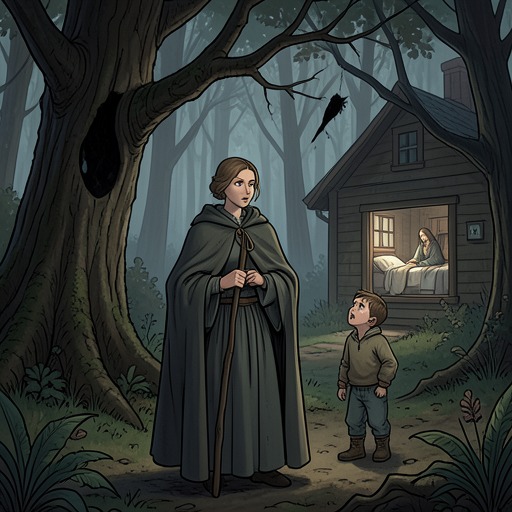
Bartholomew searches the fields with his dogs, while Agnes’s husband trails behind. He finds Agnes in the forest, where he had suspected she might be, asleep between waking and sleep with the newborn wrapped against her chest. He bends to lift her and tells her she cannot stay there. The scene returns him to the protective role established at the wedding, but now care requires finding his sister in a vulnerable place and bringing her out of it. The birth’s disorder and smell do not deter him; his attention is on Agnes and the child.
His support continues in later family crises. On one occasion, Agnes comes to the farm carrying Susanna on her back while her husband is distressed by his work and unable to settle on a quill for writing. She finds Bartholomew hammering a fence stake into the ground to mark enclosures for newborn lambs. He could have assigned the task to someone else, but his height, unusual strength, and steady persistence suit the work. When Agnes approaches, he puts down the hammer, wipes his face, and waits to hear her. The ordinary labor of the farm provides the setting for another moment of contact between brother and sister.
When Judith is ill and Agnes stays beside her through the night, exhausted and refusing to leave, Bartholomew gives Agnes one of his rare broad smiles and puts a powerful arm around her shoulders. He says he will speak to John that very night. His gesture and promise offer practical backing at a moment when Agnes’s attention is fixed on the sick child and she has neither eaten nor slept. As elsewhere, his support does not depend on elaborate speech: he recognizes the strain and commits himself to action.
Limits and Continuing Significance
Bartholomew’s place in the family is also marked by the decisions he has not yet made. In a letter, William Shakespeare asks him to act as his representative in making a purchase, explaining that he does not want to ask his brothers because their father might interfere. Bartholomew considers the letter, leaves it on the mantel, and looks at it from time to time over lunch. Joan presses him to reveal its contents and argues against lending William money, fearing that he has failed in London. The evidence does not establish Bartholomew’s eventual answer; instead, it shows him weighing a request within the same family structure where his own authority coexists with Joan’s influence and John’s potential interference.
Across the novel’s family episodes, Bartholomew’s strength becomes useful because it is joined to attention and responsibility. He works the land, exercises the authority his inheritance gives him, and repeatedly steps in when Agnes is threatened or overwhelmed. His care is not presented as effortless harmony: it unfolds amid disputes about property, household control, reputation, marriage, and obligation. Yet from the childhood memory of two reed dolls laid side by side to his search for Agnes in the forest, the sibling relationship persists as a durable bond expressed through touch, shelter, and work.