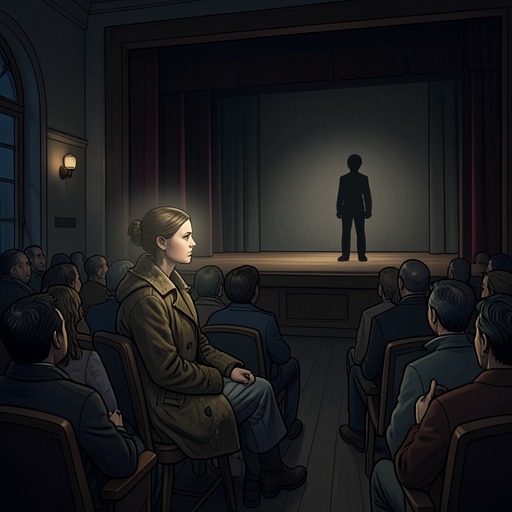
Everything we have can be taken away at any moment
HamnetEverything we have can be taken away at any moment names the understanding Mary reaches while Judith lies dangerously ill: a child’s life cannot be assumed secure, and love cannot guarantee that a child will remain. The thought joins the immediate fear at Judith’s bedside to Mary’s history of loss, making her response at once personal and hard-won.
The thought at Judith’s bedside
Mary watches Agnes tend Judith through the night. The fever has not subsided, and the swelling on Judith’s neck is stretched tight enough that Mary fears it may burst; she believes the child may die that night or in the days to come. The expression arises from this precarious present, not from a general reflection detached from the scene.
As Agnes takes Judith’s limp fingers, Mary sees the effort to hold her daughter to life. She recognizes in Agnes the wish to carry the child away from death by sheer force of will, because she has occupied the same place beside a sick daughter herself. The moment makes Agnes’s helpless care legible to Mary through experience rather than explanation.
Loss behind the recognition
Mary’s certainty is shaped by having lost three daughters, two of them newborns. She knows the position of the mother who wants to keep a daughter in the world and has found that wanting cannot prevent death. Judith’s illness therefore reopens an old wound even before its outcome is known: Mary imagines the possibility that she and Agnes will have to wash and braid the child’s hair and prepare her for burial.
The thought expands from Mary’s own losses into a warning against taking ordinary life for granted. A child may be breathing, drinking, walking, talking, smiling, arguing, and playing, yet still be vulnerable to sudden disappearance. The language of what is given and then taken frames bereavement as an ever-present possibility, not a danger that can be dismissed once a family seems safe.
Vigilance and helplessness
Mary’s conclusion is not that vigilance can defeat loss. Rather, she insists that a parent must never lower her guard or mistake temporary safety for certainty. The contrast is stark: the mother’s attention remains fixed on the child’s breath and life, while cruelty and devastation may arrive without warning, as suddenly as a thief.
In this scene, the expression binds care to fear. Agnes’s hands keep returning to Judith’s body, and Mary recognizes the longing behind them; yet neither attention nor longing can promise an outcome. Mary’s recognition gives the bedside vigil its double force: it is an act of love in the present and a witness to how completely loss can undo the assumption that what a family has will remain.