Henley Street
HamnetHenley Street is the family’s home in Stratford and the setting of a tightly interwoven domestic world. Its large house, workshop, and neighboring two-room dwelling hold the ordinary work of several generations, while the street becomes a point of departure and return in the lives of Agnes, Hamnet, and the rest of the family. The novel’s historical frame places the family there in the 1580s and links that household to the later deaths of Hamnet and the writing of Hamlet.
Setting and Domestic Geography
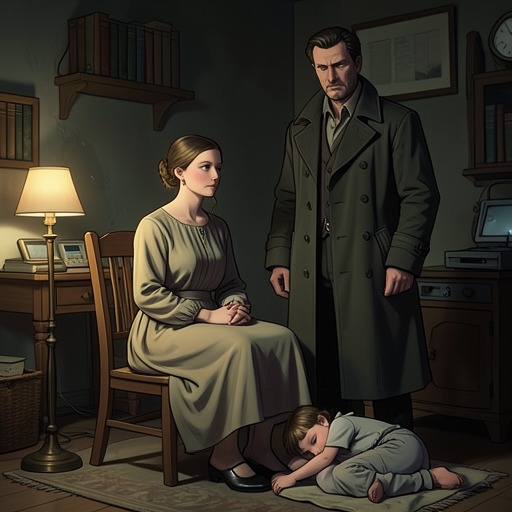
The family’s homes stand almost against one another. The larger house belongs to Hamnet’s grandparents; beside it, fitted into a narrow gap and attached to the main building, is a small dwelling built by his grandfather. Hamnet lives there with his mother and sisters. A thin partition of woven cane and sticks separates the two households, but the boundary is more than a line in the structure: the air, smell, and temperature differ on either side. Nearness does not make the dwellings identical.
The grandparents’ house is a working household as well as a home. Its rooms and yard carry the sounds of the grandfather’s workshop, customers calling at the selling window, and relatives moving about. Work gloves pass through the house and beyond it, connecting family labor to customers and to the street. In one still, empty moment, Hamnet finds the workshop deserted: benches and stools are vacant, tools lie idle, the glove tray is exposed, and the hatch is firmly shut. The dining room is empty too, its table holding stacked napkins, an unlit candle, and feathers. Familiar objects remain, but their usual human activity has vanished.
Family Life and Work
Henley Street is shared space, though its households retain their own rhythms and points of friction. Agnes and Mary may quarrel over food, sewing, and domestic work, yet when Judith is ill their disagreements give way to cooperation. Agnes prepares water and medicine; Mary tends the fire, fetches what is needed, and helps care for the child. The women work together as if they were two hands of one person. The neighboring houses can therefore feel separate in daily life and continuous in moments of urgent care.
The street also opens onto the labor that sustains the family. Mary goes through a lane near the river to make deliveries, with Susanna carrying a basket of gloves in a range of materials and finishes. Mary raises her stick to ward off a bad-tempered rooster, then reproaches Susanna for failing to greet the grandparents’ best customers properly. Susanna’s basket, heavy with wares, makes the family business visible outside the workshop; the exchange also shows how commercial duties pass between generations.
Marriage, Departure, and Return
On her wedding night, Agnes looks out from the house into Henley Street’s deep darkness. Wrapped in a blanket against the cold, she hears an owl calling intermittently behind the house. Others might take the cry as an omen of death, but Agnes is not afraid of animals; she is drawn instead to the owl’s layered feathers and unreadable expression, as though it belongs partly to the spirit world and partly to the world of birds. The street’s nighttime quiet makes a private domestic threshold feel exposed to meanings beyond the household.
In spring 1583, Agnes leaves the newlyweds’ small house early in the morning, while her young husband sleeps on, unaware that her side of the bed is empty and cooling. She crosses Rother Market as its sellers arrive and pauses to speak with the baker’s wife. Their conversation turns to the weather, the threatened rain, the heat of the ovens, and Agnes’s pregnancy. When the baker’s wife insists on putting a bun into Agnes’s basket, she glimpses clean folded cloth, scissors, and a lidded jar. The details establish that Agnes has prepared for a journey, even as the scene keeps her purpose unstated in the conversation. Henley Street is not simply where married life begins; it is also the home from which Agnes sets out.
Later, the street’s family home becomes the setting for a dispute about leaving. Mary sews while her son says he will make John’s business prosper in London. Her stitches grow larger and clumsier as she struggles to contain her anger. She believes he should seek forgiveness from his parents rather than flee, especially since they had taken him and his pregnant wife into their home less than three years earlier. Agnes, standing by the window with a squirrel, remains outside the exchange as Mary sees it. The domestic room holds competing ideas of family obligation, independence, and departure.
Historical and Narrative Significance
The historical frame identifies a couple living on Henley Street in the 1580s and names their children as Susanna, Hamnet, and Judith, who are twins. Hamnet dies in 1596, aged eleven; four years later, his father writes Hamlet. These facts give the street a significance beyond the household scenes: it anchors the family’s early life in the place from which the story’s later grief and theatrical afterlife can be understood.
The novel makes that history tangible through rooms, tools, deliveries, and small acts of care rather than treating the family home as a mere address. The contrast between the two adjoining dwellings, the quiet of the emptied workshop, the cold bedroom on Agnes’s wedding night, and Mary’s faltering sewing each presents Henley Street at a different pressure point in family life. Here proximity can mean shared labor and mutual care, but it can also sharpen disagreements about who belongs, who owes what, and who is free to leave.