The Latin Tutor’s Father Reaches a Marriage Agreement with the Hewlands Family
HamnetThe marriage agreement between Agnes and William Shakespeare is won through negotiation among their families, not simply through the lovers’ wishes. Agnes’s pregnancy makes marriage urgent, while William’s youth, John’s authority, and an old debt give the older generation leverage. The eventual handshakes settle the immediate dispute, but the arrangement also exposes how marriage can secure a household and bind William more tightly to the family business he wants to escape.
Causes and Competing Claims
The negotiations follow Joan’s refusal to let Agnes marry William. She dismisses him as too young and without a viable trade, and invokes the debts John owes in the town and to the Hewlands family. Joan expects Agnes to marry a prosperous farmer instead, pointing to the dowry Agnes inherited from her father. Agnes rejects that prospect and openly insists that she wants William. Joan’s opposition is therefore both a judgment of William’s prospects and an assertion of control over Agnes’s future.
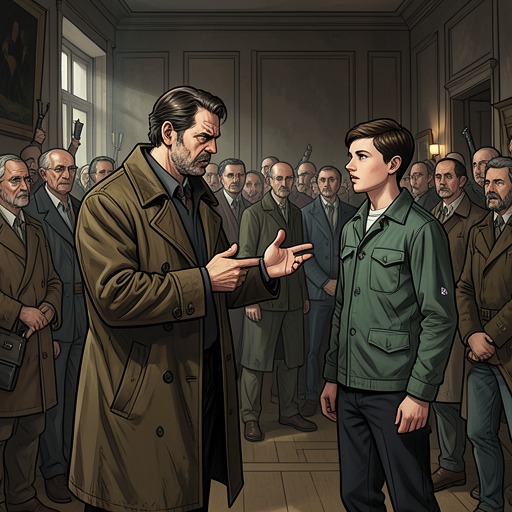
That control is contested within the family. After Joan throws Agnes’s bundle at her feet and declares her expelled, Bartholomew steps forward: the house is his by inheritance from his father, and Agnes may stay. His intervention matters to the subsequent agreement because the Hewlands household is not governed by Joan alone. Bartholomew can contradict her decision, while John must negotiate with him and with Joan rather than simply dictate terms.
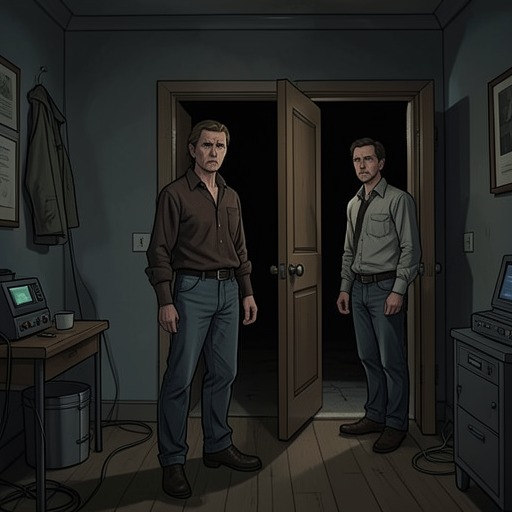
The immediate crisis becomes explicit when Mary tells William that Agnes is pregnant and says the child is his. William acknowledges the news while watching his father, already anticipating the violence and conflict between them. He is also ashamed that Agnes will witness the strained reality of his relationship with John. The pregnancy changes the stakes: the marriage is no longer only a contested courtship but a question of the circumstances into which their child will be born.
John Turns Consent into Leverage
John first presents agreement as a reasonable solution. He says he is convinced they can reach one, and argues that William wants to marry Agnes, Agnes wants to marry William, and the child should be born within marriage. Yet the narrative makes clear that his apparent accommodation conceals calculation. William recognizes the expression John wears when a commercial bargain favors him: John sees the marriage as useful in his dealings with the widow of the sheep farmer.
John means to use the whole situation to his advantage: Agnes’s pregnancy, her arrival at his house, the kestrel, and the child she carries. The marriage could turn the lovers’ predicament into a means of strengthening his position in existing dealings with the Hewlands family. William understands the cost of that prospect as personal as well as financial. What happened between him and Agnes at Hewlands, in the woods, with the kestrel diving through the foliage, threatens to become a tether John can use to keep him at home and in the family business.
John acts quickly. He goes toward Hewlands by way of Shottery rather than stopping at the market, checking stock, or speaking with an acquaintance on Rother Street. He knows William is a minor and will need written parental consent and a special licence to marry. He also knows that the old debt between the families gives him another argument, while Agnes’s pregnancy makes marriage pressing and leaves William dependent on his consent. John regards the combination as a strong bargaining position and hurries to conclude a deal before circumstances change.
The Hewlands Negotiation
At Hewlands, John meets Bartholomew in a field. Their opening gestures are not warm: Bartholomew squeezes John’s hand hard enough to make him cry out. John nevertheless approaches the conversation as a transaction, greeting Bartholomew with the satisfaction of a man who believes there are matters to settle. Bartholomew points out that Joan is coming and will have something to say. That detail makes the negotiation visibly collective: the brother who owns the house and the woman who has opposed the match both have a part in deciding Agnes’s future.
The children watch from behind a wall as the three adults talk among the sheep. Their distance leaves the terms unheard, but their observation records the negotiation’s changing balance. Bartholomew appears to shake his head and turn as if to leave. John opens his hands and counts something on his fingers. Joan speaks at length, gesturing toward the house and clutching her apron. Bartholomew turns his attention to the sheep, touches one’s back, and looks toward John, who nods emphatically and speaks at length. John smiles in apparent triumph; Bartholomew taps his boot with his staff, a sign that he is not satisfied. John moves closer and puts a hand on his shoulder, which Bartholomew does not remove.
The conversation ends in handshakes: first John and Joan, then John and Bartholomew. The watching children take this as a sign that the arrangement has been made and breathe with relief. The novel supplies no complete account of the terms, so the agreement is registered through these gestures rather than a detailed statement of what each household has promised. The handshakes resolve the immediate uncertainty over whether Agnes will marry William and return to live among her family.
Household Consequences and Significance
A later domestic scene suggests that the agreement’s consequences extend beyond the permission to marry. Agnes’s new dwelling stands beside the familiar house; John had used it for storage, and Agnes recognizes the smell left by wool bales kept there. She suspects that the arrangement has something to do with Bartholomew and may form part of the marriage agreement. Bartholomew inspects the narrow rooms before acknowledging them to John. Only after Bartholomew nods twice does John hand William the iron key. The slow transfer, and William’s hesitant way of taking it, give the household provision the feel of a negotiated concession rather than an uncomplicated welcome.
That settlement does not erase the tension between father and son. John tries to soften the moment with talk of home, happiness, and wives, then pats William on the back; William stumbles under the force of the gesture and quickly rights himself. Agnes observes an awkwardness that makes the exchange resemble a contest as much as a father’s welcome. Later, when William writes to Bartholomew asking him to represent him in making a purchase, he avoids asking his brothers because he fears John’s interference. The request shows Bartholomew continuing to serve as a practical intermediary even as John’s authority remains a concern.
The agreement thus joins personal choice to family property, obligation, and control. Joan’s initial refusal does not decide the matter; Bartholomew’s authority over the house and his participation in the field negotiation help make another outcome possible. John’s consent is indispensable because William is underage, but John uses that necessity to pursue his own advantage. The marriage is secured, yet the key passed to William marks only a limited independence: the new household stands beside the family home, and the conflict that shaped the bargain remains present within it.